




Gothic Revival Bible
These gothic revival bible pieces are heavy oak lecterns, brass stands and early texts designed for reading.
Gothic Revival Bible
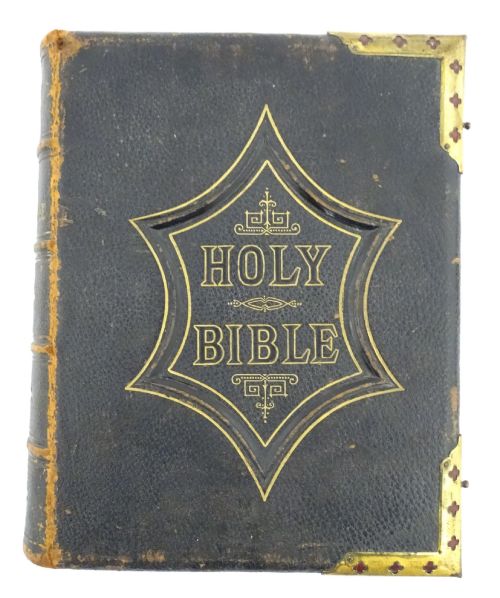
A gothic revival bible search brings up church lecterns, reading stands, book pedestals and 19th-century editions. These objects reflect ecclesiastical design traditions of the Victorian and Edwardian eras.
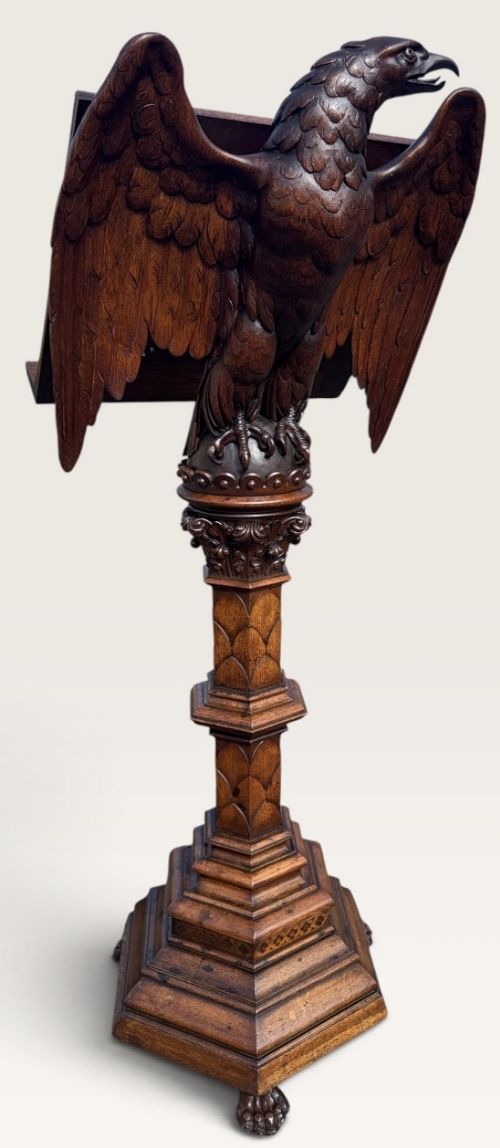
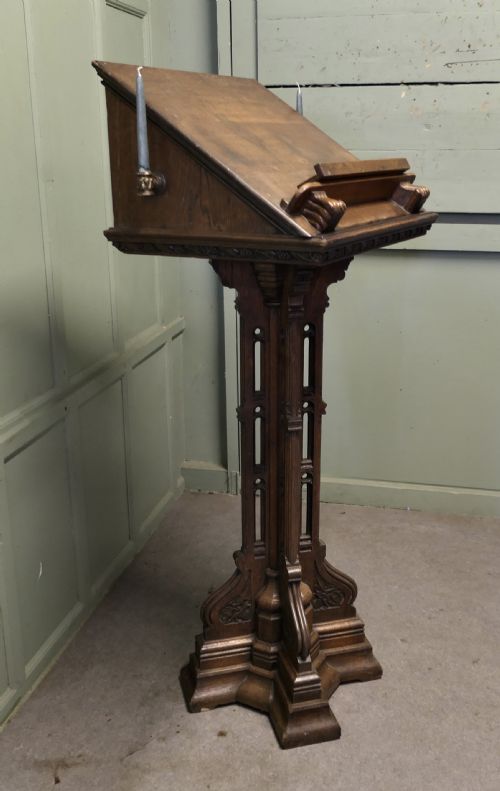
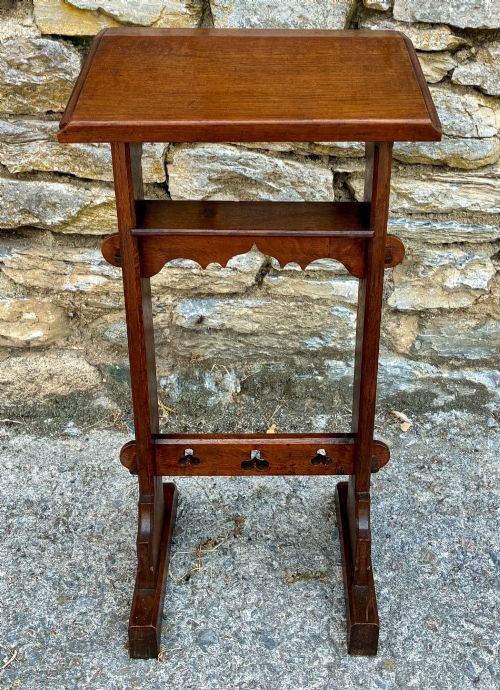
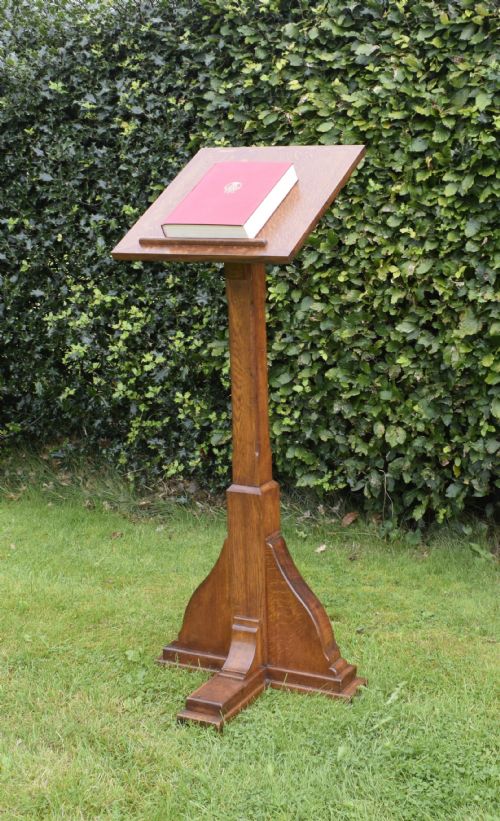
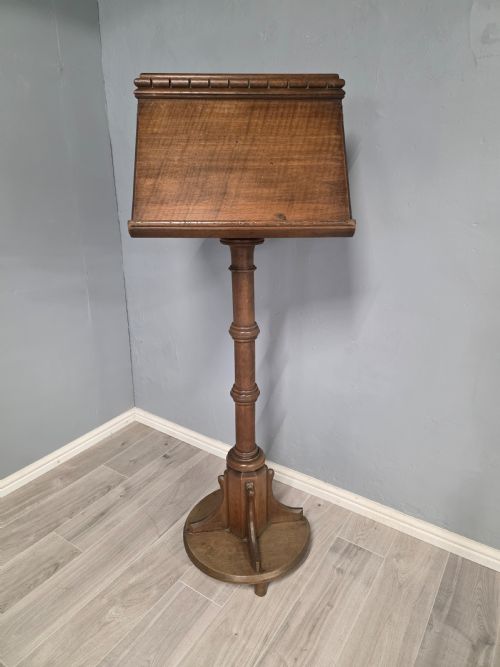
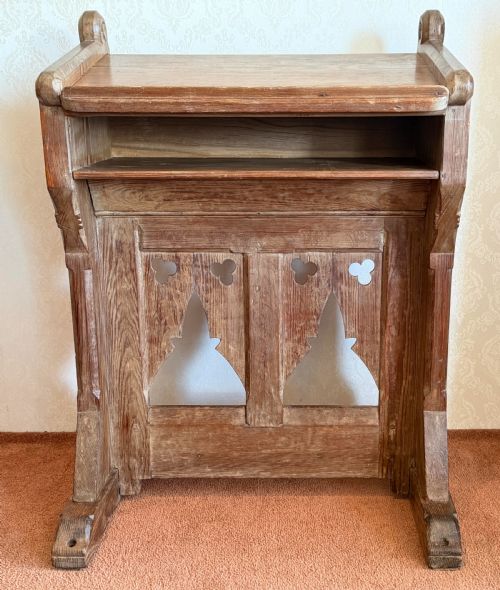
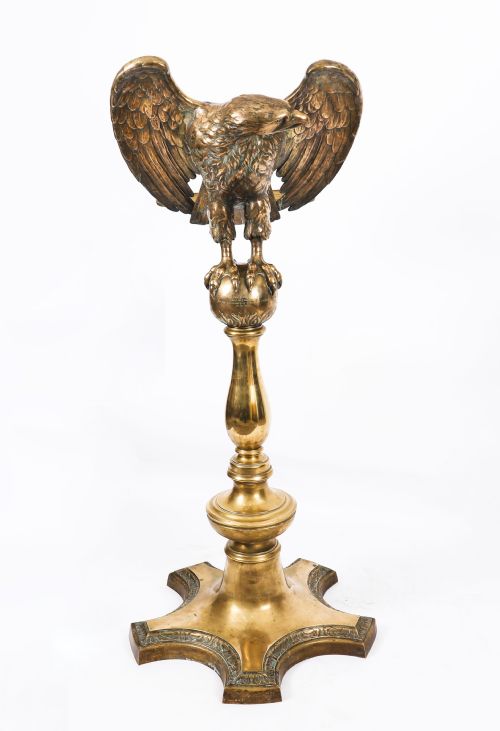
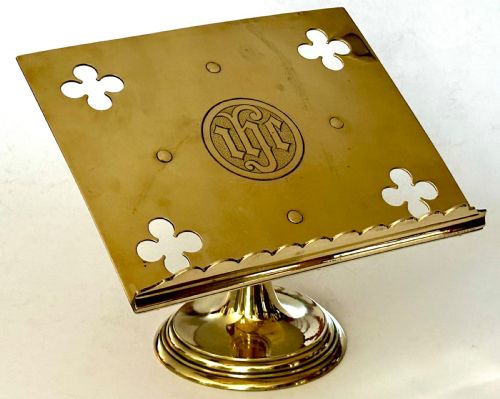
The most common forms on this page are carved oak lecterns and brass eagle stands originating from the nineteenth century. These pieces range from small table rests to large church podiums.
Makers drew on medieval architectural motifs to shape these reading stands. They served primarily in chapels, churches and domestic halls for displaying large volumes.
Materials and construction
Carpenters worked primarily in solid oak, pine and mahogany, joining heavy timbers with traditional joints. Brass was cast and polished to form monumental bird supports and desk mounts.
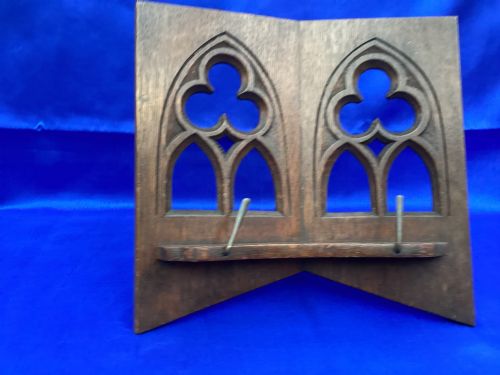
Surfaces received deep hand-carving displaying tracery, linenfold panels and pointed arches. Metal components were joined with visible fixings suited to ecclesiastical environments.
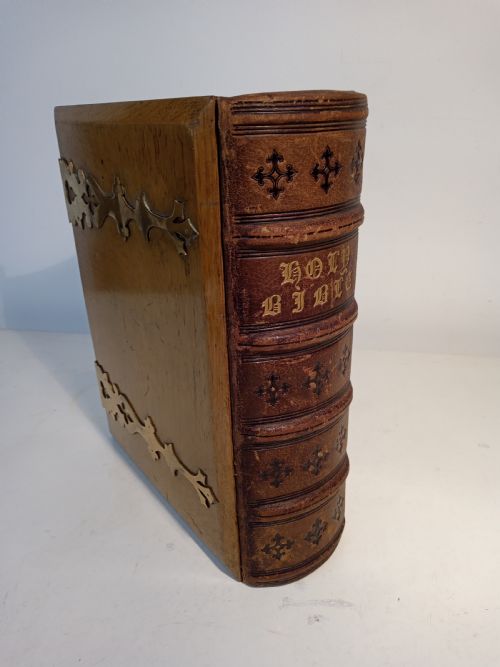
Listings span the nineteenth century through the Edwardian period, featuring oak, brass, pine and leather.
Assessing quality and execution
Quality rests on the depth and sharpness of the hand-carving across the timber surfaces. Fine examples show crisp architectural detailing rather than shallow machine routing.
Proportion and stability separate standard utility stands from important church pieces. The weight of the timber and the casting finish of brass elements define the grade.
The Gothic Revival Bible Glossary
- Lectern
- A tall stand with a sloping desk used to hold a book for reading aloud. These tall supports dominate ecclesiastical interiors.
- Gothic Revival
- An architectural and decorative style reviving medieval forms from the mid-nineteenth century onwards. It utilises pointed arches and quatrefoil motifs.
- Ecclesiastical
- Belonging or relating to a church or its clergy. Pieces described thus were built for religious services.
- Arts and Crafts
- A design movement valuing hand craftsmanship and simple materials. It influenced later church furniture design.
Gothic Revival Bible: Frequently Asked Questions
Where were these lecterns used?
These reading stands stood inside churches, chapels and parish halls to hold large service books.
Smaller desk versions served in domestic studies or libraries for heavy reference volumes.
How do I date an oak lectern?
Dating relies on timber preparation marks, joint construction and the style of the Gothic ornamentation.
Victorian pieces often display heavier machine assistance while earlier examples show hand-adzed surfaces.
What metals appear on these stands?
Brass forms the structural columns and detailed bird sculptures seen on ecclesiastical reading desks.
Iron occasionally appears in internal support brackets and heavy floor fixings.
Are these stands suitable for modern books?
The wide sloping ledges easily accommodate heavy modern books, atlases and heavy volumes.
Their sturdy construction provides stable support for daily reading use in a room.