

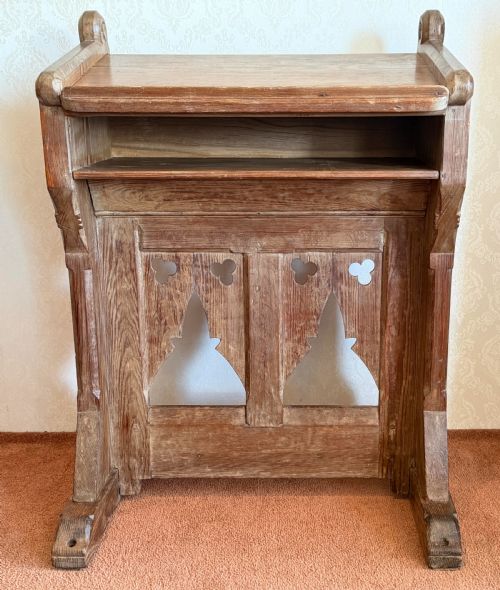
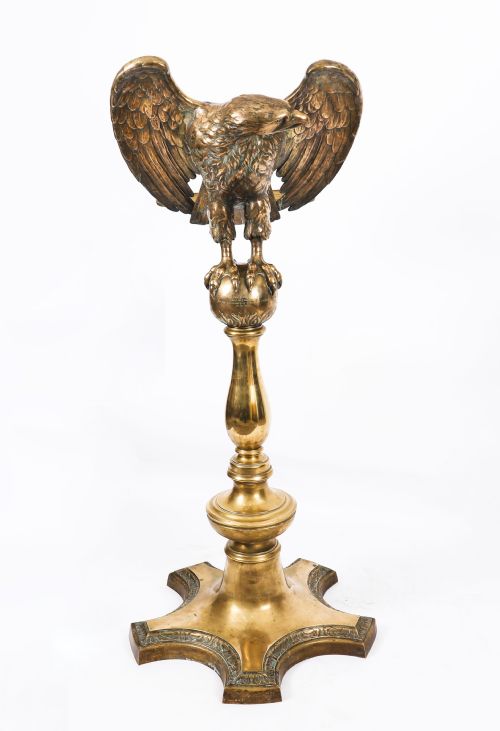


Gothic Reading Stand
A gothic reading stand brings architectural gravity and hands-free purpose to any room, holding heavy volumes or scores with upright dignity.
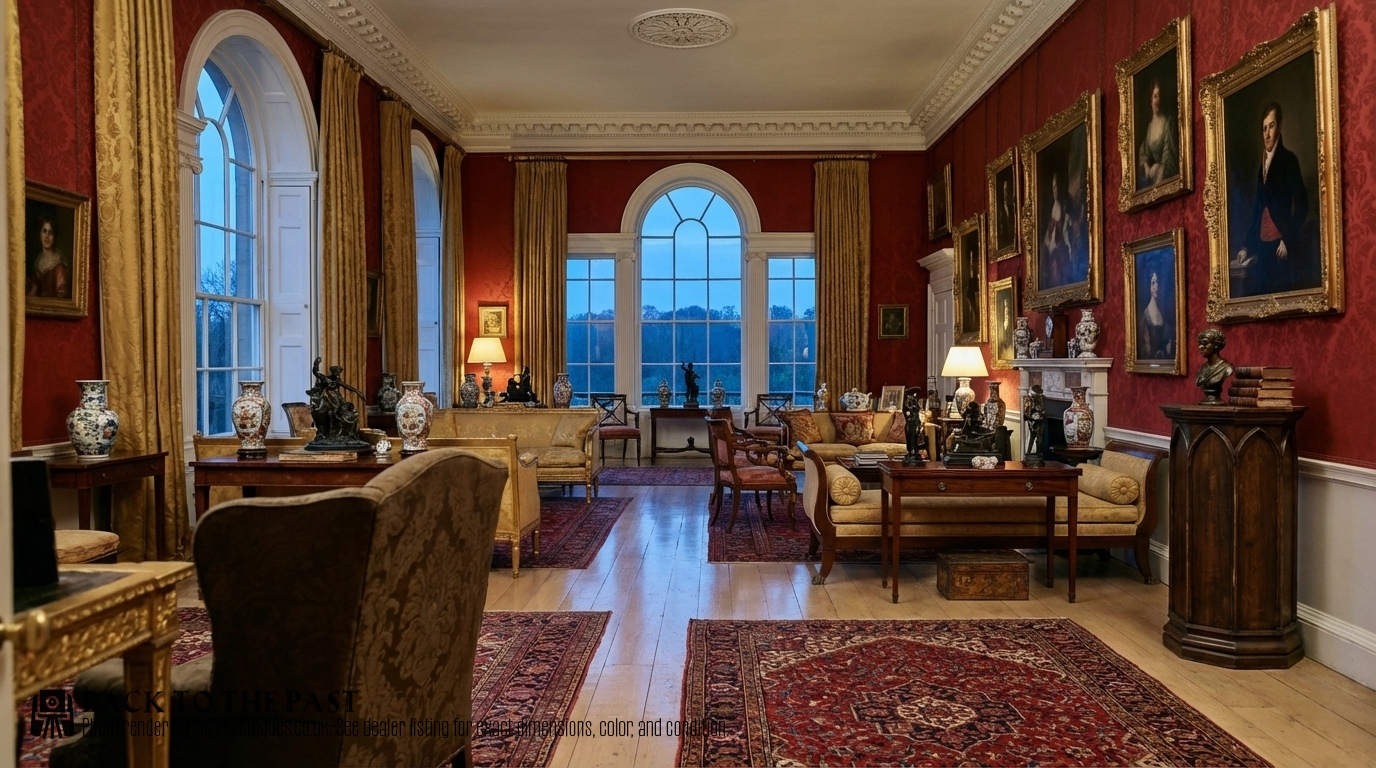
Gothic Reading Stand
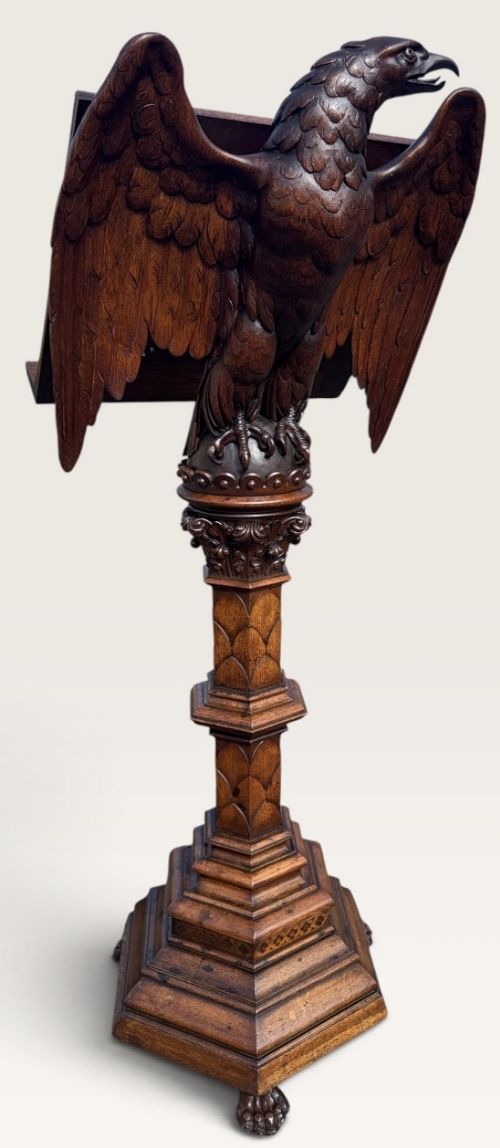
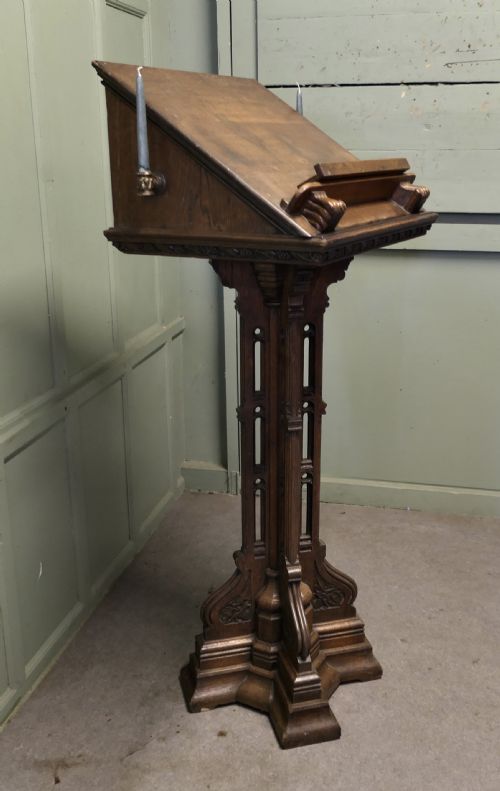
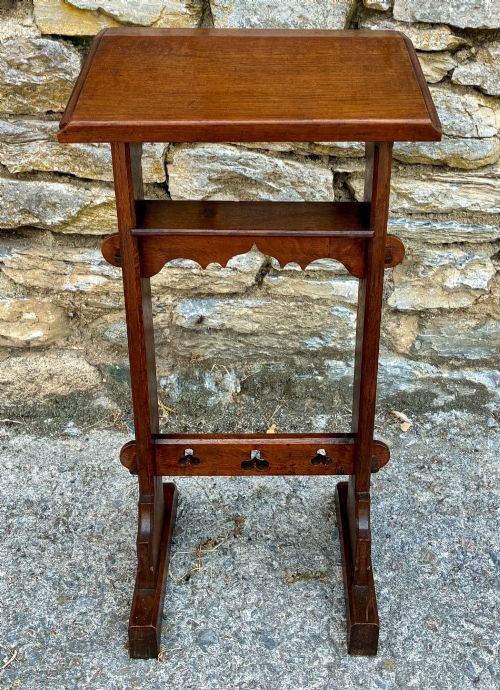
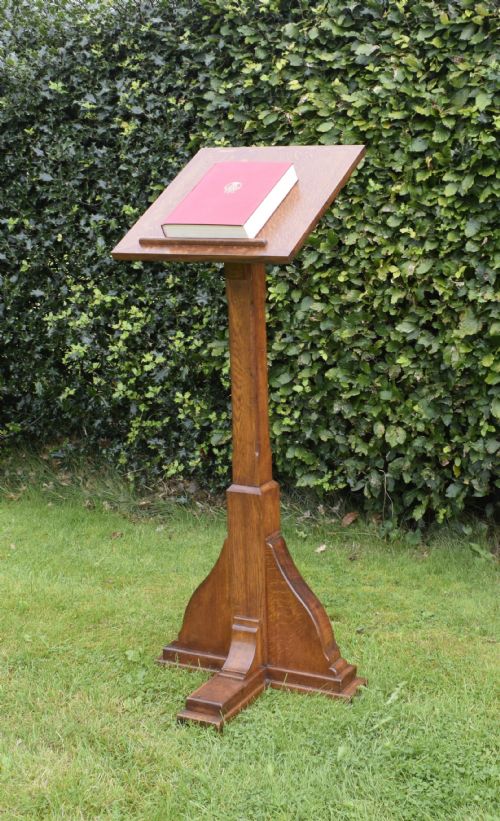
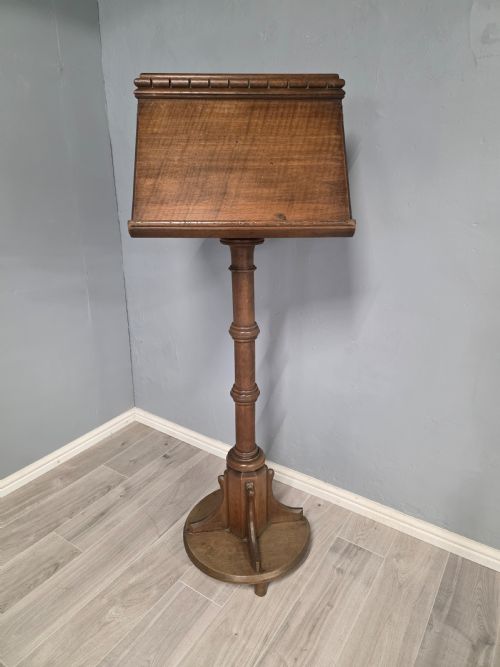
A gothic reading stand is typically encountered as a heavy oak lectern, a wrought iron standard piece, or a polished brass book rest dating from the nineteenth century or the Edwardian era. These functional furnishings range from small table rests to tall floor-standing podiums and ecclesiastical eagles.
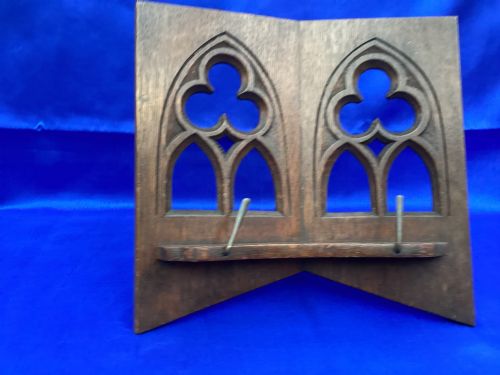
The prevalent style is Gothic Revival, alongside Victorian Gothic, Arts and Crafts, and occasional ecclesiastical or Art Nouveau interpretations. Most examples bridge domestic study spaces and church interiors, reflecting a shared Victorian taste for medievalism.
Buyers selecting a gothic reading stand will find diverse configurations, including adjustable book stands, duet stands, and folio cabinets. Oak and brass predominate, joined by cast iron, pine, and wrought iron.
Materials and construction
Makers utilised dense timbers such as oak, walnut, and pine, frequently applying deep relief carving to mimic medieval church woodwork. Joinery is robust and traditional, designed to support heavy volumes without sagging.
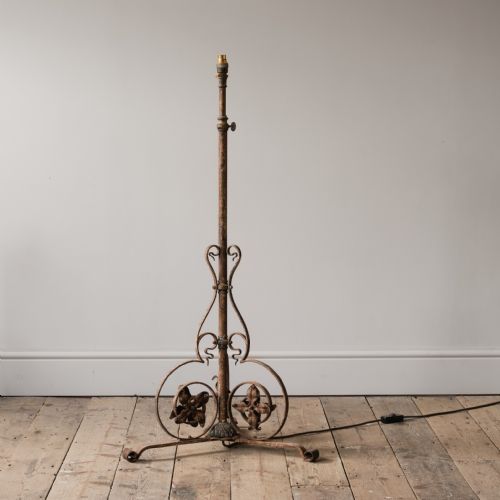
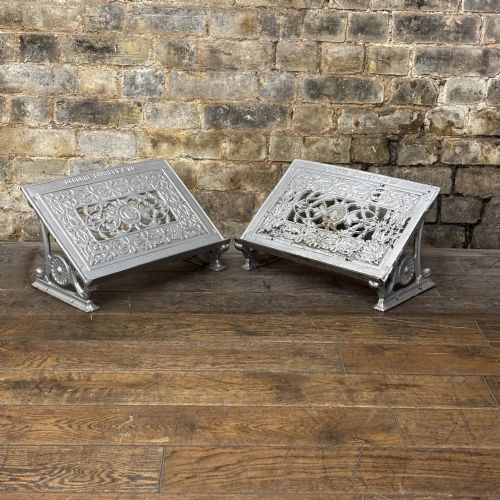
Metal components rely on cast iron, wrought iron, and heavy brass, often shaped by blacksmiths into adjustable arms, telescopic columns, and pivoting book rests. Brass mounts and eagles demonstrate meticulous casting and chasing techniques.
Some pieces incorporate secondary materials like fabric linings, bone details, and electrical adaptations added during later domestic conversions.
Listings feature oak, brass, wrought iron, and pine across Victorian and Edwardian periods.
What separates the best from the rest
Quality rests on the crispness of the hand-carving and the structural integrity of the pivoting mechanisms. Superior pieces display deep, confident chisel work in the timber and smooth articulation in adjustable brass joints.
The choice of materials dictates the standing of the piece, with solid oak and heavy cast or chased brass holding more presence than lighter pine or simpler iron constructions. Signed works by documented cabinet makers elevate an object above standard workshop production.
Osborne Garrett And Co·Benjamin Taylor And Sons
The Gothic Reading Stand Glossary
- Lectern
- A tall stand with a sloping top designed to hold a book or notes for a speaker. These often feature carved panels or eagle pedestals.
- Gothic Revival
- An architectural and decorative style that revives medieval forms, pointed arches, and heavy tracery. It dominated nineteenth-century design.
- Folio
- A large book size or a specialised holder and cabinet designed for storing large sheets of paper or folios. Walnut examples are particularly substantial.
- Ecclesiastical
- Relating to the Christian Church or clergy, describing furnishings originally made for chapels, churches, and abbeys. Many domestic stands were sourced from these environments.
- Duet stand
- A music or reading stand designed to accommodate two people reading opposite or adjacent pages simultaneously. These often feature wider adjustable ledges.
Gothic Reading Stand: Frequently Asked Questions
How do I date a gothic reading stand?
Dating relies on material combinations, construction marks, and stylistic shifts between nineteenth-century revivalism and Edwardian production. Oak pieces from the Victorian era often show deeper hand-carving.
Hardware such as brass hinges and telescopic iron mechanisms also offer clues to the exact decade of manufacture.
Were these stands made for churches?
Many examples originated in churches, chapels, and ecclesiastical settings as reading desks or eagle lecterns. Others were constructed for domestic libraries and studies.
Ecclesiastical pieces are generally heavier and more overtly architectural in their gothic detailing.
Can these stands hold heavy books?
Solid oak and cast iron versions are engineered precisely to bear the weight of large folios, family Bibles, and heavy music scores. Adjustable ledges provide secure support.
Lighter pine or delicate brass table stands are better suited to moderate volumes rather than massive tomes.
How do I adjust the reading angle?
Most stands utilise a pivoting bracket, ratchet mechanism, or sliding brass support rod behind the book rest. These allow the user to alter the slope for standing or seated reading.
Blacksmith-made iron examples often feature screw keys or sliding collars on telescopic floor stems.