

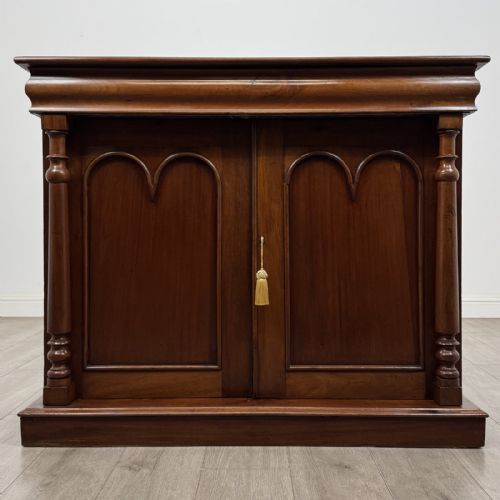
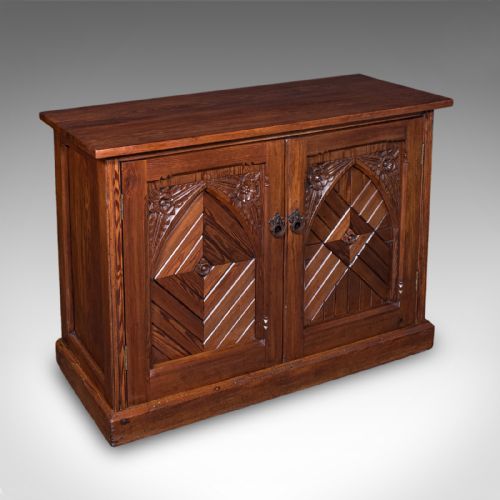
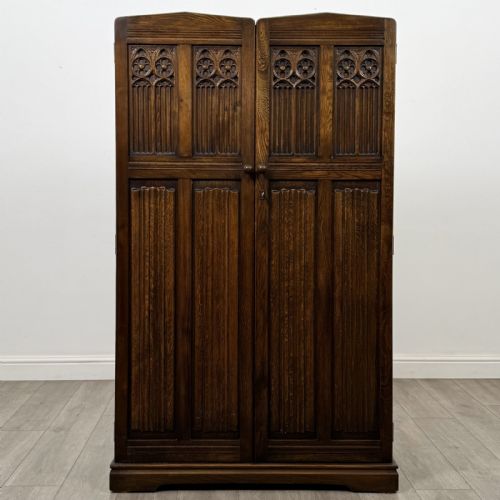
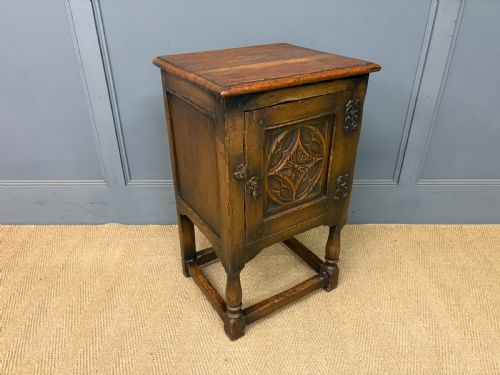
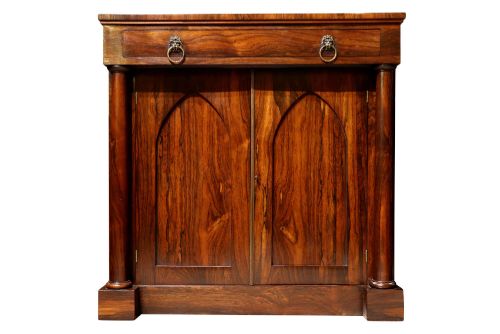
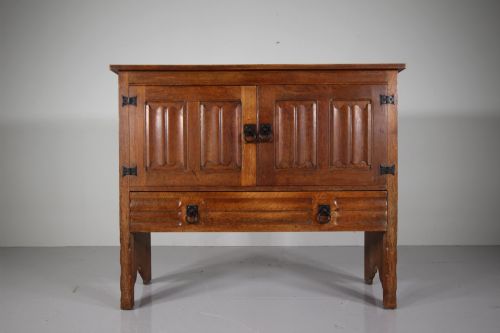


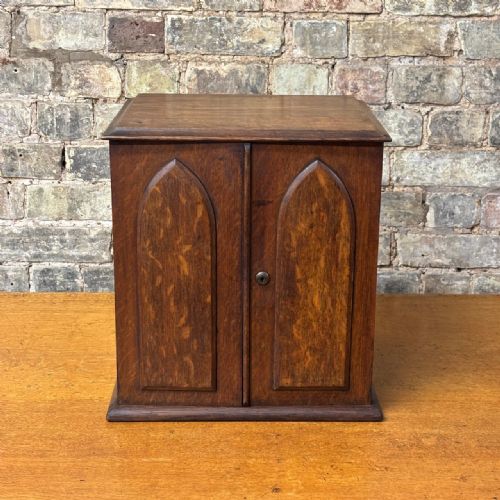
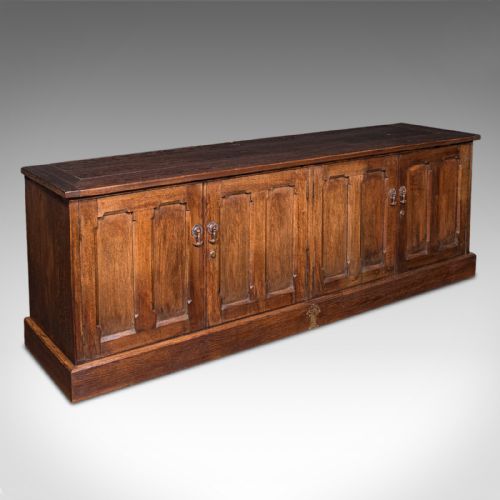


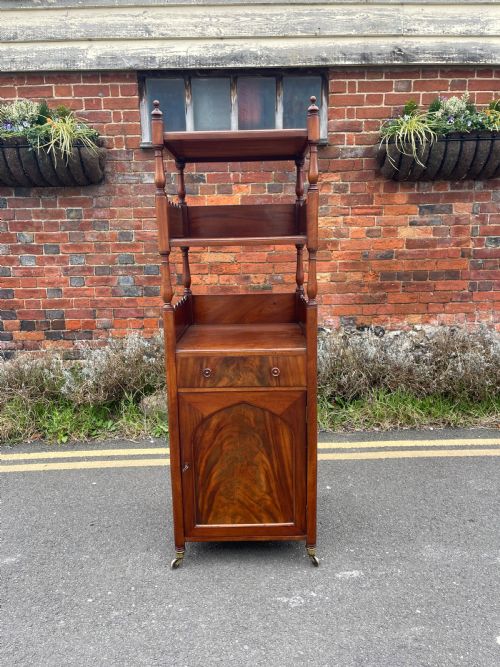


Gothic Panelled Cupboard
A gothic panelled cupboard brings heavy architectural timber and deep architectural carving straight into a room.
Gothic Panelled Cupboard
When you search for a gothic panelled cupboard, you encounter timber storage pieces that borrow tracery, pointed arches, and rectilinear framing from medieval architecture. The examples found here span the nineteenth century and the early twentieth century, taking the form of sideboards, corner cupboards, and small table cabinets.
Most pieces on this page are constructed from oak, though occasional mahogany, rosewood, and limewood pieces appear alongside them. They reflect revival movements, notably Gothic Revival, Jacobean Revival, and Chippendale Revival, translating heavy ecclesiastical forms into domestic storage.
Buyers seek these forms for their sturdy construction and strong vertical lines. The panelling typically dictates the character of the piece, anchoring heavy doors beneath moulded cornices and carved friezes.
Materials and construction
Makers relied primarily on solid oak, working the timber with hand tools to produce pegged mortise and tenon joints that held heavy door frames and side panels together. Secondary woods appear internally, while iron and brass provide hinges, escutcheons, and drop handles.
Carving was executed directly into the solid timber of the stiles, rails, and panels rather than applied as separate mouldings. Limewood and mahogany variants show similar reliance on solid construction, utilising timber thickness to achieve deep relief work without compromising structural integrity.
Gothic Panelled Cupboard Retail Price Guide 2026
Typical asking prices for gothic panelled cupboard among the pieces listed under this phrase on Sellingantiques today, from the lower quarter to the upper quarter. They describe what is for sale here now, not the wider market.
Object forms span large wardrobes and sideboards down to compact table cabinets and wall shelves.
Assessing quality and execution
Quality rests on the depth and crispness of the timber carving and the weight of the timber selected for the frame. Superior pieces display sharp tracery and well-defined linenfold or geometric panels that sit flush within tight joints.
Hardware contributes significantly to the distinction between standard production and finer workshops, with heavy brass hinges and locks integrated smoothly into the timber. Lesser examples show mechanical uniformity in the carving and lighter stock timber that lacks the dense grain of better nineteenth-century pieces.
The Gothic Panelled Cupboard Glossary
- Gothic Revival
- An architectural and decorative style that revived medieval forms, pointed arches, and heavy timber framing during the eighteenth and nineteenth centuries. It heavily influenced domestic furniture design through ecclesiastical motifs.
- Jacobean Revival
- A nineteenth-century stylistic movement that copied the heavy, rectilinear furniture forms of the early seventeenth century. It often incorporates geometric panelling and strapwork alongside gothic details.
- Chiffonier
- A small sideboard or low cabinet featuring doors enclosing shelves, popular during the Regency and Victorian periods. Some variants incorporate glazed or panelled doors.
- Escutcheon
- A flat plate of brass or iron surrounding a keyhole to protect the surrounding timber from wear. Finer examples are hand-engraved or shaped to match the period style.
- Stile
- The vertical outer member of a frame that holds a panel in place. In quality cupboards, stiles are grooved to receive the panel securely without glue.
Gothic Panelled Cupboard: Frequently Asked Questions
What rooms suit a gothic panelled cupboard?
These cupboards suit libraries, hallways, and dining rooms where their heavy timber presence grounds lighter modern furniture. Their vertical proportions allow them to fit into corners or wall spaces without dominating the floor plan.
Because they provide enclosed shelving, they function well for storing books, glassware, or tableware out of sight while adding architectural weight to an interior.
How do I date a nineteenth-century oak cupboard?
Dating relies on examining the construction marks, timber selection, and hardware style. Hand-sawn boards and pegged joinery generally indicate earlier nineteenth-century work, whereas machine-cut elements point towards later Victorian or Edwardian production.
Revival styles often overlap, so the specific depth of the carving and the type of secondary wood used inside provide additional clues to the decade of manufacture.
Are these cupboards made from solid wood?
The majority of pieces listed are built from solid oak, mahogany, or rosewood, reflecting the heavy construction standards of the periods represented. Timber thickness was utilised to create deep mouldings and structural rigidity.
Panels were typically allowed to float within their frames to accommodate natural seasonal movement in the solid timber without splitting the surrounding structure.
How should I care for antique oak furniture?
Oak benefits from occasional application of traditional beeswax to nourish the dry timber and maintain a soft sheen. Avoid placing these pieces near direct heat sources or in fluctuating humidity to prevent the solid panels from warping.
Dusting with a dry, soft cloth prevents particulate buildup in the deep recesses of the carved tracery and panelling.