



Gothic Oak Writing Desk
A gothic oak writing desk brings heavy architectural carving and sombre timber straight into a study, offering a serious workspace grounded in nineteenth-century craftsmanship.
Gothic Oak Writing Desk
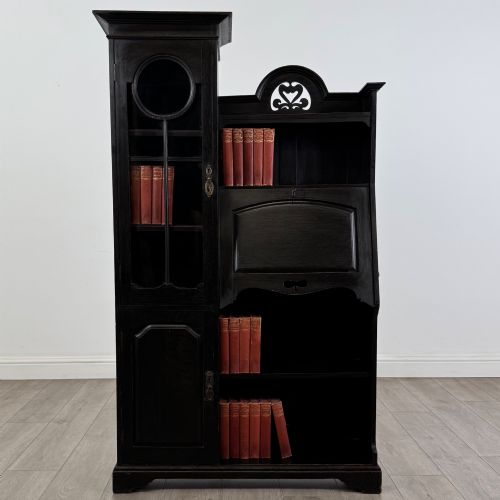
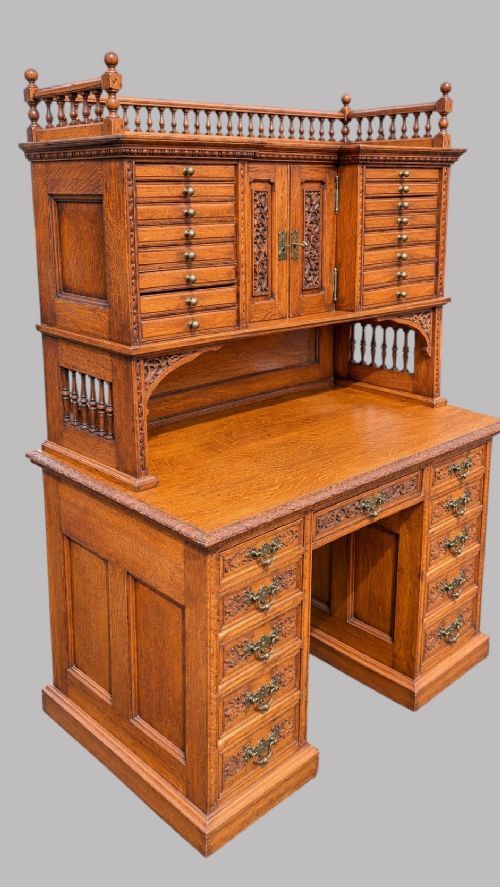
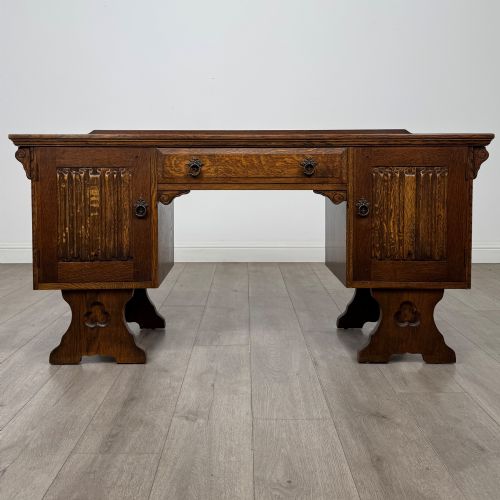
A gothic oak writing desk brings together sturdy nineteenth-century framing and the sharp, pointed arch details of revival architecture. Buyers searching this phrase encounter heavy library tables, kneehole desks, and bureau forms produced across the Victorian and Edwardian eras. These pieces lean heavily on Gothic Revival, Tudor Revival, and Arts and Crafts design idioms, adapting medieval ecclesiastical motifs for domestic studies.
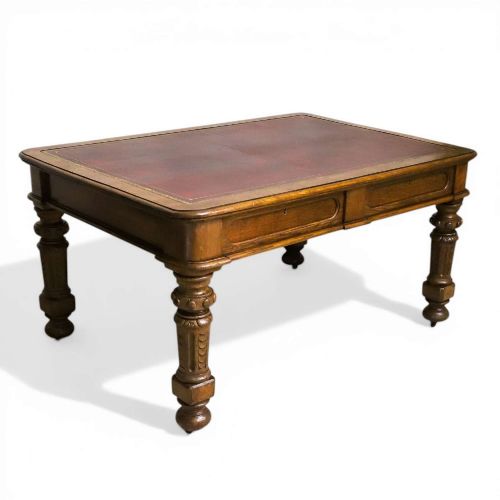
The versions met most frequently on this page date from the mid-nineteenth century to around nineteen hundred, dominated by Victorian interpretations of Gothic taste. Many items incorporate practical writing surfaces inset with leather alongside banks of drawers or central wells. Makers utilised native and imported hardwoods to build substantial freestanding tables and pedestal forms intended for permanent placement in libraries and public school rooms.
How They Were Made
Makers constructed these desks predominantly from solid oak, sometimes selecting pollard oak or ebonised wood for decorative contrast. Timber was seasoned, joined with traditional framing methods, and finished to highlight the natural grain beneath dark wax or polish. Brass handles, hinges, and occasional leather writing panels provided functional utility against the heavy wooden structures.
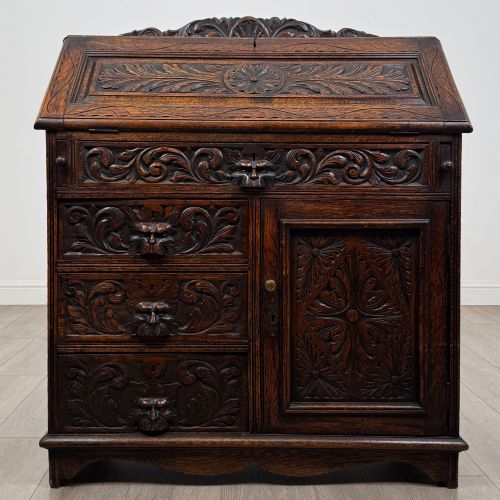
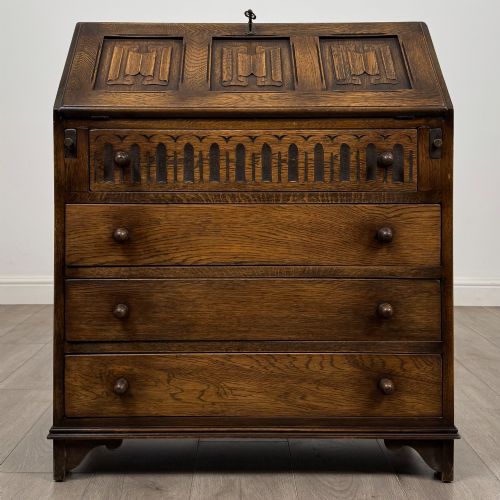
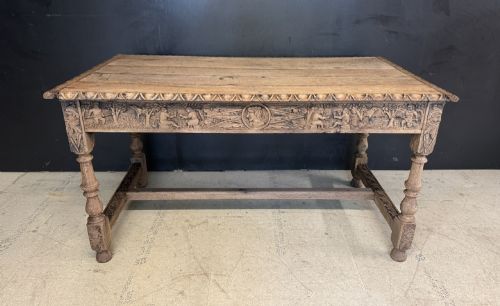
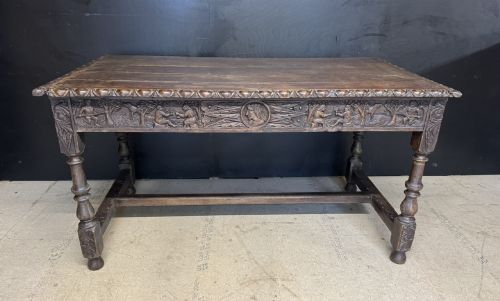
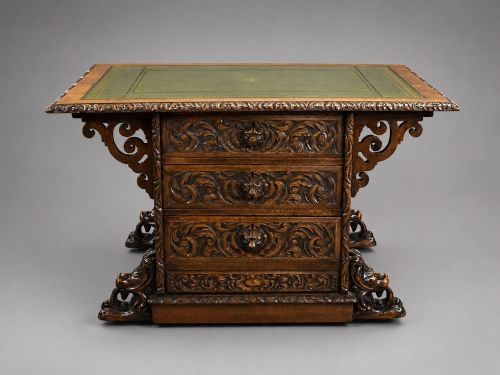
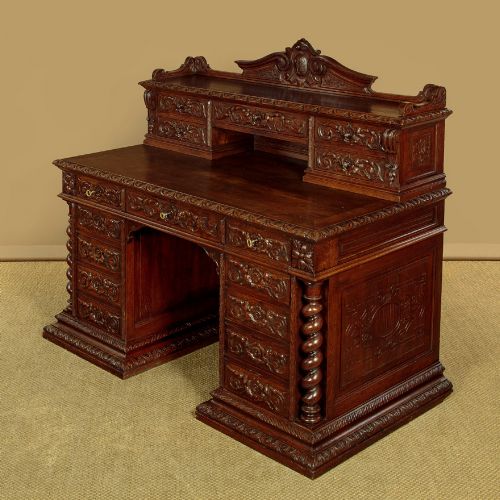
Carving defines the surface work, executed by hand with deep relief panels showing linenfold patterns, architectural tracery, and grotesque green man masks. Structural integrity relied on thick planking for table tops and sturdy pedestal bases designed to bear the weight of heavy ledgers and books. Metalwork elements like iron brackets and brass panels reinforce the vernacular medieval aesthetic.
Gothic Oak Writing Desk Retail Price Guide 2026
Typical asking prices for gothic oak writing desk among the pieces listed under this phrase on Sellingantiques today, from the lower quarter to the upper quarter. They describe what is for sale here now, not the wider market.
Materials recorded across current items include solid oak, brass, leather, glass, and ebonised wood.
What Varies in Quality
The depth and sharpness of the hand carving separate standard commercial production from exceptional pieces. Superior examples display crisply articulated foliage, expressive green man faces, and finely incised linenfold panels rather than shallow, machine-routed decoration. The choice of timber also dictates grade, with dense quarter-sawn oak and figured pollard oak sitting at the upper end of the scale.
Proportion and structural honesty distinguish the finer desks from later vernacular copies. Pieces retaining original brass hardware, undamaged leather writing surfaces, and integrated pedestals command greater regard. The integration of architectural elements, such as working gothic arcading and robust structural framing, marks the distinction between ordinary furniture and masterwork revival pieces.
Heals of London
The Gothic Oak Writing Desk Glossary
- Gothic Revival
- An architectural and decorative style drawing inspiration from medieval forms, pointed arches, and ecclesiastical motifs. This movement flourished throughout the Victorian era in domestic furniture.
- Green Man
- A sculptural motif representing a human face surrounded by or sprouting from foliage. It frequently appears carved into the woodwork of nineteenth-century revival desks.
- Linenfold
- A style of wood carving used to panel surfaces, resembling folded parchment or linen cloth. It was widely revived on Victorian and Edwardian bureau fronts.
- Kneehole Desk
- A freestanding desk featuring a central recess for the user's legs, flanked by pedestals of drawers. This form provides substantial storage capacity while maintaining a compact footprint.
- Pollard Oak
- Timber harvested from trees that have been pollarded, producing a heavily gnarled and highly figured grain pattern. Cabinet makers valued it for decorative veneering and small statement pieces.
Gothic Oak Writing Desk: Frequently Asked Questions
What is a gothic oak writing desk?
A heavy nineteenth-century desk built from oak and decorated with architectural motifs like pointed arches, tracery, and linenfold panels.
These pieces were designed for studies and libraries, combining medieval aesthetics with practical storage and writing surfaces.
How do I date an oak gothic desk?
Look to the construction methods, hardware materials, and specific revival styles present in the piece. Victorian examples often feature deep hand carving and brass fittings, while Edwardian versions frequently utilise lighter linenfold panels.
Secondary indicators include the presence of Pollard oak, ebonised elements, or specific nineteenth-century registration marks on the hardware.
Were these desks used in schools?
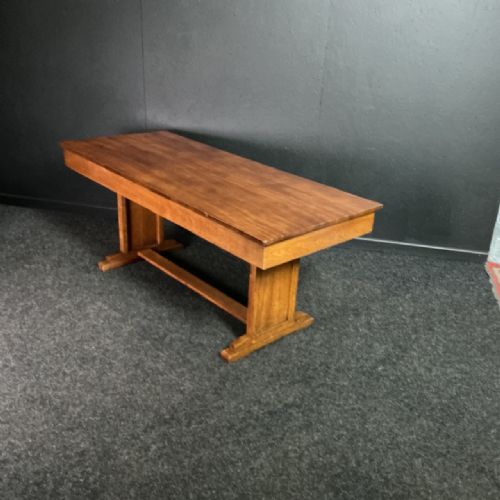
Some robust library tables and pedestal desks originated in institutional settings such as historic public schools. These utilitarian pieces were built to withstand heavy daily use by students and staff.
Institutional examples often display larger proportions and simpler structural detailing compared to domestic library furniture.
How do I care for antique oak furniture?
Maintain the wood by applying a quality beeswax polish periodically to nourish the dry timber and protect the finish. Avoid placing the desk near direct heat sources or strong sunlight, which can cause the oak to split and the leather insets to warp.
Clean surfaces gently with a dry or barely damp cloth, taking care not to trap moisture in deep hand-carved recesses.