


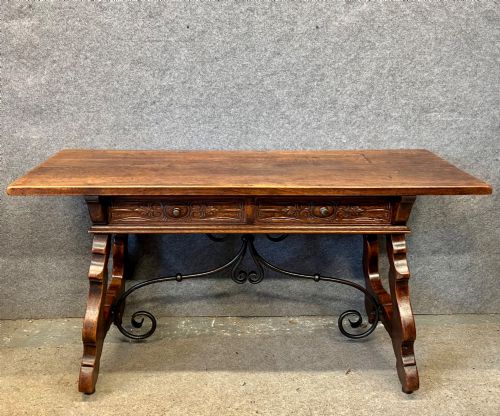


Carved Oak Work Table
A carved oak work table brings together utility and rich grain, offering a practical surface with fitted compartments for sewing or writing.
Carved Oak Work Table
When you search for a carved oak work table, you encounter nineteenth-century pieces designed for domestic utility and needlework. These items combine sturdy timbers with decorative carving, often featuring hinged lids or drop flaps.
The examples on this page span the Victorian and Regency periods, alongside rustic Spanish and French provincial forms. You will find work tables alongside writing desks and occasional tables sharing similar foundational timbers.
How they were made
Construction relies heavily on solid oak and figured pollard oak veneers, selected for striking grain patterns. Workshops integrated brass fittings, wrought iron, and occasionally leather surfaces to complete the functional design.
Joinery techniques from the nineteenth century prioritised structural rigidity, supporting heavy carved bases and lift-top mechanisms. Cabinetmakers utilised beech and other secondary timbers internally where appropriate.
Makers integrated hidden wells beneath lift tops, ensuring nineteenth-century sewing needles remained securely out of sight during formal visits.
What varies in quality
Quality separates standard utilitarian furniture from exceptional cabinetmaking through the crispness of the carving and the selection of timber. Figured pollard oak sections demonstrate superior material choice compared to plain timber.
The integrity of internal compartments and the smoothness of drop-flap or lift-top mechanisms distinguish finer workshops from simpler regional production.
Boothroyd Sons Rimmer·Trussant Cie
The Carved Oak Work Table Glossary
- Pollard oak
- Timber taken from trees that have been pollarded, producing dense and highly figured circular grain patterns. This wood was favoured for decorative tabletops.
- Drop flap
- A hinged leaf on the side of a table that can be raised and supported to extend the surface area. It allows the furniture to adapt to smaller spaces.
- Lift top
- A hinged table surface that opens to reveal a storage well or fitted interior compartments beneath. This mechanism is characteristic of work tables and writing desks.
- Regency
- An English design period spanning the early nineteenth century, noted for classical restraint and refined proportions. Pieces from this era often feature dark timbers and brass mounts.
Carved Oak Work Table: Frequently Asked Questions
What is a work table?
A work table is a nineteenth-century domestic piece designed for needlework, sewing, or writing, typically equipped with internal compartments or storage wells beneath the surface.
These versatile items served as functional furniture in sitting rooms and parlours, combining practical utility with decorative cabinetmaking.
How do I identify pollard oak?
Pollard oak displays distinctive clustered knot formations and swirling grain patterns created by pruning the parent tree near the trunk. It was frequently utilised for tabletops and decorative veneers.
This timber stands apart from standard straight-grained oak through its rich, mottled visual texture.
Where were these tables used?
These tables were kept in private drawing rooms, boudoirs, and studies of nineteenth-century homes to hold sewing implements or writing materials close at hand.
Their compact forms allowed them to sit beside chairs or against walls when not actively in use.
How do I care for antique oak?
Maintain antique oak by keeping it away from direct heat sources and sudden humidity changes that can cause timber to split or warp. Regular dusting with a soft cloth preserves the polished finish.
Avoid modern silicone sprays, relying instead on traditional beeswax to nourish the dry wood over time.