
Gothic Oak Furniture
Gothic oak furniture brings monumental architecture into domestic spaces through heavy timbers and pointed arches.
Gothic Oak Furniture
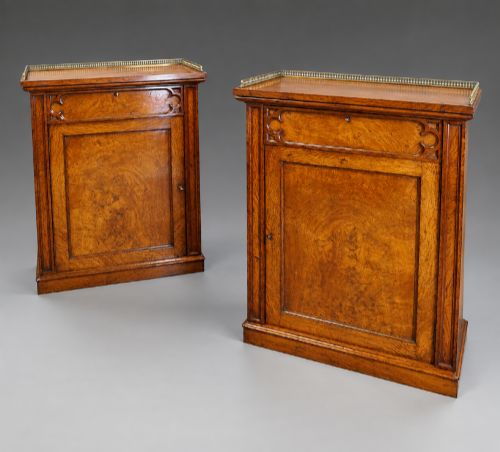
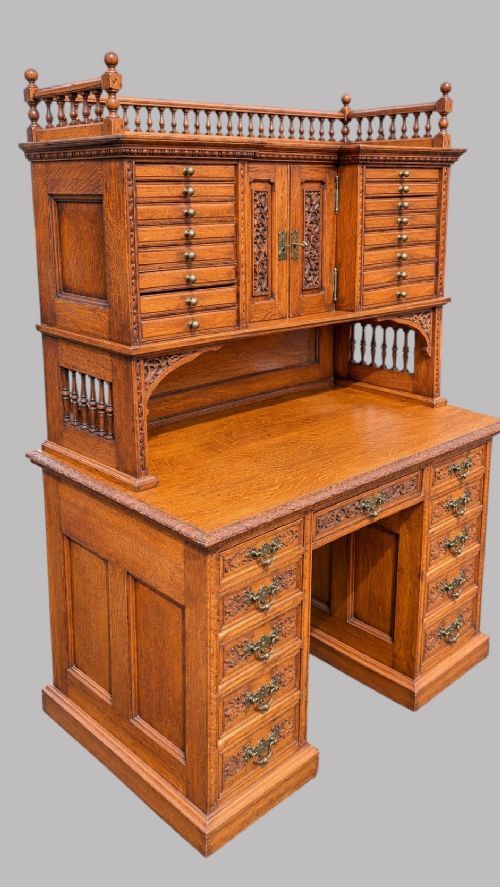
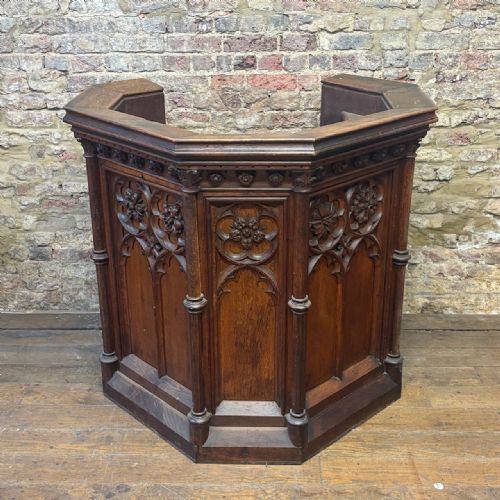
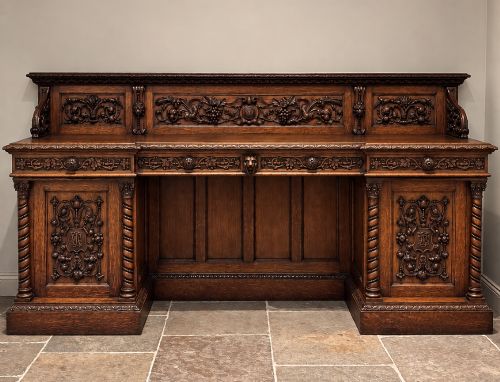
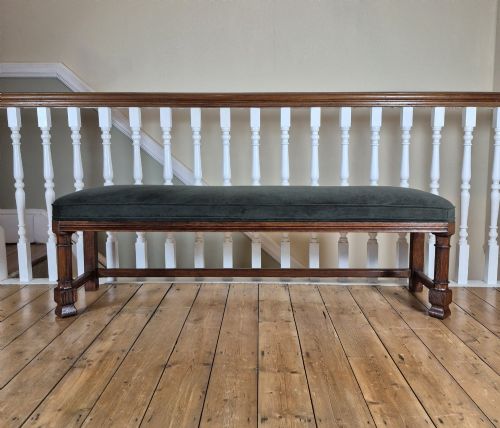
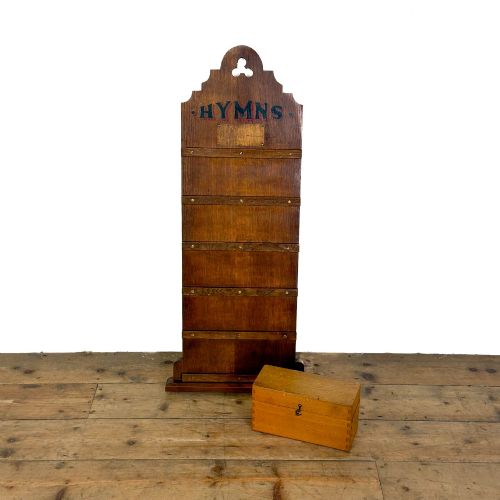
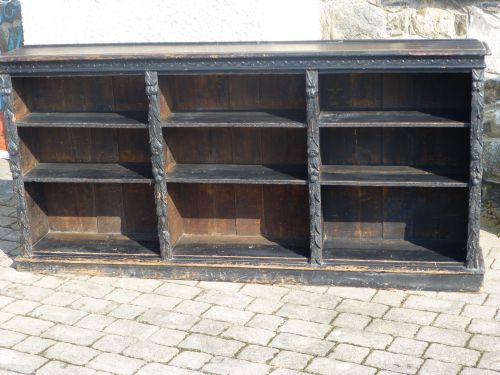
Gothic oak furniture encompasses robust seating, storage, and tables drawing inspiration from medieval ecclesiastical design. Pieces range from Victorian church pulpits and prayer desks to domestic sideboards, hall benches, and dressers.
Buyers most frequently encounter 19th-century Victorian and Edwardian examples displaying revivalist motifs. These items reflect a widespread fascination with medieval craftsmanship during the industrial era.
How they were made
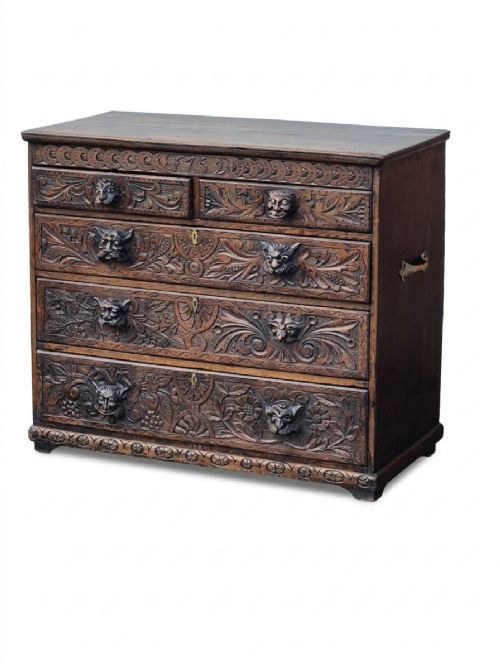
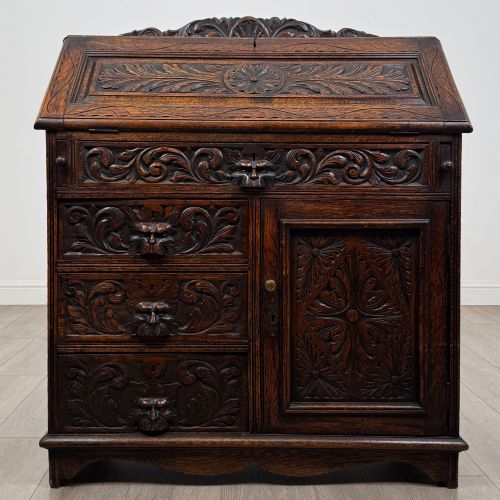
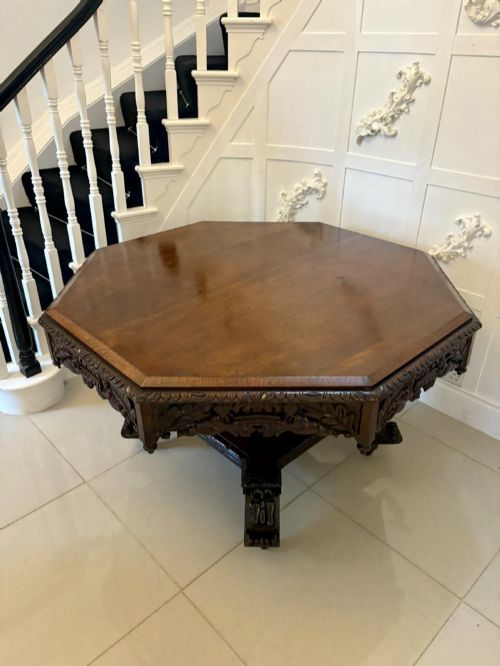
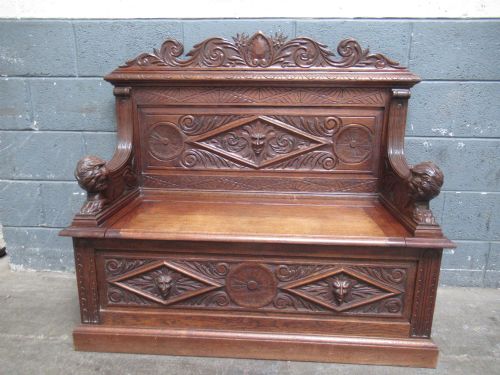
Solid oak serves as the primary structural material, often paired with secondary elements of brass, iron, and leather. Artisans utilised traditional joinery alongside deep chip carving to render intricate motifs like trefoils and Green Man masks.
Surfaces frequently receive hand-carved detailing, panel construction, and ebonised highlights. This combination of dense timber and manual chiselling creates the heavy, sculptural silhouettes characteristic of the revival styles.
Listings feature periods spanning from the 16th century through the Edwardian era, with a strong concentration of 19th-century Victorian revival pieces.
What varies in quality
Quality rests upon the depth and precision of the hand-carving alongside the selection of timber. Crisp relief work on Green Man masks and geometric tracery separates superior examples from plainer production items.
Construction methods and hardware integration also dictate worth. Robust joinery using solid oak throughout distinguishes substantial church and hall furniture from lighter decorative pieces.
GIllows·Arthur Simpson of Kendal·Heals·Liberty & Co.
The Gothic Oak Furniture Glossary
- Green Man
- A sculptural architectural ornament depicting a human face emerging from or entwined with foliage. It appears frequently as a grotesque motif on Victorian oak cabinets and benches.
- Trefoil
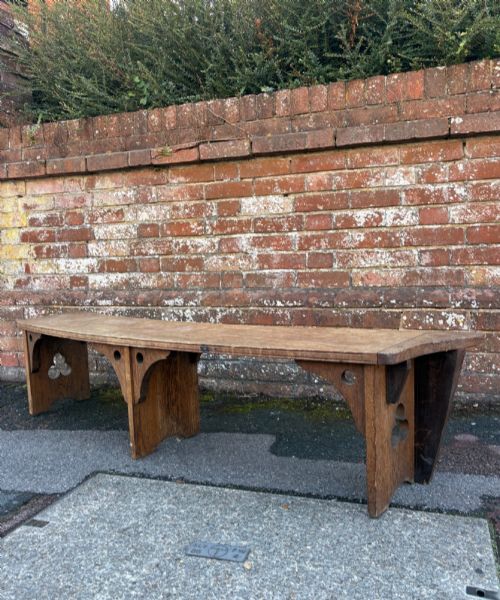
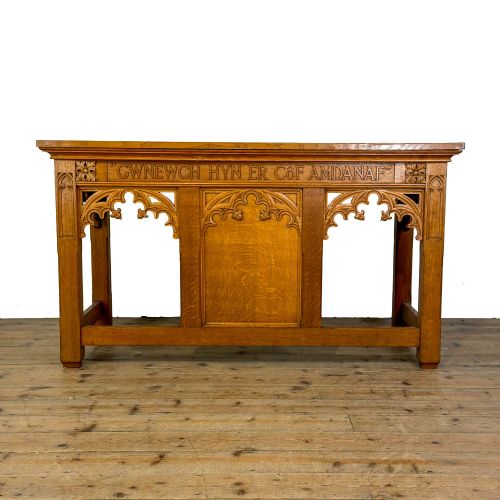
- A graphic ornament composed of three overlapping or adjacent rings or lobes. Craftsmen often pierced this shape into the wooden supports of tables and seating.
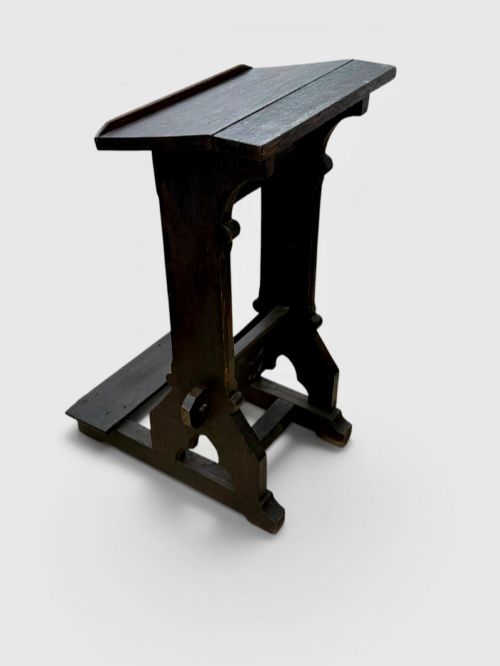
- Prie-Dieu
- A specialised prayer desk equipped with a sloping shelf for books and a lower kneeling platform. These ecclesiastical forms are typically constructed from solid oak.
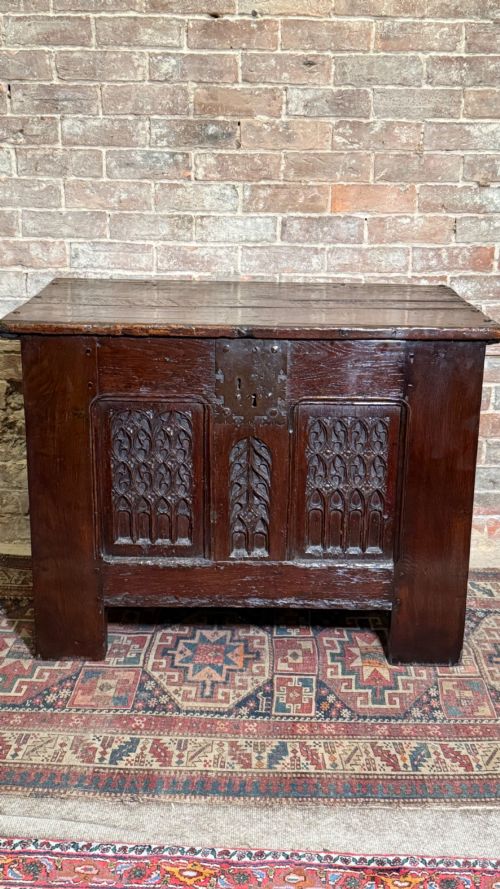
- Coffer
- A heavy wooden chest traditionally used for storage and transport of valuables. Medieval and revival examples utilise robust oak panels joined at the corners.
Gothic Oak Furniture: Frequently Asked Questions
What defines Gothic oak furniture?
These pieces combine heavy timber construction with medieval architectural motifs such as pointed arches, trefoils, and linenfold panels. They emerge primarily through 19th-century revival movements.
Craftsmen drew directly from ecclesiastical and secular medieval buildings to translate monumental stone elements into domestic woodwork.
Where were these pieces used?
Original contexts included churches, chapels, and grand Victorian reception rooms designed to mimic medieval halls. Domestic interiors adopted these heavy forms for striking visual weight.
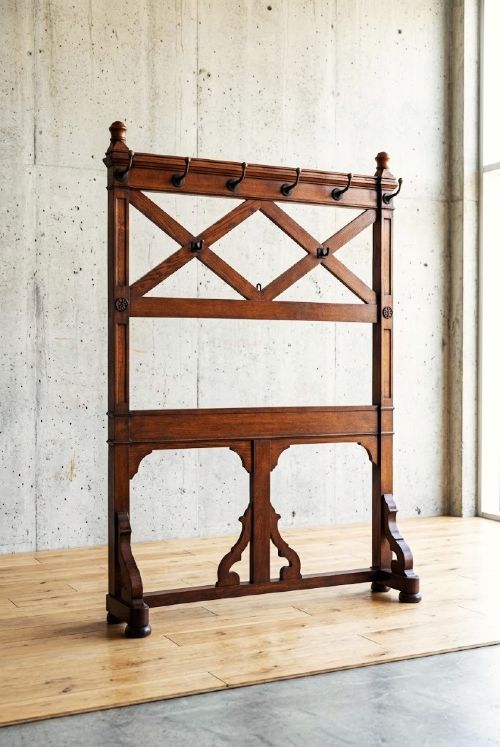
Hallways, libraries, and dining spaces frequently housed large sideboards, bench seats, and coat stands.
How do I care for antique oak?
Maintain solid oak surfaces by applying occasional traditional wax polish to nourish the grain. Avoid placing pieces near direct heat sources to prevent wood splitting.
Keep humidity stable within the room to protect both the structural timber and any integrated leather, fabric, or metal hardware.