


Oak Step Ladder
These oak step ladder pieces combine practical utility with clever folding mechanics, offering both a sturdy climb and an engaging piece of library furniture.
Oak Step Ladder
When you search for an oak step ladder, you find pieces designed to reach high shelves in domestic and institutional libraries, often taking the form of library steps or standing ladders. The evidence shows these pieces span from the Georgian period through the Victorian, Edwardian, and early twentieth century.
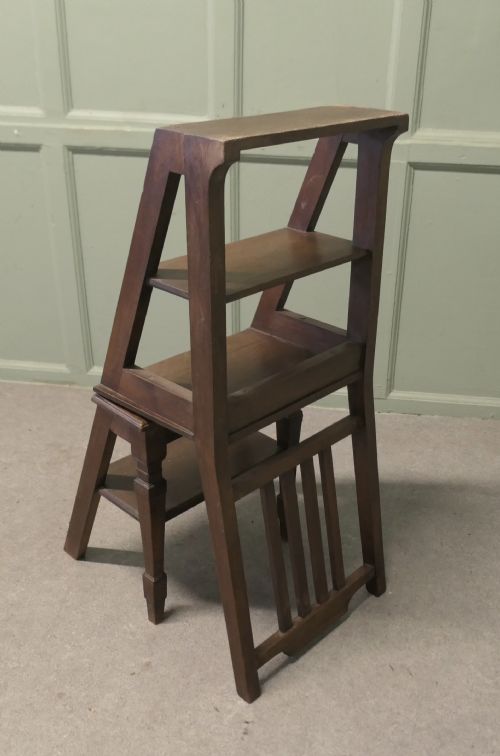
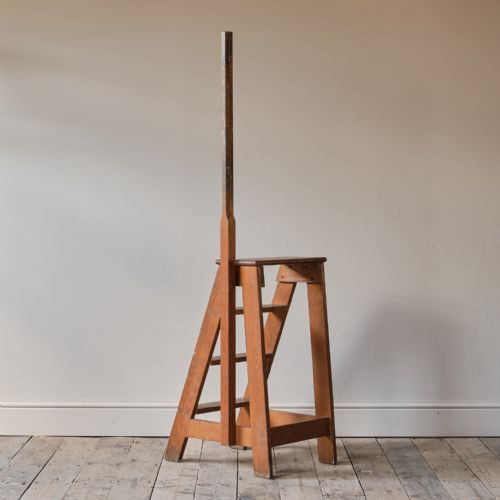
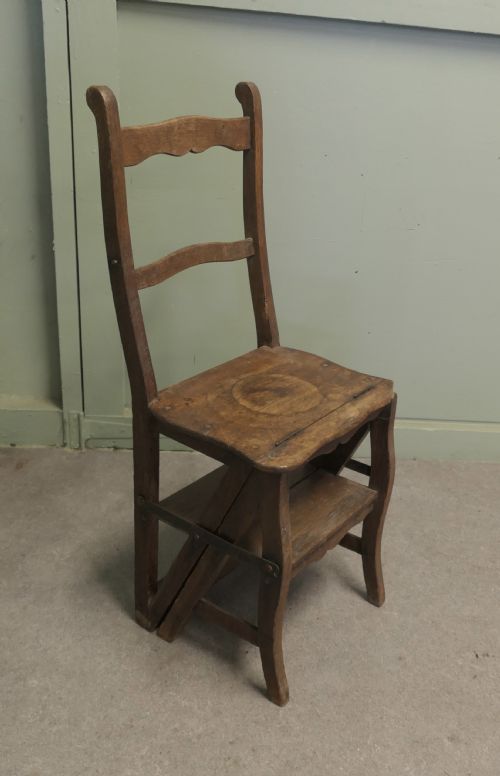
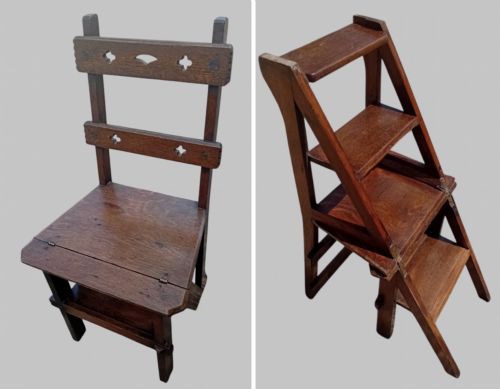
The most common versions met on this page are metamorphic library chairs that transform from a seat into a flight of steps, alongside traditional A-frame steps, folding shop steps, and tall library ladders. Stylistic influences across these forms include Gothic Revival, Arts & Crafts, Aesthetic Movement, and French Country designs.
Makers utilised solid oak, frequently paired with brass and iron hardware, while some examples incorporate leather elements. The construction serves the dual purpose of domestic seating and safe elevation.
How they were made
Makers constructed these pieces primarily from solid oak, sometimes referred to as golden oak, complemented by hardwood secondary timbers. Structural integrity relies on sturdy joinery to support weight during use as a ladder or a chair.
Hardware components like brass hinges, iron brackets, and pivotal mechanisms allow metamorphic forms to shift smoothly between configurations. Selected examples feature leather upholstery on the seating surfaces of convertible chair steps.
Listings feature oak alongside brass, iron, and leather materials across 19th-century, Victorian, Edwardian, and 1920s periods.
What varies in quality
The distinction between standard examples and superior pieces rests on the complexity of the metamorphic mechanism and the ingenuity of the design. Simpler fixed A-frame ladders contrast with sophisticated chairs that convert seamlessly with clever pivoting hinges.
Proportion and material selection also define the grade of a piece, with larger proportions and richly grained golden oak or deliberate Gothic Revival and Arts & Crafts detailing marking out finer examples.
The Oak Step Ladder Glossary
- Metamorphic
- Furniture designed to transform from one object into another, such as a chair that converts into a flight of steps. This ingenious duality was particularly popular in nineteenth-century libraries.
- A-frame
- A freestanding folding ladder configuration shaped like the letter A when open. This structure provides stability without needing to lean against a wall.
- Gothic Revival
- A nineteenth-century design style drawing on medieval architectural motifs such as pointed arches and heavy tracery. Pieces in this style often display dramatic vertical lines and carved details.
- Aesthetic Movement
- A late nineteenth-century design current emphasising visual beauty and craftsmanship over strict historical revival. It produced refined furniture with clean forms and subtle ornamentation.
Oak Step Ladder: Frequently Asked Questions
How do metamorphic library chairs work?
These dual-purpose pieces use concealed hinges and pivoting joints to unfold safely from a standard seating height into a stepped staircase. The transformation requires gentle manipulation of the upper section to reveal the treads beneath.
Most mechanisms rely on gravity and balanced wooden tracks to lock the frame securely into its chosen position. Users should inspect the pivot points to ensure smooth movement before converting the furniture.
Are these ladders safe to use?
Most antique library steps and folding ladders remain robust enough for gentle domestic elevation when placed on a flat surface. However, their primary value today is decorative and historical, so regular heavy climbing is discouraged.
Checking the stability of the iron or brass fixings helps ensure the frame holds firm. Lighter models, such as metamorphic chair steps, should be fully locked into configuration before any weight is applied.
How do I identify a Victorian piece?
Victorian examples typically display heavier timber dimensions, darker patination, and robust structural joinery. Stylistic markers such as Gothic Revival tracery or carved Aesthetic Movement details frequently appear on nineteenth-century pieces.
Examining the metal hardware and the wear patterns on the oak treads offers further clues to age. Machine-cut screws or standard iron brackets often point towards the later Victorian and Edwardian eras.
Where were these pieces used originally?
Libraries in large country houses, private studies, and institutional buildings formed the primary home for these folding ladders and step chairs. Their compact footprint suited rooms with extensive floor-to-ceiling book shelving.
Commercial settings also utilised folding shop steps for reaching high merchandise. Over time, these functional items transitioned into versatile living room and hallway furniture.