



Dark Oak Steps
Dark oak steps bring solid utility and clever transformation to interiors, uniting rich timber with practical climbing forms.
Dark Oak Steps
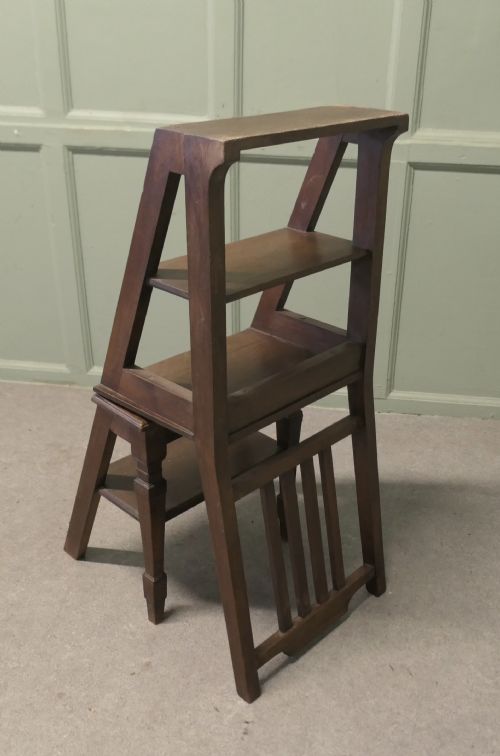
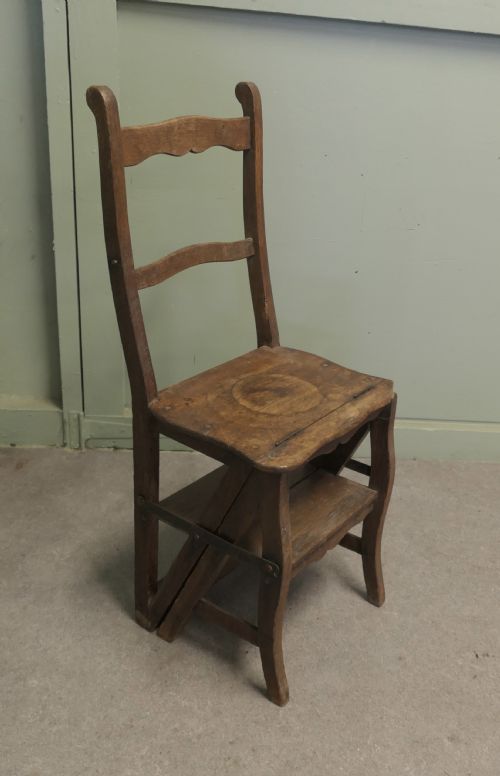
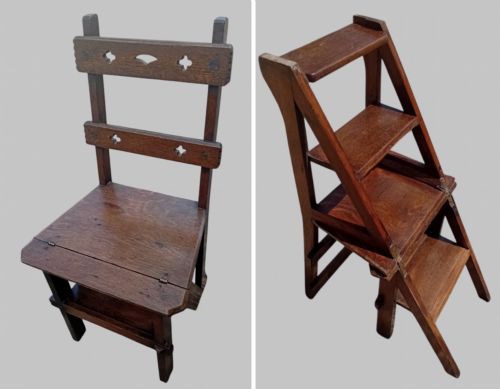
Dark oak steps encompass sturdy library equipment, metamorphic chairs, and rustic ladder forms designed to reach high shelves. When you search for dark oak steps, you encounter functional timber constructions from the eighteenth, nineteenth, and early twentieth centuries. These pieces range from simple A-frame library steps to dual-purpose folding chairs that convert into ladders.
The selection on this page relies heavily on nineteenth-century craftsmanship, alongside Georgian examples and pieces from the Edwardian era and the nineteen-thirties. You will find forms associated with Gothic Revival and Arts and Crafts styles, reflecting domestic library utility and institutional book storage. Solid oak and hardwood dominate the selection, often complemented by iron or brass hinges and fittings.
Materials and construction
Construction relies upon solid oak and general hardwood, utilising timber boards shaped into treads and supporting frames. Makers employed traditional joinery techniques to ensure stability under weight, housing treads securely within sturdy vertical uprights or folding side arms.
Metal components such as iron and brass feature as functional hinges, locking mechanisms, and pivoting pins that allow metamorphic chairs to shift smoothly between seating and ladder configurations. The wood surfaces show deep brown tones developed through natural ageing and applied finishes.
Listings span the eighteenth, nineteenth, and early twentieth centuries, featuring solid oak, elm, walnut, brass, and iron.
Assessing quality and craftsmanship
Quality in these steps lies in the tightness of the joinery and the smoothness of the mechanical action in metamorphic designs. Superior examples maintain rigid stability when extended, showing careful attention to the grain and structural integrity of the solid timber.
The distinction between standard utility items and finer pieces rests on the refinement of the woodwork, such as chamfered edges, Gothic detailing, or the cleverness of the pivoting design. Heavy hardware integration without looseness indicates superior execution by the maker.
The Dark Oak Steps Glossary
- Metamorphic
- Furniture designed to transform from one object into another, such as a chair turning into a set of library steps. This mechanism requires precise hinges and balanced weight distribution.
- A-frame
- A structural shape resembling the capital letter A, providing a wide base for stability on library steps. This design prevents tipping during use.
- Gothic Revival
- A nineteenth-century style drawing inspiration from medieval architecture, characterised by pointed arches and robust framing. Pieces in this style often feature heavy oak construction.
- Arts and Crafts
- A design movement emphasising handcraftsmanship and simple, honest construction using natural materials like solid oak. Objects from this period prioritize visible joinery and utility.
Dark Oak Steps: Frequently Asked Questions
What are dark oak steps used for?
These steps provide safe access to elevated bookshelves in domestic libraries and studies. Many double as seating or decorative stands.
Their dual functionality made them popular space-saving solutions in historic homes.
How do metamorphic library steps work?
Metamorphic steps utilise hidden hinges and pivoting joints to shift between a chair and a ladder. You manually unfold or flip the sections to lock them into the desired configuration.
This ingenious engineering allowed libraries to maximise floor space without sacrificing seating.
What periods do these steps date from?
The pieces span the Georgian period, the nineteenth century, and early twentieth-century movements like Arts and Crafts. You will also find examples from the Edwardian era and the nineteen-thirties.
Each era brought distinct decorative details to the standard timber frame.
How do I care for antique oak steps?
Maintain the wood by applying appropriate wax polish periodically to nourish the dry grain. Avoid placing them near direct heat sources to prevent timber splitting.
Regularly check any brass or iron fixings to ensure they remain secure.