
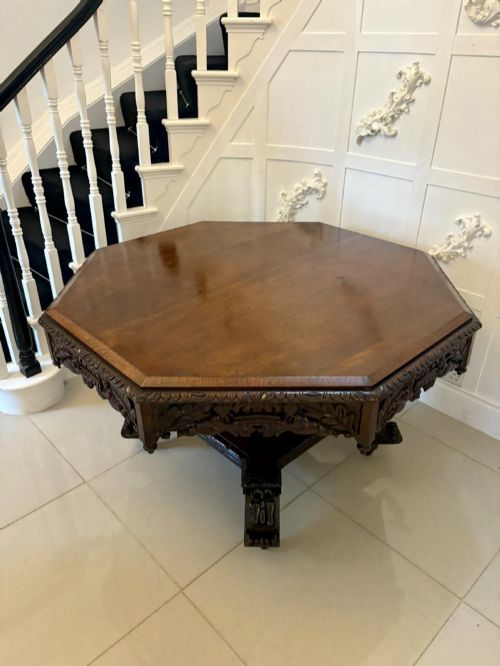
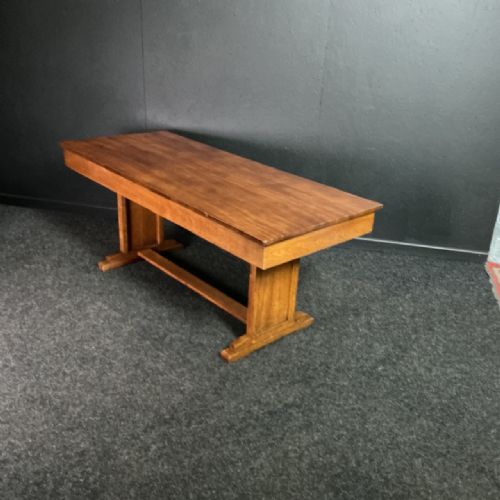
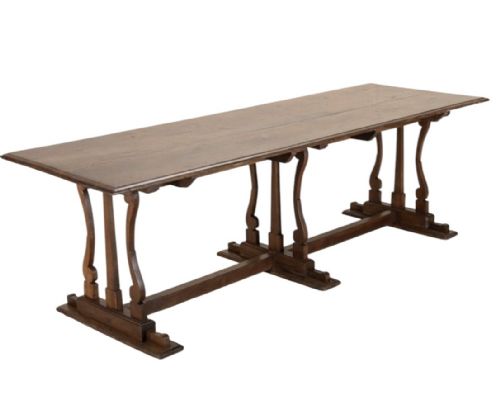


Gothic Oak Dining Table
A gothic oak dining table brings medieval architectural weight and substantial timber into a modern interior.
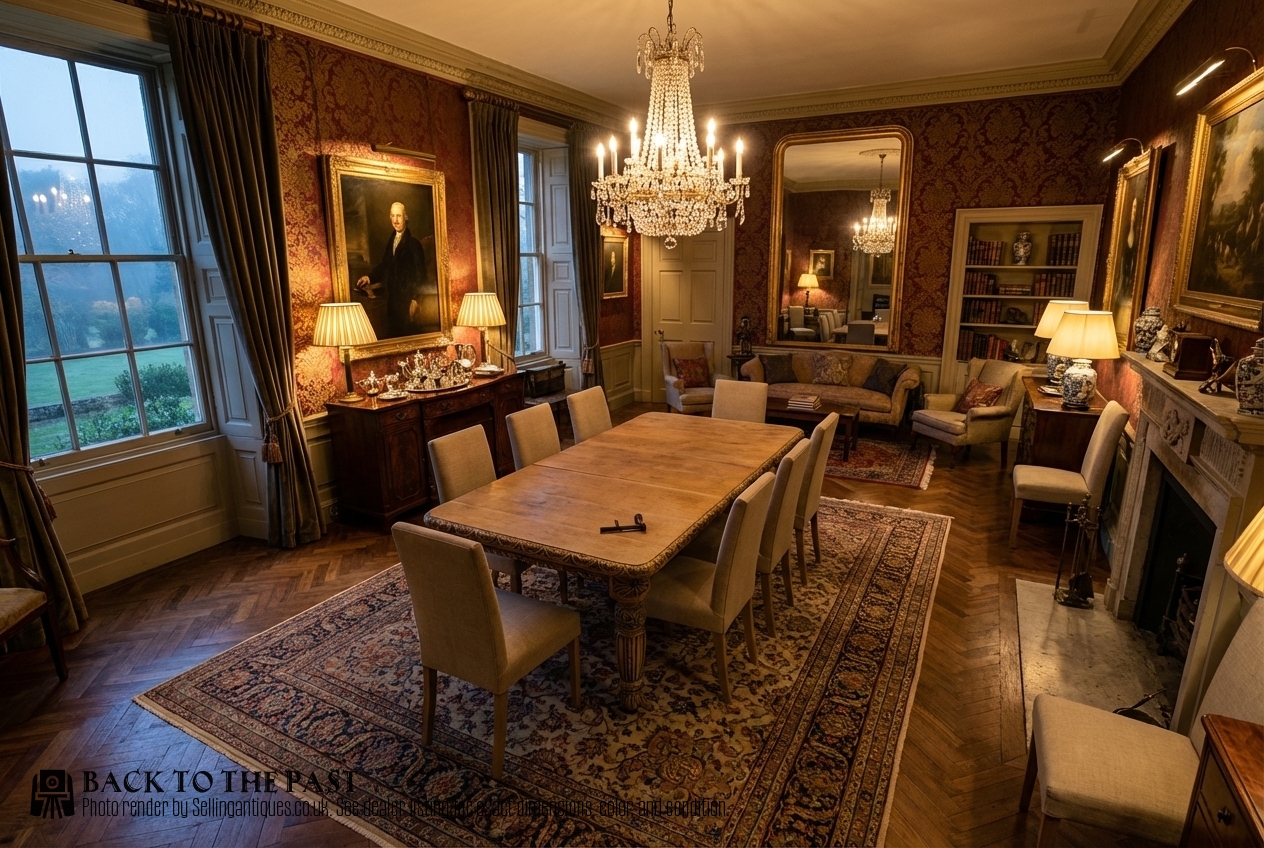
Gothic Oak Dining Table
A gothic oak dining table combines heavy timber construction with pointed arch motifs, tracery, and structural heft drawn from medieval buildings. These pieces appear primarily in nineteenth century iterations, including Victorian Gothic Revival, Arts and Crafts, and Jacobean Revival movements.
The versions most commonly met on this page take the form of refectory, monastery, and trestle tables designed to seat multiple diners. Makers adapted historical architecture for domestic spaces, producing substantial dining furniture alongside centre and library tables.
Origins span English, Scottish, and continental workshops, ranging from country kitchen pieces to monumental boardroom and refectory tables spanning up to eighteen feet. Oak forms the primary timber, occasionally accompanied by walnut or bleached oak surfaces.
How they were made
Cabinet makers built these tables using solid oak planks for the tops and thick structural members for the legs, stretchers, and trestles. Iron and brass hardware provided reinforcement for extending mechanisms, hinges, and corner brackets.
Carving defines the decoration, utilising deep relief work to render green men, tracery panels, and foliate motifs by hand. Timber was selected for grain pattern and strength, sometimes bleached or finished to highlight the natural figure of the oak.
Several tables stare back at dinner guests through intricate carved green men peering out from the timber framework.
What varies in quality
The standard of carving distinguishes standard production furniture from exceptional custom commissions. Crisp, deep relief work executed by skilled hands carries greater visual presence than shallow or mechanically routed detail.
Proportion and timber selection dictate the integrity of the piece, with dense old growth oak providing superior stability over lesser boards. Original mechanisms on extending tables and untouched patination across the top surfaces separate well preserved examples from heavily altered pieces.
Sir Robert Lorimer
The Gothic Oak Dining Table Glossary
- Refectory table
- A long, narrow dining table traditionally used in monastic dining halls. These examples feature substantial length supported by central stretchers or trestle bases.
- Gothic Revival
- An architectural and decorative style drawing inspiration from medieval forms. This aesthetic reappears strongly across Victorian furniture design through pointed arches and heavy mouldings.
- Green Man
- A sculptural motif depicting a human face carved with leaves or vines issuing from the mouth. It symbolizes rebirth and appears frequently in nineteenth century architectural woodcarving.
- Trestle table
- A table consisting of two or more support frames connected by a horizontal beam or stretcher. This construction method allows maximum legroom along the length of the top.
- Arts and Crafts
- A design movement emphasising handcraftsmanship and traditional materials. Tables from this tradition favour honest joinery and minimal surface distraction over heavy ecclesiastical carving.
Gothic Oak Dining Table: Frequently Asked Questions
How do I seat ten people?
Look for extending refectory or wind out tables designed with extra leaves. These formats accommodate larger dining parties while maintaining structural stability.
Check the stretcher placement underneath to ensure guests have adequate legroom when seated along the full length of the sides.
Are these tables suitable for daily use?
Solid oak construction makes these tables exceptionally durable for everyday family dining and heavy kitchen use. The dense timber withstands regular activity.
Use appropriate heat mats and placemats to protect the historic polish and timber surface from daily wear and moisture.
How do I date a gothic oak table?
Examine the timber preparation, tool marks on the underside, and the specific manifestation of the revival style. Nineteenth century pieces often blend Gothic motifs with Victorian or Arts and Crafts proportions.
Extending mechanisms, screw types, and secondary woods inside the frame offer further clues to the manufacturing decade between eighteen fifty and nineteen thirty.
What is a monastery table?
Monastery tables are heavy, long dining surfaces inspired by communal tables found in medieval religious houses. They typically feature thick plank tops and robust trestle or refectory bases.
Nineteenth century cabinet makers recreated this monastic aesthetic for large Victorian dining rooms and institutional libraries.