




Gothic Oak Clock
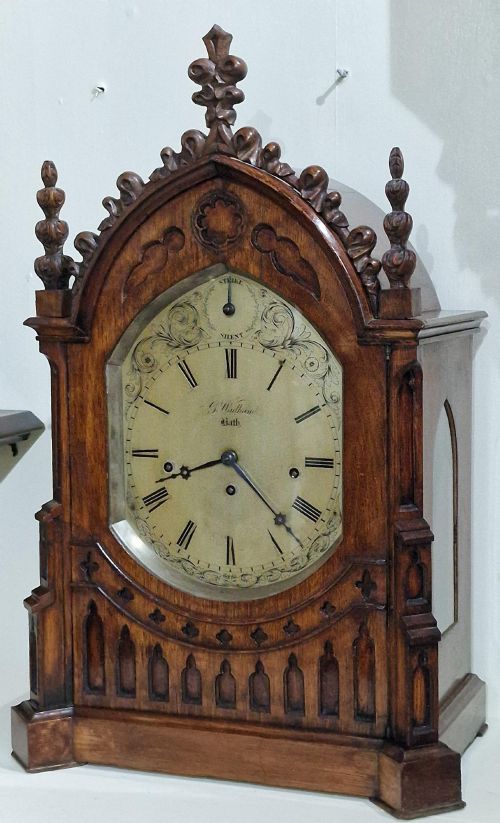
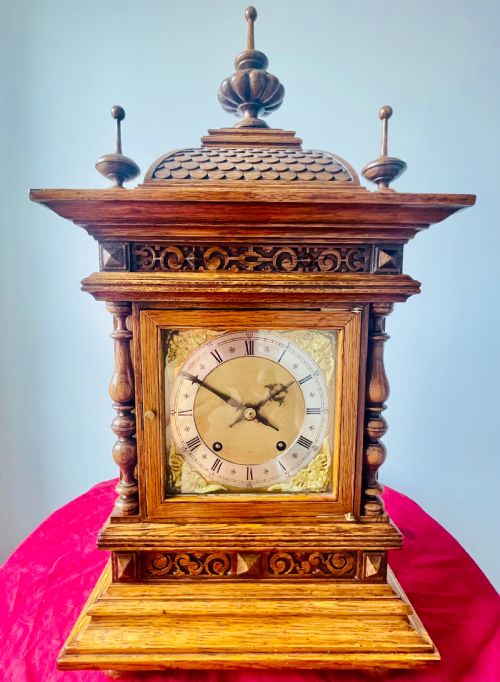
These gothic oak clock examples unite architectural verticality and rich timber grain, offering a commanding presence for any serious interior.
Gothic Oak Clock
A gothic oak clock unites architectural severity with sturdy timber construction, drawing upon medieval design motifs translated through nineteenth century revivalism. Buyers hunting for a gothic oak clock seek substantial architectural presence, often expressed through pointed arches, heavy mouldings, and deeply carved surface decoration. The examples met on this page span table-standing bracket formats, wall-hung variations, and taller floor-standing longcase designs.
The material palette centres firmly upon oak, frequently paired with contrasting brass mounts, glass viewing panels, and occasionally stained wood elements. Surviving items typically date from the Victorian era and the later nineteenth century, though earlier Georgian and Edwardian iterations appear alongside them. These pieces function simultaneously as reliable timekeepers and as dominant focal points within domestic spaces.
Materials and construction
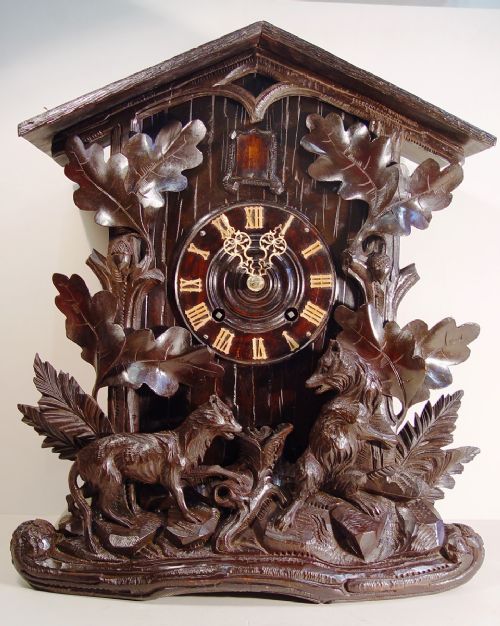
Makers utilised solid oak alongside burl veneers and secondary timbers, shaping the cases with traditional joinery methods suited to heavy woods. Carved ornamentation was executed by hand, yielding deep relief work depicting foliage, tracery, and figurative elements.
Movements were constructed from brass and steel, incorporating complex gear trains for striking mechanisms, bells, and musical chimes. Dial faces combined brass chapter rings, enamel cartouches, and ceramic components, protected behind bevelled or plain glass doors.
Some gothic oak clock models hide tiny carved wooden kings inside their towering wooden cases.
Distinguishing finer examples
Quality reveals itself in the crispness of the hand-carved woodwork and the structural integrity of the timber case over decades of environmental shifts. Superior pieces display harmonious proportions where the architectural elements, such as cathedral arches and tracery, align precisely with the scale of the clock body.
Internally, the sophistication of the movement dictates worth, with triple fusee and quarter-striking mechanisms representing superior craftsmanship compared to simpler time-only setups. Furthermore, the originality of the dial, hands, and mounting hardware preserves the integrity that collectors prize above surface restoration.
Winterhalder and Hofmeier·George Wadham·Beha·W Davis and Sons
The Gothic Oak Clock Glossary
- Fusee
- A conical pulley used in spring-driven clocks to ensure even tension as the mainspring unwinds. This mechanism improves timekeeping accuracy across the power reserve.
- Gothic Revival
- An architectural and decorative movement reviving medieval forms from the mid-eighteenth through the nineteenth centuries. It relies heavily on pointed arches, trefoils, and structural mass.
- Bracket clock
- A portable table or shelf clock originally designed to sit upon a dedicated wall bracket. Many examples retain this classification despite resting directly on furniture surfaces.
- Longcase clock
- A tall pendulum clock housed in a wooden case featuring a trunk and a hood. These instruments are frequently referred to colloquially as grandfather or grandmother clocks.
- Trifid
- A decorative foot style split into three lobes, occasionally seen on period furniture and clock bases. It provides a stable footing for heavier timber enclosures.
Gothic Oak Clock: Frequently Asked Questions
Where should I place a gothic oak clock?
These clocks demand prominent placement where their architectural lines can command the room, such as a sturdy mantelpiece, a dedicated side table, or a clear stretch of wall.
Ensure the location remains stable and free from excessive vibrations or direct sunlight to protect both the mechanical movement and the seasoned oak timber.
How do I identify the period of a clock?
Dating relies upon examining the style of the case ornamentation, the construction techniques used on the interior chassis, and the signature styles of the dial design.
Nineteenth-century revival pieces often feature exaggerated gothic arches and machine-assisted carving alongside traditional hand finishing, distinguishing them from genuine medieval work.
Do these clocks require professional setup?
Complex movements featuring multiple trains, bells, or chimes often benefit from professional installation to ensure the beat is even and the pendulum hangs true.
A specialist can also lubricate aged metal components safely without disturbing the historical integrity of the interior mechanism.