

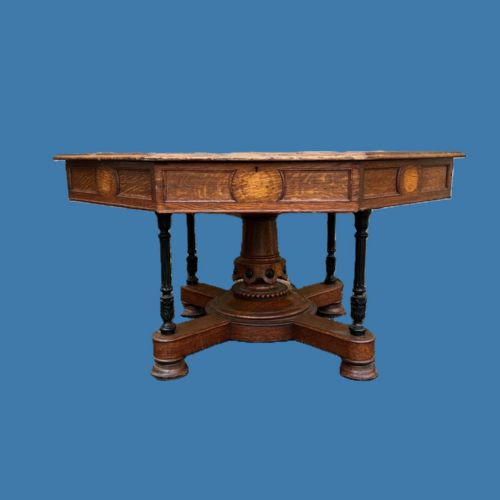


Gothic Library Table
When you search for a gothic library table, you enter a world of heavy carved timber and architectural ornament built for serious study.
Gothic Library Table
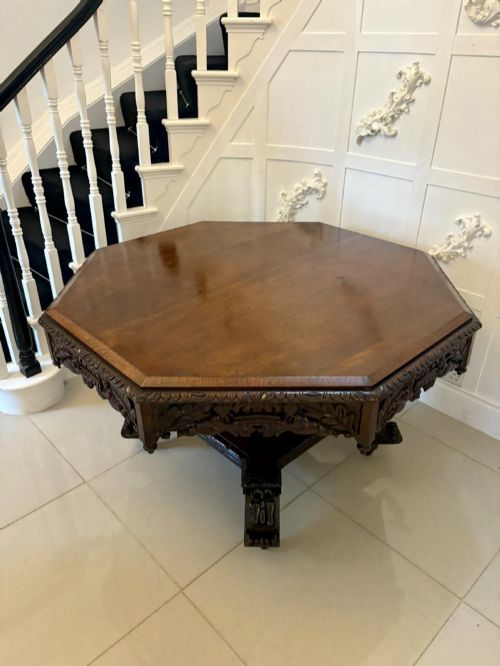
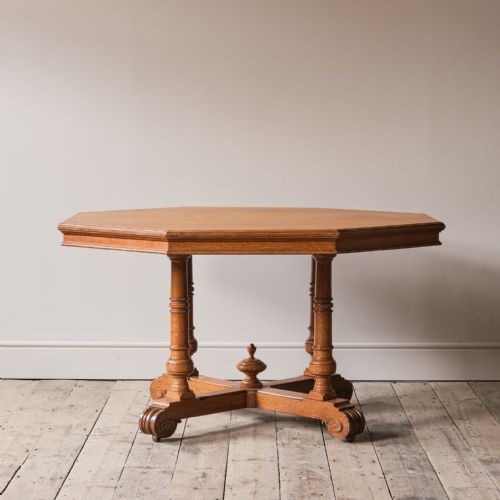
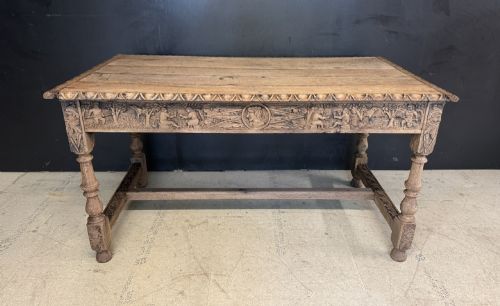
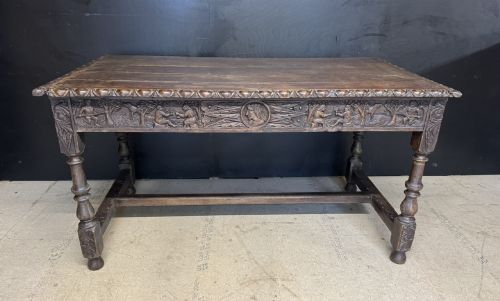
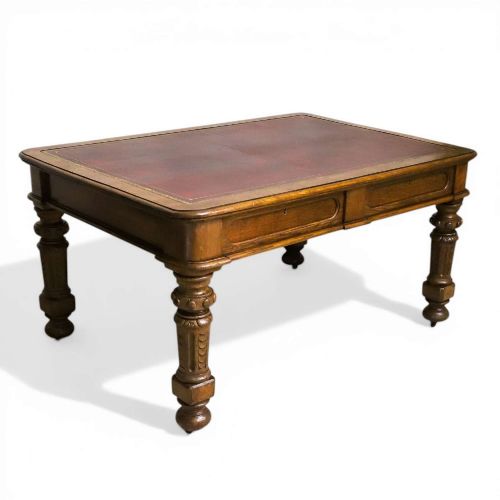
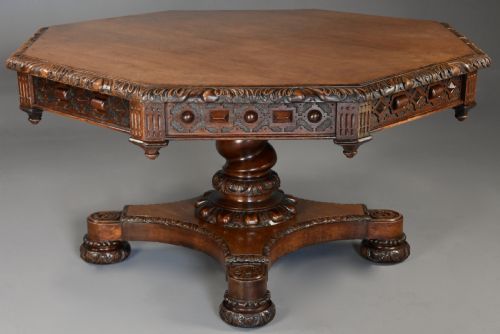
A gothic library table is a substantial piece of nineteenth-century furniture designed for scholarly use, typically standing on robust legs with heavy carving. The version you are most likely to meet on this page is the Victorian Gothic Revival oak table, often featuring an octagonal or rectangular top with a fitted leather writing surface.
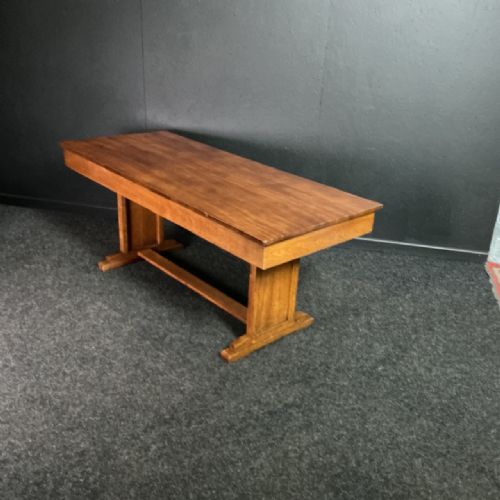
These pieces encompass centre tables, writing desks and library tables spanning the nineteenth century, with strong representation from the eighteen-sixties and eighteen-seventies. They range from simple pitch pine examples to heavily carved architectural forms influenced by Elizabethan and Jacobean styles.
How They Were Made
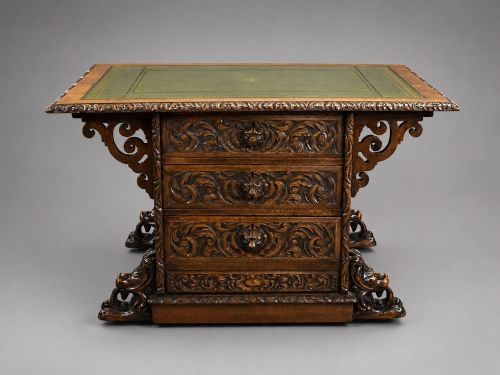
Makers relied primarily on solid oak, walnut and mahogany, frequently incorporating tooled Moroccan leather inset tops and brass hardware. Secondary timbers such as pine appeared in structural elements, while decorative details drew on rosewood, coromandel inlay and ebonised wood.
Listings demonstrate a strong preference for nineteenth-century oak, complemented by mahogany and walnut forms.
What Varies in Quality
Quality rests in the crispness and depth of the timber carving, moving from mechanical factory work to confident, hand-chiselled architectural detail. Heavier, more substantial proportions and timber selection, such as burr oak or figured mahogany, elevate an example above standard utility pieces.
James Winter·Howard and Sons·W Williamson and Sons·Hindley
The Gothic Library Table Glossary
- Gothic Revival
- A nineteenth-century architectural and decorative movement drawing inspiration from medieval forms, pointed arches and structural tracery. This style defined much of the seating and case furniture produced for domestic libraries.
- Centre Table
- A freestanding table designed to be viewed from all sides rather than pushed against a wall. These pieces often feature octagonal tops and symmetrical pedestal bases.
- Reformed Gothic
- A later nineteenth-century design approach that simplified medieval ornament in favour of structural honesty and geometric clarity. It discarded excessive ecclesiastical carving for cleaner lines.
- Partners Desk
- A large double-sided writing table fitted with drawers on both long sides, allowing two people to work opposite one another. They frequently appeared in institutional and grand domestic libraries.
- Tooled Leather
- Leather treated with gold leaf or blind tooling impressions around the perimeter of a tabletop insert. It provided a durable writing surface for nineteenth-century studies.
Gothic Library Table: Frequently Asked Questions
What is a gothic library table?
A gothic library table is a nineteenth-century desk or centre table decorated with medieval architectural motifs like pointed arches, heavy mouldings and carved tracery. They were built to furnish domestic studies, public school libraries and grand reception rooms.
These tables typically feature solid oak or mahogany construction, often paired with inset leather writing surfaces and integrated drawers for storage. Their robust proportions reflect the serious scholarly pursuits of the Victorian era.
How do I date a gothic table?
Dating relies on identifying stylistic shifts between early nineteenth-century interpretations, mid-century Gothic Revival work, and later Reformed Gothic pieces. Examining the timber choice, construction methods and hardware helps narrow down the decade.
Earlier examples from the eighteen-thirties and eighteen-forties often show restrained classical proportions alongside Gothic detailing. By the eighteen-sixties and eighteen-seventies, carving became heavier and more pronounced, incorporating architectural elements directly inspired by Pugin.
Where were these tables used?
These tables anchored the Victorian library, study or institutional reading room, serving as the central workspace for writing and reading. Larger octagonal forms sat in the middle of a room, while rectangular writing desks stood against walls or operated as partners desks.
Their heavy construction suited public schools, administrative offices and the private residences of the wealthy. They were meant to project an atmosphere of erudition and permanence.
How do I care for the leather top?
Maintaining the inset leather surface involves keeping it clean from dust and applying a neutral leather balm periodically to prevent drying and cracking. Avoid using harsh chemical cleaners or excessive water during upkeep.
Protecting the surface from direct sunlight prevents the tooled gold leaf and the leather dye from fading over time. Gentle dusting with a soft, dry cloth preserves the original finish.