




Gothic Altar Table
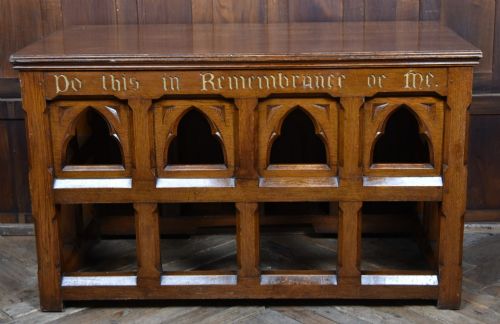
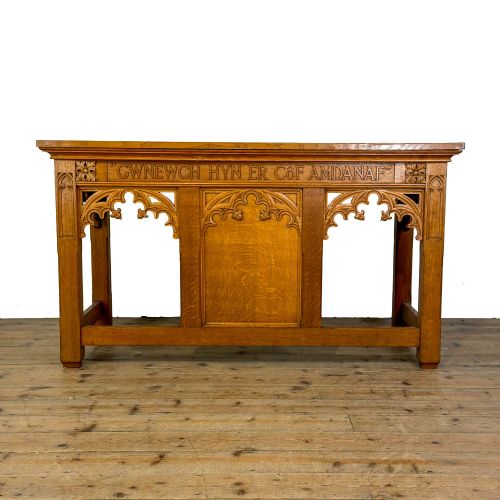
These gothic altar table examples bring ecclesiastical presence to domestic spaces through robust timber construction and pointed arch motifs.
Gothic Altar Table
A gothic altar table serves as a sturdy focal point in a room, drawing on ecclesiastical forms originating in churches and chapels. These pieces combine heavy timbers with traditional architectural details.
Buyers encounter solid oak and pine iterations frequently, often shaped by the Gothic Revival and Arts and Crafts movements. The selection includes dedicated altar tables alongside console and side tables influenced by ecclesiastical design.
Dating ranges primarily from the nineteenth century into the early twentieth century, spanning Victorian and later revival periods. Many items show direct links to church furnishings, serving as serving tables or console surfaces in modern interiors.
Factors that define quality
Quality rests upon the selection of timber and the execution of carved architectural details. Solid oak examples with crisp, hand-carved gothic tracery sit at the higher end compared to simpler pine utility pieces.
The integrity of the construction and the distinction of the design provenance elevate individual pieces. Items associated with known makers or specific architectural movements demonstrate superior joinery and stylistic cohesion.
Gothic Altar Table Retail Price Guide 2026
Typical asking prices for gothic altar table among the pieces listed under this phrase on Sellingantiques today, from the lower quarter to the upper quarter. They describe what is for sale here now, not the wider market.
Listings feature oak and pine predominantly, spanning the Victorian period through to the 1930s.
J and G W and Sons Ltd of Edinburgh·T Thomason and Co
The Gothic Altar Table Glossary
- Gothic Revival
- An architectural and decorative style drawing inspiration from medieval design. It dominates the ornamentation found on these tables and associated church furnishings.
- Ecclesiastical
- Relating to the Christian Church or its clergy. This term describes items originally manufactured for use in places of worship.
- Console Table
- A table fixed to a wall or standing against it, often featuring brackets or legs at the front. Several examples in this category function as narrow side or serving tables.
- Pitch Pine
- A dense, resinous softwood utilised in nineteenth-century joinery. It provides a durable surface for ecclesiastical tables.
Gothic Altar Table: Frequently Asked Questions
How are these tables used today?
These pieces function well as console tables in hallways or as serving surfaces in dining rooms. Their narrow proportions make them adaptable for display spaces.
They provide a strong architectural anchor against plain walls, contrasting effectively with modern interiors through their historic timber grain.
What woods were used?
Oak and pine form the primary structural materials for these tables. Solid oak provides dense durability and deep colouration.
Pine appears frequently in secondary pieces and provincial church furniture, often finished to resemble heavier hardwoods.
How do I date these pieces?
Dating relies on timber characteristics, construction joints, and stylistic markers from the nineteenth and early twentieth centuries. Victorian revival pieces often display characteristic machine-sawn elements alongside hand finishing.
Comparing the tracery and proportions to documented church catalogues helps narrow down the period of manufacture.
Are these pieces from actual churches?
Many examples originated in chapels, churches, and ecclesiastical workshops before entering the domestic market. Their robust build reflects their original purpose in supporting heavy liturgical items.
Some pieces were created in domestic revival styles that simply adopted church proportions for secular halls.