





Gothic Library Armchairs
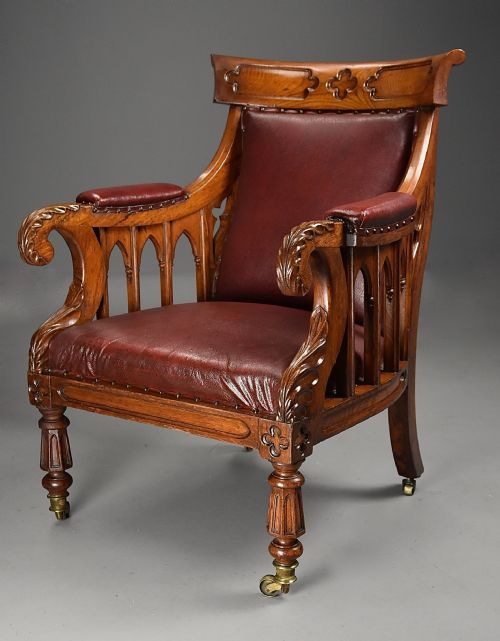
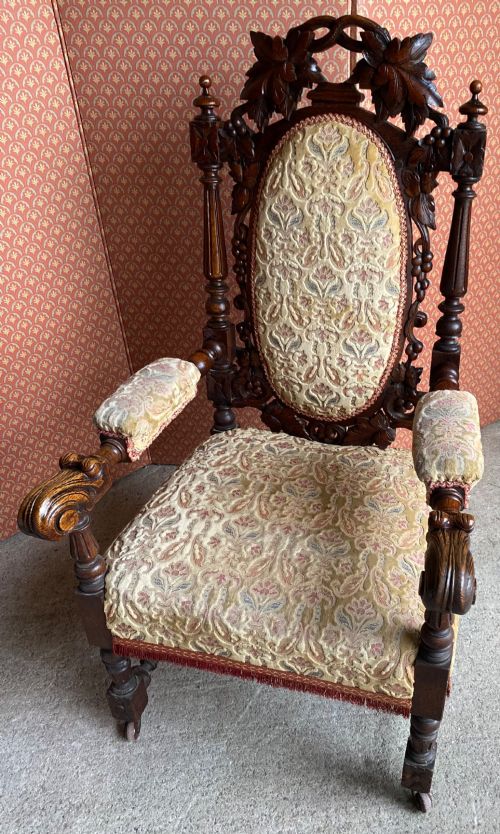
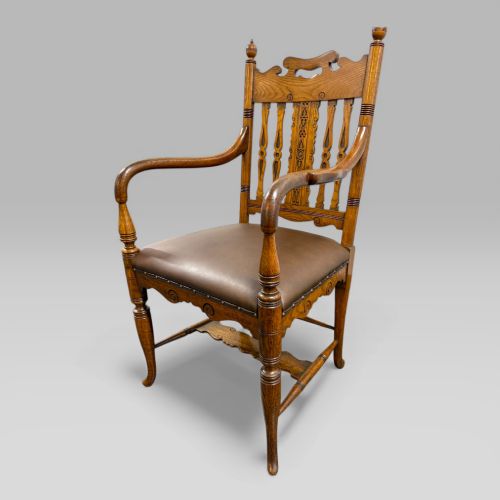
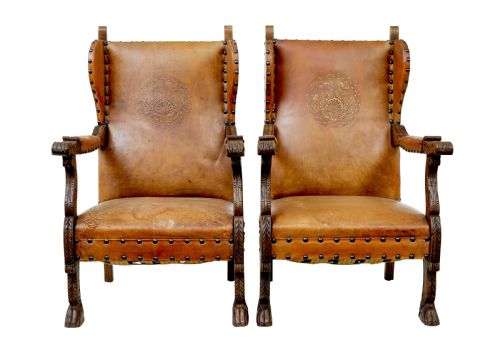
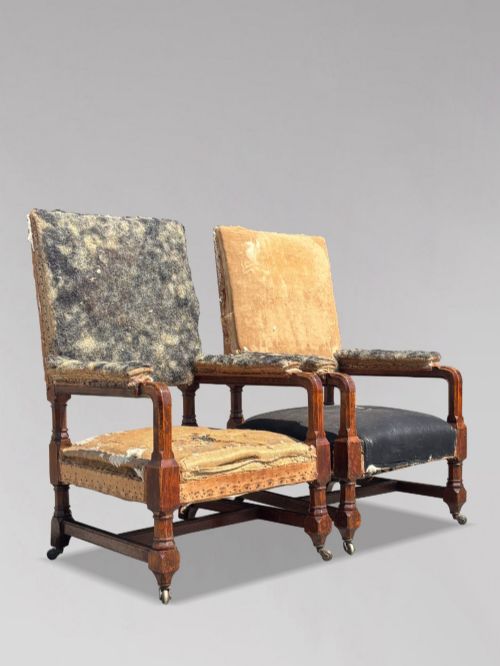
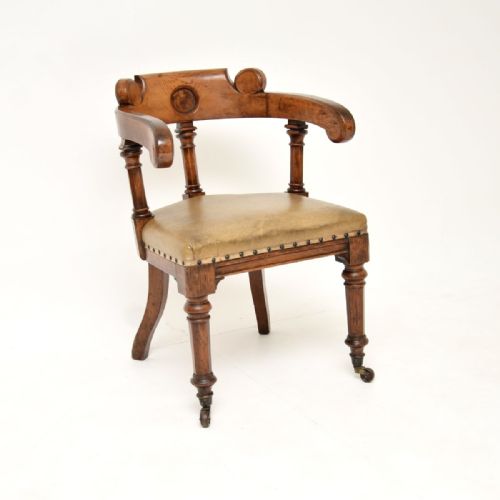
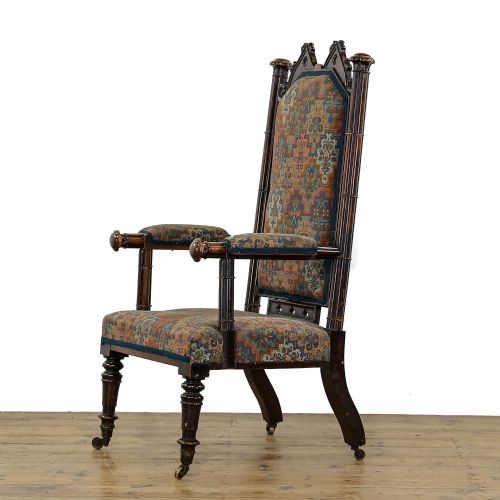
These gothic library armchairs bring heavy timber, pointed arches and leather upholstery straight into a study or reading room.
Materials and construction
Oak dominates the evidence, appearing in solid golden tones, carved panels and heavy cross-frames. Walnut and rosewood also provide dark, dense timber for carved crest rails and structural supports.
Upholstery relies on embossed leather, buttoned hides and textile panels fixed with brass details or bone buttons. Carvers utilised hand tools to render Green Man motifs, hounds, fluting and architectural tracery directly into the wood.
Judging the range
Quality rests on the depth and ambition of the carving on the oak, walnut or rosewood frame. Pieces with documented attribution to major designers or specific provenance command greater attention.
The choice of upholstery materials, from plain hide to embossed and buttoned leather, sets the finer examples apart. Heavier proportions and architectural details like cross-frames and carved crests elevate individual chairs.
Gothic Library Armchairs Retail Price Guide 2026
Typical asking prices for gothic library armchairs among the pieces listed under this phrase on Sellingantiques today, from the lower quarter to the upper quarter. They describe what is for sale here now, not the wider market.
Listings feature eighteenth-century pieces alongside nineteenth-century Victorian works, extending through the Arts and Crafts movement into the twentieth century.
Gillows·Bruce James Talbert·A.W.N. Pugin·Charles Bevan·Richard Hicks Bridgens
The Gothic Library Armchairs Glossary
- Gothic Revival
- An architectural and decorative style drawing on medieval forms, pointed arches and structural tracery. This aesthetic defined much nineteenth-century furniture production.
- Throne Chair
- A tall, imposing armchair with a high back and substantial arms designed to dominate a room. These large seats often feature extensive carving.
- Cross-Frame
- A seating structure formed by intersecting diagonal timbers that support the seat and arms. This X-shaped arrangement provides geometric stability.
- Metamorphic
- Furniture engineered to transform into another object, such as an armchair that folds out into library steps. These dual-purpose items combined utility with clever joinery.
- Crest Rail
- The top horizontal member of a chair back, frequently carved with motifs, linenfold panels or coats of arms.
Gothic Library Armchairs: Frequently Asked Questions
Where did these chairs originally sit?
These seats belonged in nineteenth-century libraries, studies and private reading rooms where heavy oak furniture projected status and learning.
Owners sat in them to read weighty volumes, write letters or conduct business at large partners desks.
Are pairs common?
Makers often produced these substantial seats in pairs for symmetrical placement beside a fireplace or flanking a large library desk.
Matching sets also appeared in grand halls and large reception rooms.
How do I date a Victorian gothic chair?
Look to the timber selection, such as golden oak or dark walnut, combined with the sharpness of the carved architectural details.
Documentation, stamps or attribution to known nineteenth-century workshops help narrow the decade of production.
What is a metamorphic library chair?
A metamorphic library chair is a dual-purpose piece that transforms from a comfortable seat into a set of steps for reaching high bookshelves.
This ingenious engineering allowed scholars to access tall bookcases without moving heavy equipment across the room.