

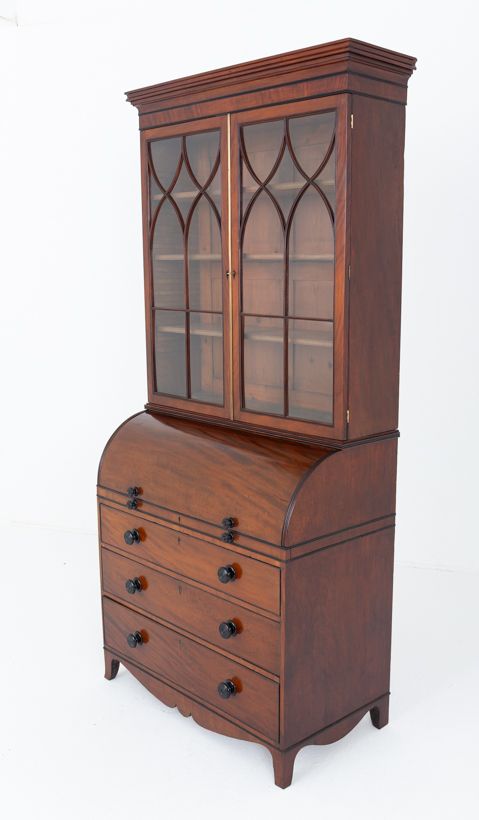
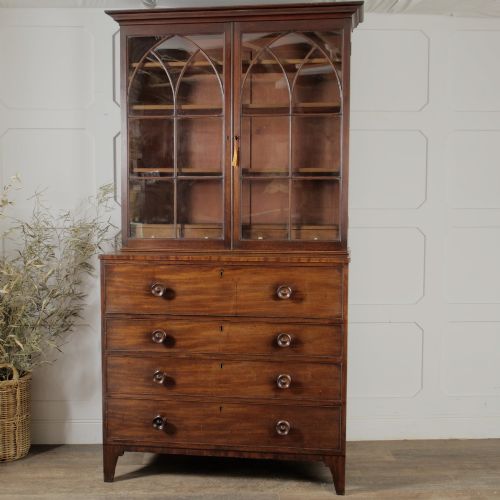

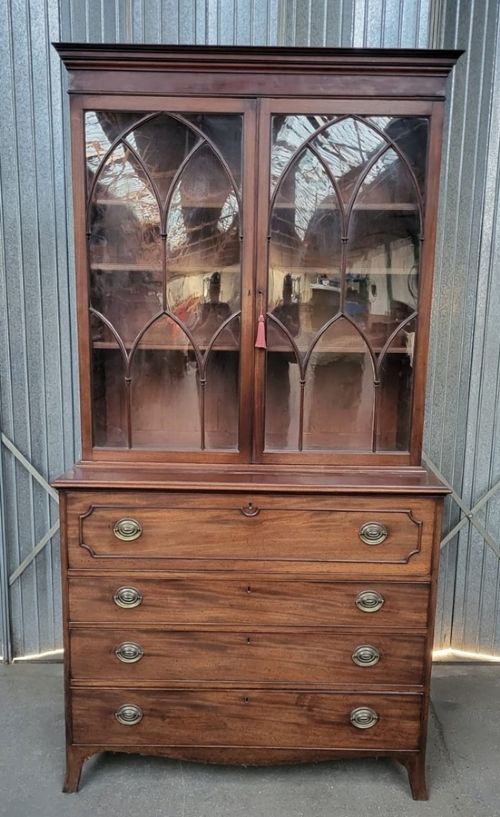
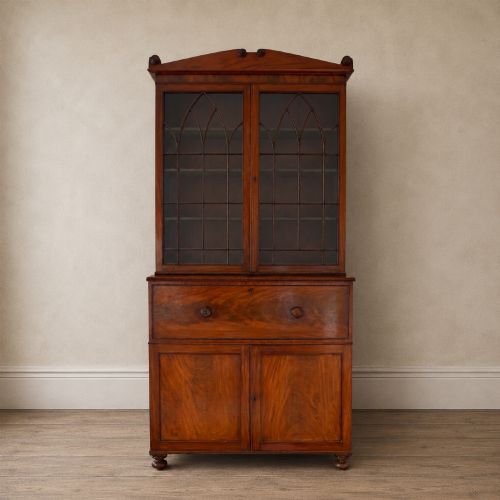
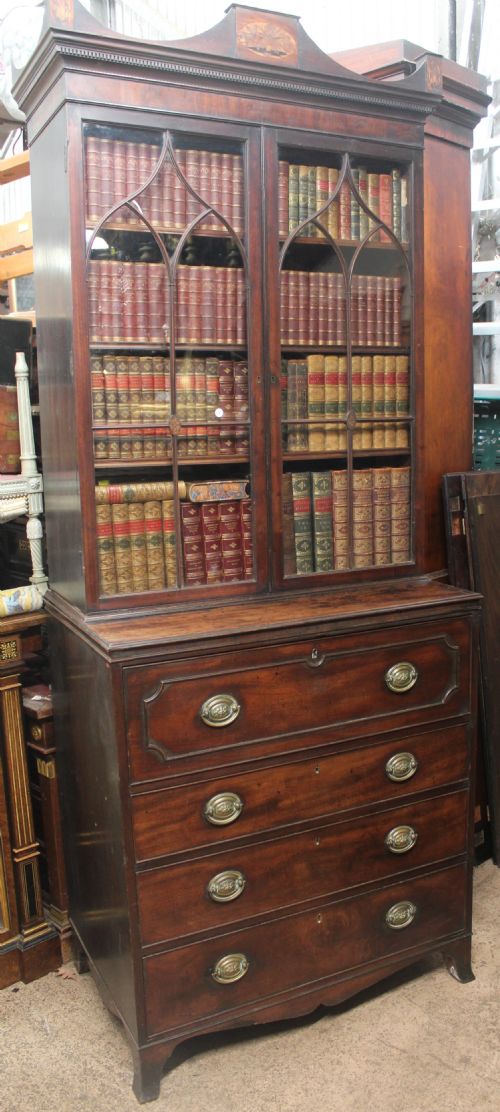
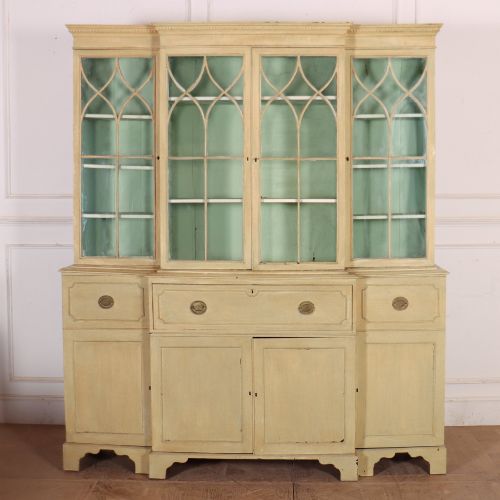
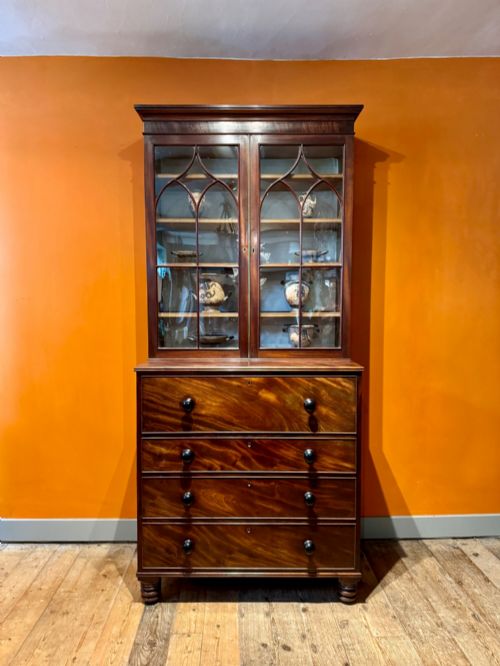


Gothic Glazed Bureau Bookcase
These gothic glazed bureau bookcase pieces combine fitted writing compartments with upper display shelving behind glass doors, offering both storage and a dedicated workspace.
Gothic Glazed Bureau Bookcase
A gothic glazed bureau bookcase provides a drop-down writing flap concealing small drawers and pigeonholes below tall glass-fronted shelves. The examples found here span the Georgian, Regency, and Victorian periods, alongside Edwardian interpretations.
Most pieces on this page are constructed from mahogany or yew wood, though oak variants also appear alongside painted surfaces. Makers during these eras utilised traditional timber framing methods to support the combined weight of books and fitted writing drawers.
The lower section usually functions as a chest or a cabinet beneath the bureau drawer, while the upper portion holds collections behind wooden or brass-panelled window frames.
Materials and construction methods
Cabinet makers constructed these large pieces primarily in mahogany and oak, often selecting figured timber veneers for the principal exterior surfaces. Brass hardware, including handles and hinges, secures the doors and drop-front mechanisms.
Glazing bars divide the upper glass panels into geometric patterns, supporting the window panes within the wooden framework. Leather inserts frequently line the interior writing surfaces of the fold-down drawers.
Gothic Glazed Bureau Bookcase Retail Price Guide 2026
Typical asking prices for gothic glazed bureau bookcase among the pieces listed under this phrase on Sellingantiques today, from the lower quarter to the upper quarter. They describe what is for sale here now, not the wider market.
Secret compartments hidden behind miniature pigeonholes reward anyone curious enough to probe the inner depths of a bureau.
Assessing quality and craftsmanship
Quality reveals itself in the selection of figured timber and the precision of the joinery within the internal pigeonholes and small drawers. Superior examples display careful grain matching across the fall-front writing surface and the cabinet doors below.
The intricacy of the glazing bar arrangement and the weight of the brass fittings further distinguish finer pieces from simpler utility items. The integration of the upper bookcase and the lower bureau reflects the original maker's skill in balancing proportion and structural integrity.
The Gothic Glazed Bureau Bookcase Glossary
- Secretaire bookcase
- A tall cabinet featuring a fitted writing drawer with a drop-front mechanism beneath upper shelving. This form combines the functions of a writing desk and a library bookcase.
- Glazing bars
- The narrow wooden strips that hold individual panes of glass within a cabinet door. These bars form the geometric patterns characteristic of bookcase doors.
- Fall-front
- A hinged writing flap that drops into a horizontal position for writing and lifts vertically to conceal the internal drawers when not in use.
- Figured mahogany
- Mahogany timber exhibiting attractive, natural grain patterns such as flame or curl. Cabinet makers reserved this wood for the most prominent exterior surfaces.
Gothic Glazed Bureau Bookcase: Frequently Asked Questions
What is a secretaire drawer?
A secretaire drawer is the pull-out writing compartment hidden behind a false drawer front on these pieces. It drops down to reveal pigeonholes and small drawers for correspondence.
This clever design allows the cabinet to function as a desk without requiring a separate writing table in the room.
How do I care for mahogany surfaces?
Mahogany furniture benefits from occasional application of traditional beeswax to nourish the wood and maintain its sheen. Avoid placing these pieces in direct sunlight or near heat sources to prevent timber cracking.
Gentle dusting with a soft, dry cloth preserves the finish without damaging the antique polish.
Are these bookcases modular?
Most of these pieces are constructed in two distinct sections, with the upper glazed bookcase resting upon the lower bureau cabinet. This separation made transportation and positioning possible in historical homes.
The two parts slot together securely under their own weight.
How do I distinguish Georgian from Victorian examples?
Georgian pieces generally exhibit restrained classical proportions and fine mahogany veneers. Victorian and later revival pieces often incorporate heavier Gothic or ornate decorative elements.
Construction details and secondary woods inside the drawers also help confirm the period of manufacture.