
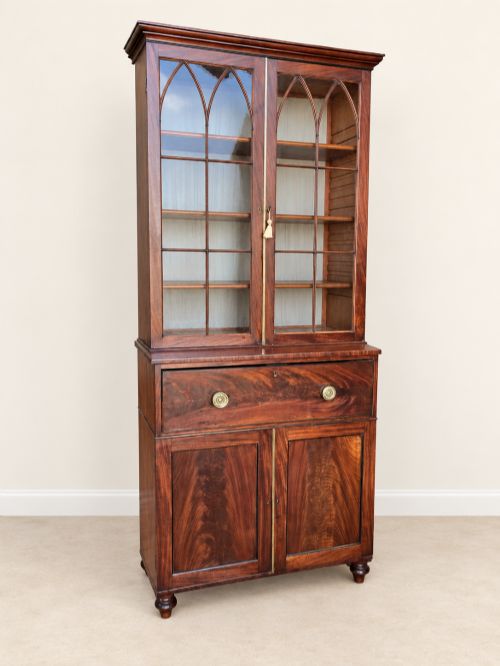
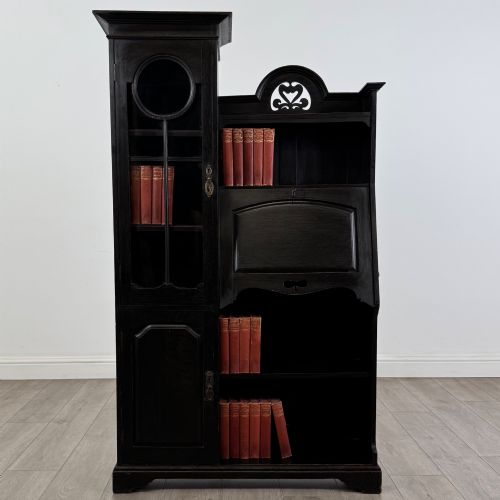
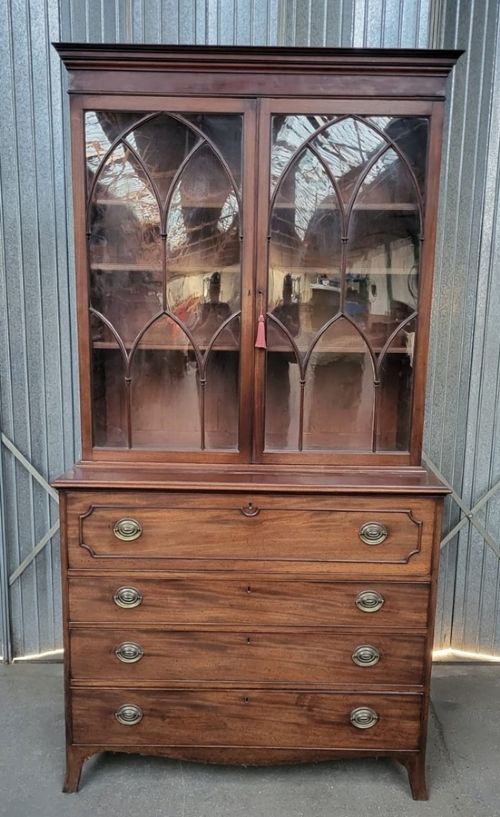

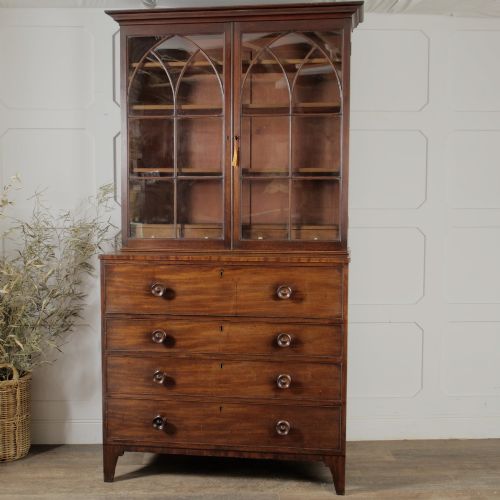


Gothic Glazed Bookcase Desk
These gothic glazed bookcase desk pieces combine display cabinetry and writing furniture into imposing architectural forms crafted to anchor a grand room.
Gothic Glazed Bookcase Desk
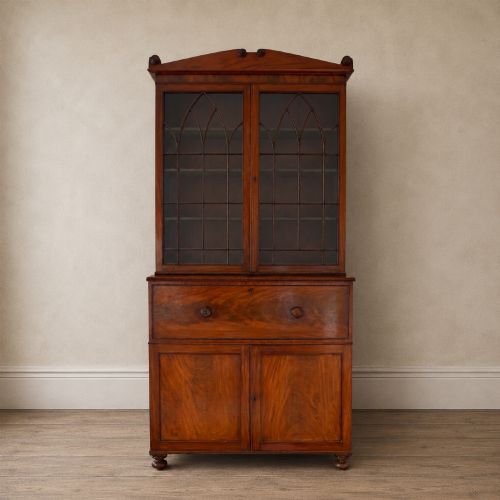
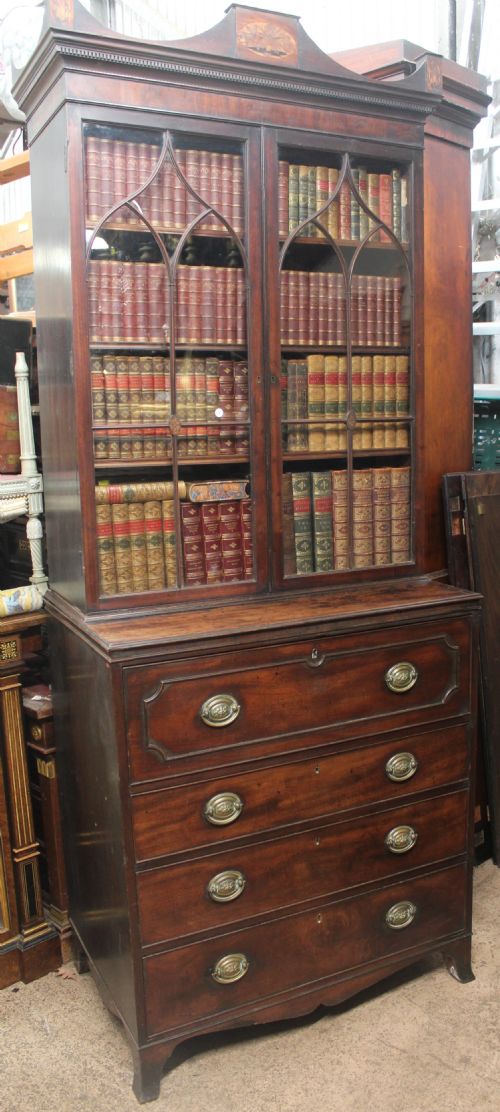
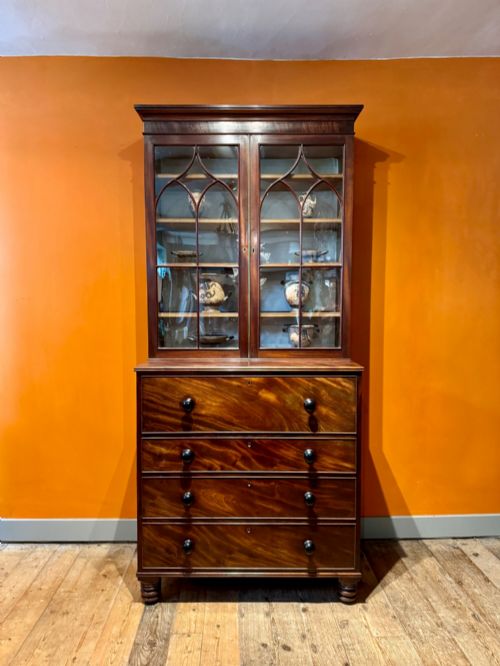
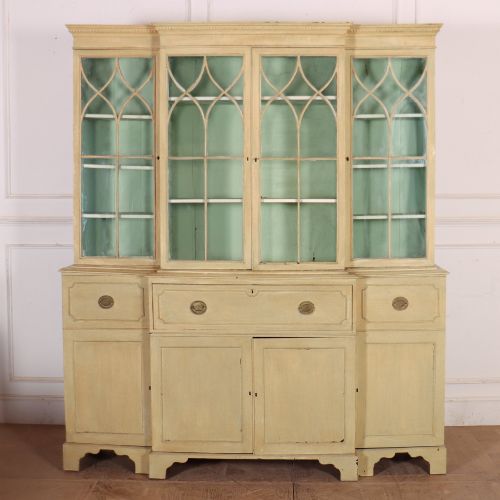
When you search for a gothic glazed bookcase desk, you encounter dual-purpose library furniture combining upper glass-fronted shelving for volumes with a lower writing cabinet. The form bridges Georgian, Regency, and Victorian periods, manifesting primarily as secretaire bookcases or bureau bookcases designed for domestic and study use.
The prevailing examples on this page are substantial mahogany and oak pieces featuring glazed doors above a fitted writing drawer that drops down to reveal pigeonholes and small drawers. These cabinets reflect classical proportions fused with Gothic revival detailing, serving both storage and writing functions.
Materials and construction
Cabinetmakers utilised dense hardwoods like mahogany, oak, and yew wood for the primary carcases, ensuring structural stability for heavy bookshelves and working desks. Brass hardware, including handles and fitted panels, adds functional contrast to the dark timber surfaces.
Glazing bars divide the upper door glass into geometric panes, while interior writing drawers incorporate leather writing surfaces and small compartments. Paint and applied mouldings sometimes define the Gothic Revival aesthetic characteristic of the later nineteenth-century pieces.
The listings here span the Georgian, Regency, Victorian, and Edwardian periods, constructed primarily in mahogany, oak, and yew wood.
What separates the grades
The quality of a gothic glazed bookcase desk depends on the selection of timber figures, such as figured mahogany or matched yew wood veneers, which elevate the visual impact. Cabinetmaking precision in the interior pigeonholes and secretaire drawer mechanisms also distinguishes finer workshops from standard production.
Proportion and glazing bar finesse dictate the architectural success of the upper cabinet, where delicate muntins indicate superior craftsmanship. The integration of the fall-front desk with the lower cupboards reveals the structural integrity maintained across Georgian and Victorian iterations.
The Gothic Glazed Bookcase Desk Glossary
- Secretaire bookcase
- A cabinet featuring a pull-down desk drawer concealing a fitted interior of small drawers and pigeonholes, paired with upper bookshelves.
- Bureau bookcase
- A writing cabinet with an angled or drop-front flap positioned beneath glazed shelving for books and display.
- Glazing bar
- A wooden strip holding individual panes of glass within the upper cabinet doors.
- Figured mahogany
- Timber exhibiting distinctive natural grain patterns like flame or curl, selected for prominent exterior surfaces.
- Gothic Revival
- An architectural and decorative style incorporating pointed arches, tracery, and medieval motifs into nineteenth-century furniture.
Gothic Glazed Bookcase Desk: Frequently Asked Questions
What is a secretaire bookcase?
A secretaire bookcase is a dual-purpose piece of furniture that combines an upper section of glass-fronted shelves for books with a lower cabinet containing a pull-down writing drawer.
The drop-front drawer conceals an interior arrangement of small drawers, pigeonholes, and sometimes a leather-lined writing surface for correspondence.
How were these pieces used?
These cabinets served as both working desks and home libraries for storing and reading bound volumes in Georgian and Victorian households.
The upper glazed doors kept dust off valuable books while displaying them, and the enclosed writing drawer provided a private space for letters and accounts.
How do I date a bookcase desk?
Dating relies on observing timber choices, hardware styles, and architectural details such as Regency curves or Victorian Gothic revival pointed arches.
Earlier pieces from the Georgian period typically feature cleaner classical lines, whereas later nineteenth-century examples incorporate heavier mouldings and distinct brass panels.
Where should I place one?
These large architectural cabinets require substantial wall space and stable ambient conditions away from direct heat sources to protect the aged timber.
Placing them in a study, library, or spacious living room allows the upper glazed display and lower desk to function effectively in daily use.