


Antique Style Secretary Cabinet
An antique style secretary cabinet combines a practical writing desk with enclosed shelving, offering versatile storage for the modern home.
Antique Style Secretary Cabinet
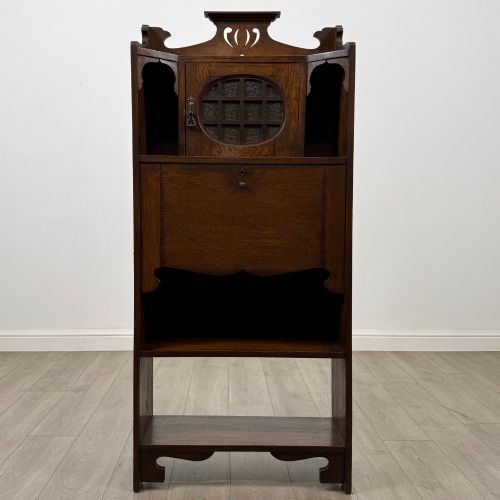
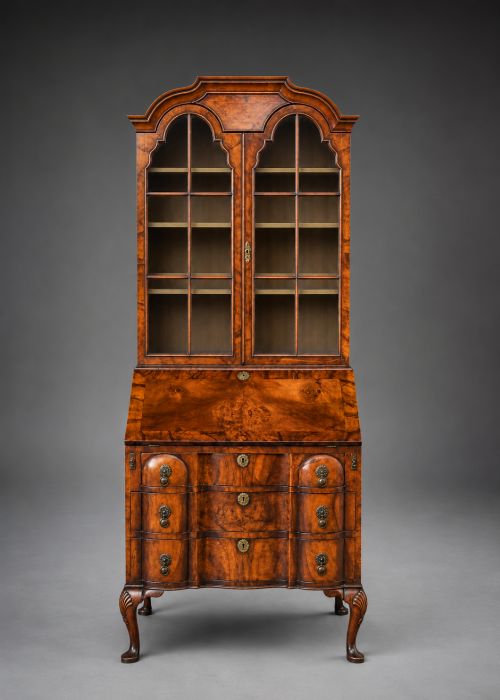
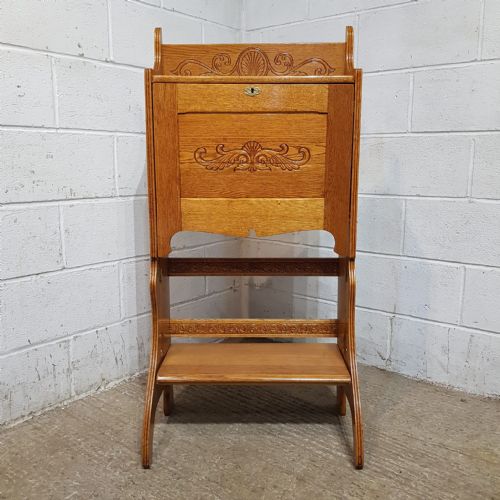
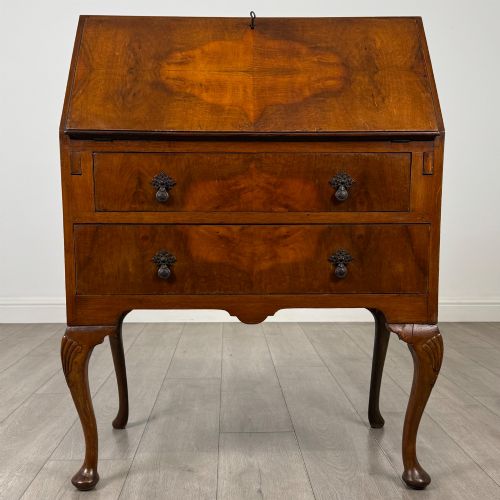
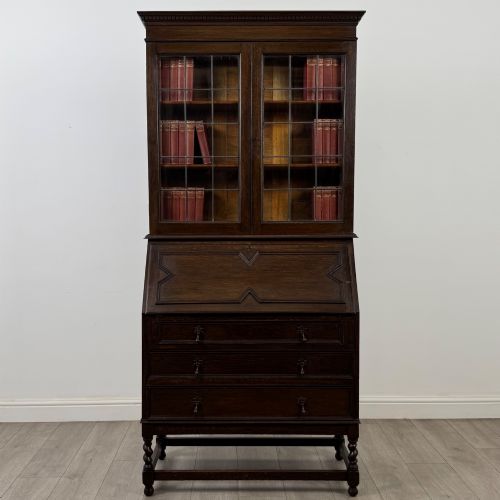
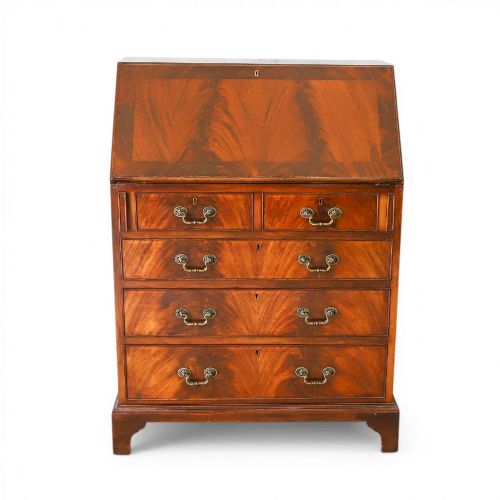
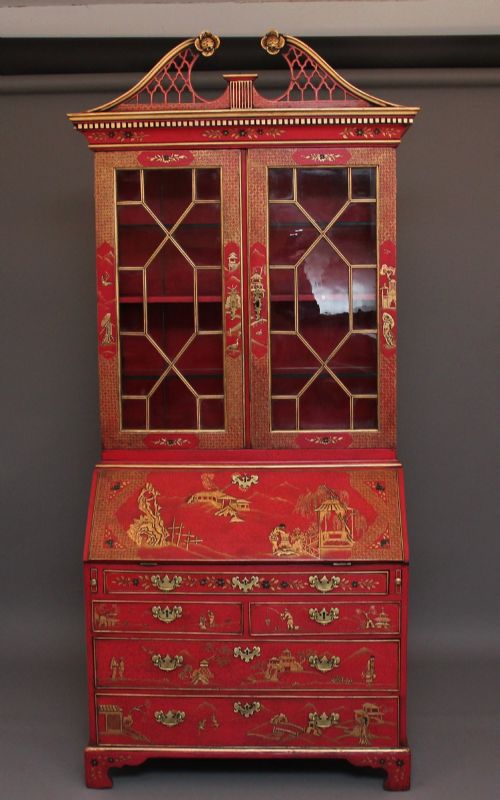
An antique style secretary cabinet brings together a fall-front desk and a shelved bookcase into a single vertical piece of furniture. When you search for this phrase, you encounter forms that range from compact writing desks to towering bureau bookcases.
The versions most common on this page span the Georgian, Victorian, and Edwardian eras, alongside later revivals built in the same tradition. These pieces serve as functional workstations while providing prominent display or storage space behind glazed or panelled doors.
Materials and Construction
Cabinet makers relied primarily on timbers such as mahogany, oak, walnut, and satinwood, often selecting burr veneers or flame-grained surfaces for visual depth. Brass hardware, including drop handles and escutcheons, secures the drawers and fall-fronts.
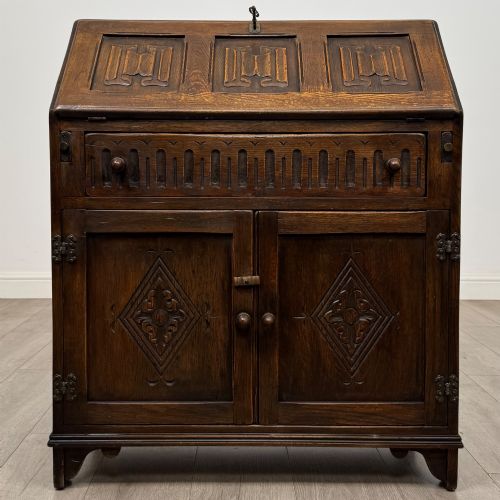
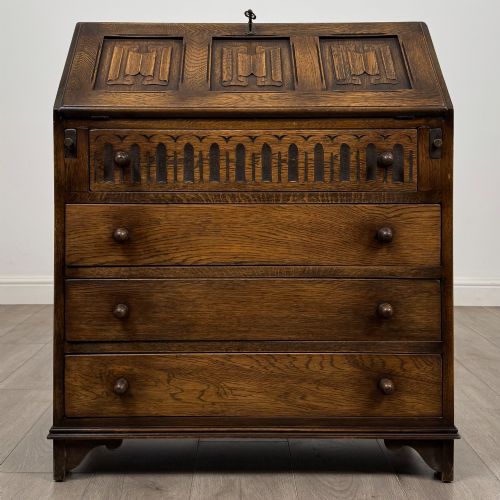
Joinery techniques involve dovetail construction for drawers and frame-and-panel assembly for the main carcasses. Decorative finishes range from inlaid marquetry and painted Chinoiserie motifs to carved linenfold details on oak panels.
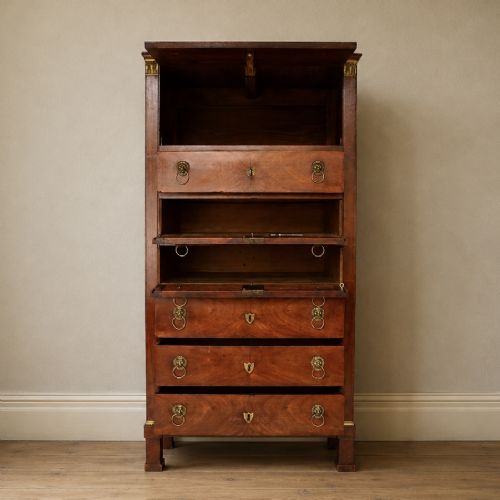
The furniture styles represented include Georgian, Victorian, Edwardian, Chinoiserie, Arts and Crafts, and French Empire.
Distinctions in Quality
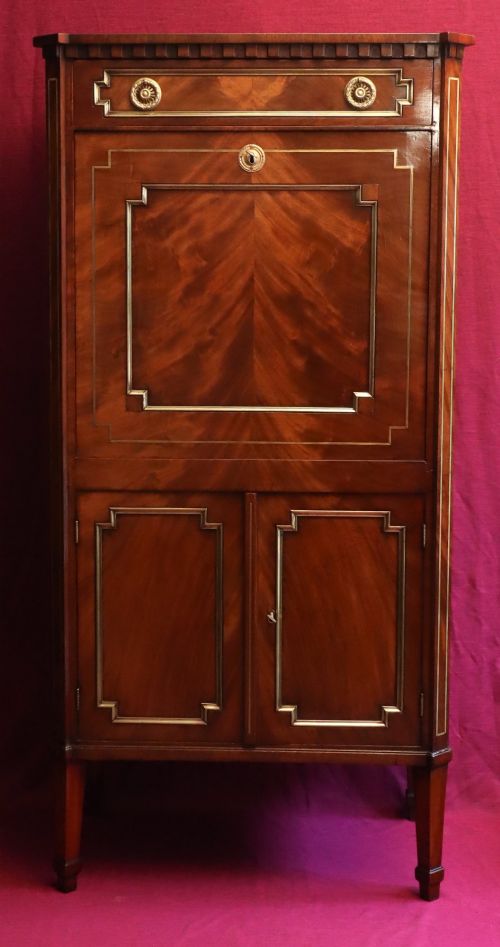
The tier of a piece rests heavily on the selection of timber and the precision of its grain matching across the fall-front or drawer facades. Finely figured burr walnut, satinwood, and flame mahogany elevate the visual impact significantly.
Execution of decorative elements such as hand-cut marquetry inlay, carved woodwork, and original brasses separate standard commercial production from master workshops. The interior arrangement of pigeonholes, small drawers, and secret compartments also indicates the maker's investment of time and skill.
Edwards and Roberts·Liberty and Co·Lamb and Co·Tudor and Burrey
The Antique Style Secretary Cabinet Glossary
- Secretaire
- A desk or cabinet with a pull-out or drop-down writing surface. It usually conceals a fitted interior of small drawers and pigeonholes.
- Bureau bookcase
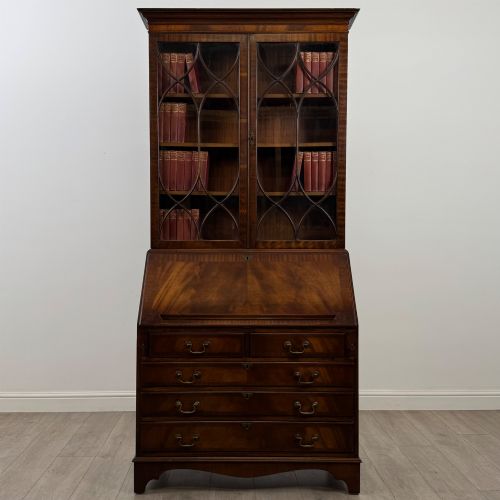
- A piece combining a sloping-front desk at the base with a glazed or panelled bookcase section above. This form became popular during the Georgian period and remained in production through the Edwardian era.
- Marquetry
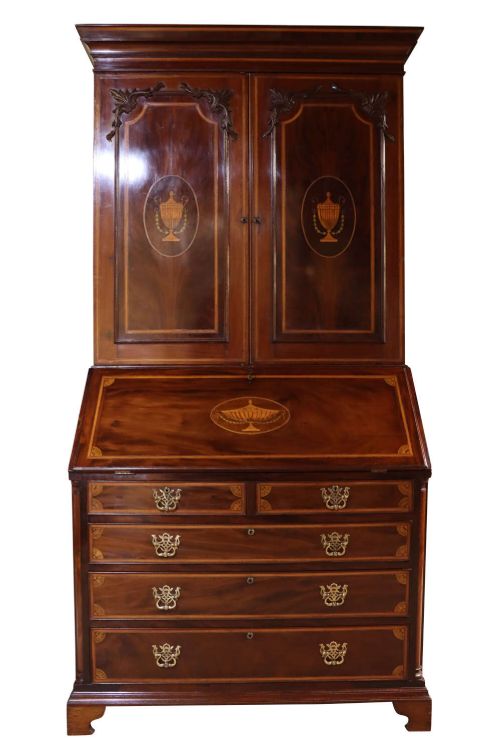
- Decorative woodwork where pieces of contrasting veneer are applied to a structure to form intricate patterns or pictures. It often appears on high-status walnut and satinwood surfaces.
- Linenfold
- A style of relief carving on wooden panels resembling folded linen cloth. This technique is frequently found on oak pieces from the Arts and Crafts and Tudor revival traditions.
- Bonheur du jour
- A light lady's writing desk featuring a small cabinet or set of shelves on top. These cabinets typically date from the nineteenth century.
Antique Style Secretary Cabinet: Frequently Asked Questions
How do I use a secretary desk?
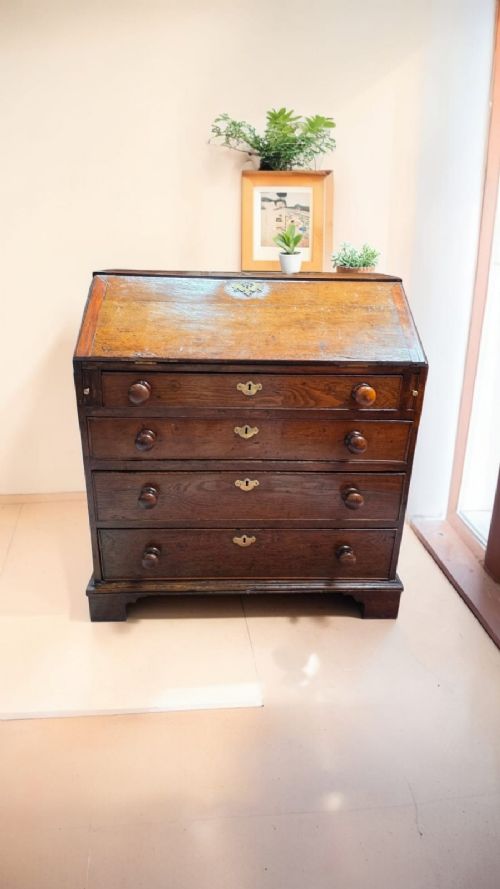
The drop-front or cylinder flap folds down to create a writing surface, often supported by automatic wooden pigeonhole rests or pull-out lopers.
Inside, you find compartments for stationery, letters, and small inkwells, keeping your workspace tidy when the cabinet is closed.
Where should I place a bureau bookcase?
These tall cabinets suit living rooms, studies, or hallways where vertical storage preserves floor space.
Ensure the room has stable humidity and avoid direct sunlight to protect the polished wood veneer and antique glass.
How do I date an antique cabinet?
Examine the secondary woods inside the drawers, the style of the brass hardware, and the construction methods used on the backboards and drawer linings.
Stylistic cues like satinwood inlay point to the late eighteenth century, while linenfold carving often indicates Edwardian revival work.