

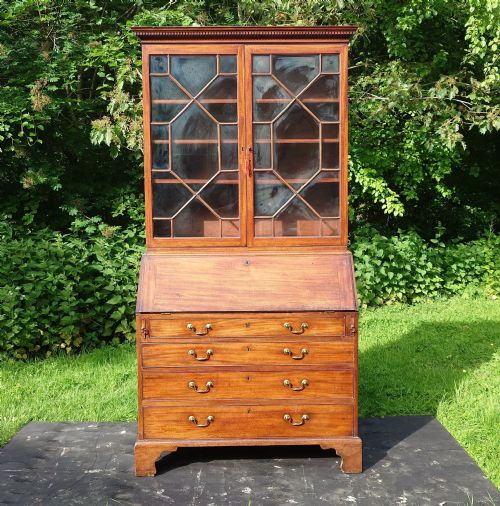
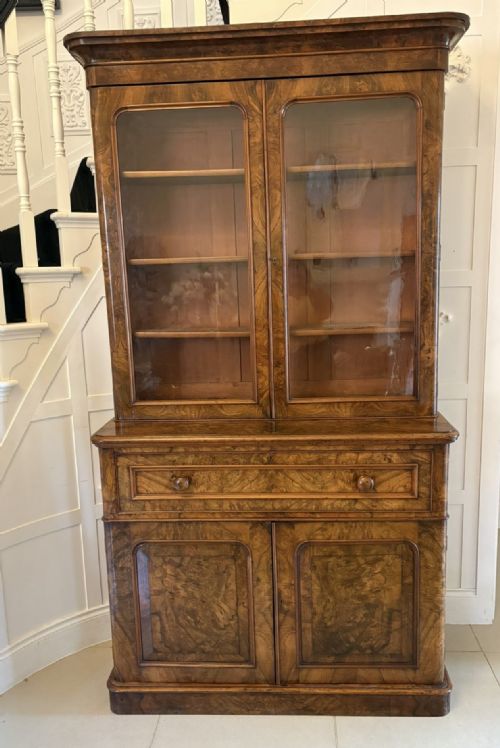


Tall Glazed Bureau Bookcase
A tall glazed bureau bookcase combines a fitted writing slope with enclosed upper shelving, offering a practical writing surface and display cabinet in one stately piece of furniture.
Tall Glazed Bureau Bookcase
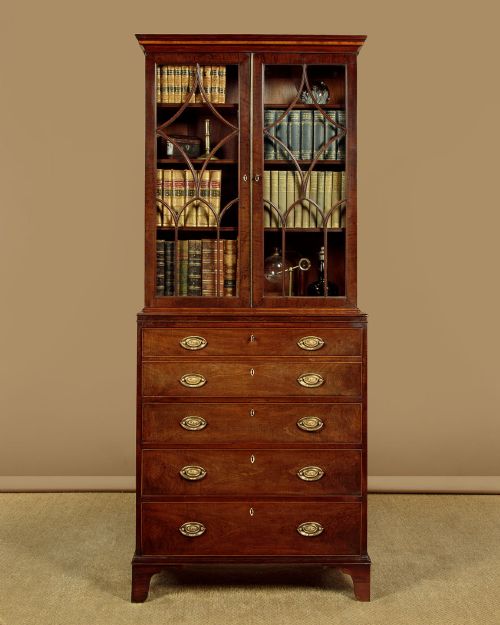
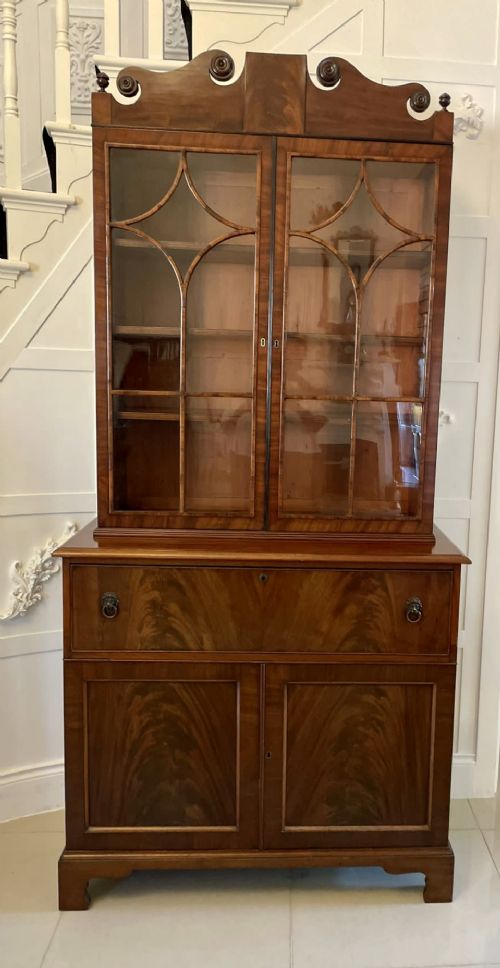
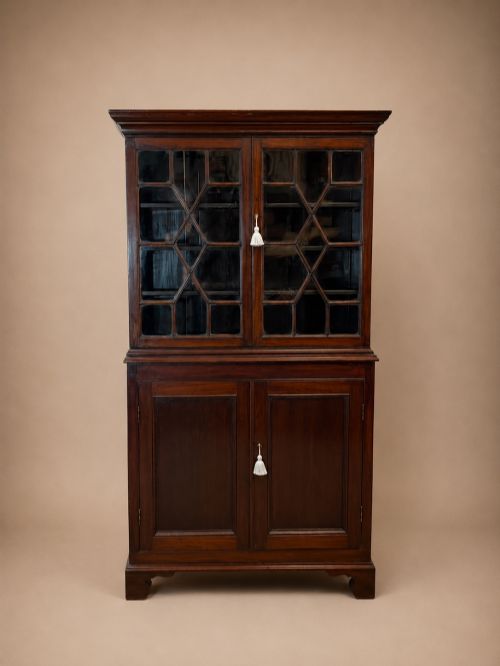
A tall glazed bureau bookcase is a dual-purpose piece of furniture that unites a lower writing desk section with an upper bookcase enclosed by glass doors. These architectural items rise vertically to maximise storage floor space while displaying leather or fabric bound volumes behind glazed panels.
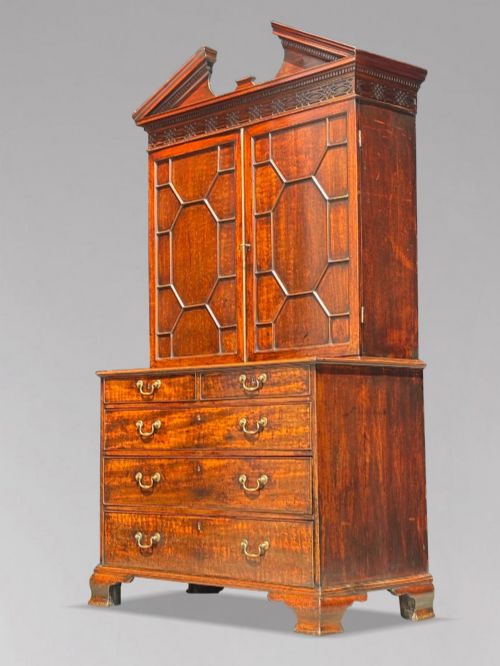
The versions encountered on this page span the eighteenth and nineteenth centuries, taking forms from George III Chippendale through to Victorian and Edwardian revivals. They appear in timbers such as mahogany, yew wood, burr walnut, and oak, often reflecting Georgian, Regency, or Victorian stylistic preferences.
Many examples incorporate a secretaire drawer that pulls out to reveal fitted pigeonholes and small drawers alongside the hinged writing flap. Such pieces serve domestic studies or libraries by keeping correspondence and books organised within a single imposing vertical structure.
How they were made
Cabinet makers constructed the primary carcase using dense hardwoods like mahogany, oak, and yew wood, frequently applying flame mahogany veneer or burr walnut to visible drawer fronts and panels. Glazed doors feature timber framing divided into individual panes by wooden astragals, securing the glass with putty or wooden glazing beads.
Internal desk sections require precise joinery to build small drawers, pigeonholes, and secret compartments concealed within the writing slope or pull-out secretaire drawer. Brass hardware including handles, escutcheons, and hinges completes the construction, fastened securely to the heavy timber framework.
Secret compartments hidden within internal pigeonholes offer a place to store small valuables out of sight.
What varies in quality
The selection of timber grain heavily influences the visual impact, with matched flame mahogany veneer and burr walnut representing more ambitious cabinet making than plain boards. Subtle details such as astragal glazing bar profiles, inlaid stringing in satinwood, and the complexity of internal pigeonhole arrangements separate standard workshops from notable cabinet makers like Gillows.
Proportion and structural harmony dictate the overall presence of the furniture, where slim profiles and well-balanced upper and lower sections demonstrate superior design. Original brass fittings, intact glass panes, and retained working locks further distinguish pieces that retain their original integrity.
Thomas Chippendale·Gillows
The Tall Glazed Bureau Bookcase Glossary
- Astragal
- A small moulded timber bar used in glazed doors to hold individual panes of glass in place. These intersecting bars create geometric patterns across the bookcase front.
- Bureau bookcase
- A piece of furniture combining a sloping writing flap desk below and a shelved bookcase above. The upper section is typically enclosed by glazed doors.
- Secretaire
- A drawer designed to pull out with a drop-front that functions as a writing surface. It conceals a fitted interior of small drawers and pigeonholes.
- Flame mahogany
- A figured veneer cut from the fork of the mahogany tree where the branch meets the trunk. This produces a characteristic flickering flame pattern across the wood.
- Burr walnut
- Timber taken from a walnut tree outgrowth, yielding a swirling, highly figured grain pattern. Cabinet makers used it on prominent surfaces for decorative effect.
Tall Glazed Bureau Bookcase: Frequently Asked Questions
How do I use a bureau bookcase?
The drop-front flap or pull-out secretaire drawer opens to provide a functional writing desk surface with built-in compartments for stationery. Meanwhile, the upper glass doors protect and display a collection of books.
Items stored inside remain visible through the glazing while being kept free from dust. This makes the furniture suitable for working spaces and home libraries alike.
What is the difference between Georgian and Victorian styles?
Georgian examples often emphasise architectural symmetry, astragal glazing patterns, and classical proportions using timbers like mahogany. Victorian and later revival pieces frequently introduce bolder wood grains such as burr walnut or cylinder fronts.
Victorian variations also incorporate richer inlay work and heavier ornamentation compared to earlier Georgian designs. Construction techniques likewise evolved from eighteenth-century hand-cut joints to more mechanised production methods by the late nineteenth century.
Are these bookcases suitable for low ceilings?
These pieces are built with a tall vertical orientation designed to maximise storage without occupying a large floor footprint. Buyers should measure their ceiling height carefully because many historical examples extend upwards significantly.
Placing them in rooms with adequate vertical clearance ensures the proportions of the upper cornice remain visible. Lower Edwardian or slim nineteenth-century variants occasionally offer slightly reduced heights.
How do I care for timber and glass?
Maintenance involves applying appropriate beeswax or polish to nourish hardwood surfaces and veneers like mahogany or yew wood. Avoiding direct sunlight prevents the timber and internal linings from fading over time.
Glass panes require standard non-abrasive window cleaner applied to a cloth rather than sprayed directly near the wooden frame. Keeping humidity levels stable protects the joints and prevents the timber carcase from warping.