


Gothic Ecclesiastical Carving
Gothic ecclesiastical carving brings the solemnity and devotional focus of medieval and revival interiors into modern spaces through timber, stone, and metal.
Gothic Ecclesiastical Carving
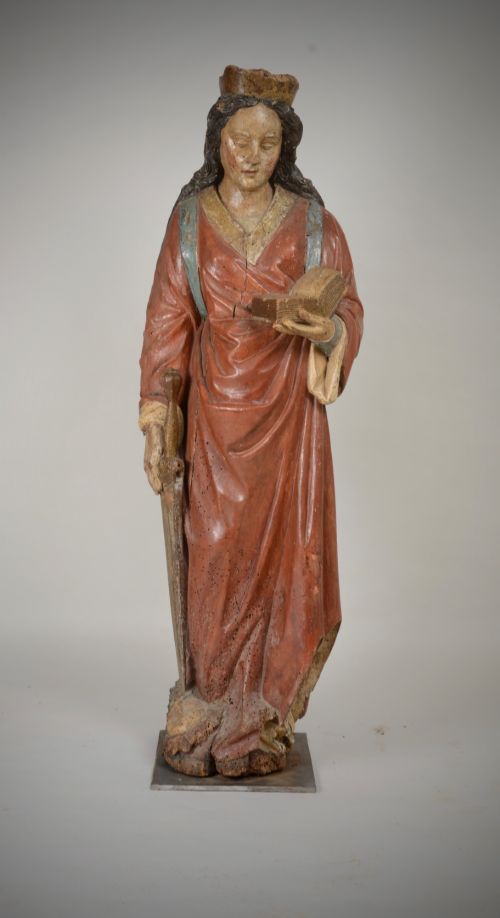
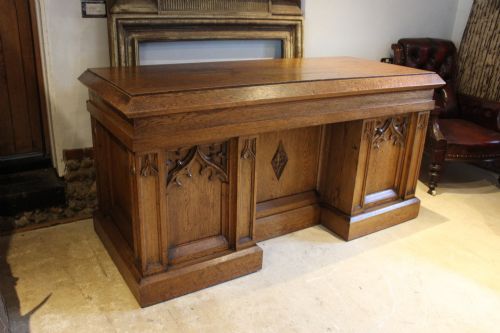
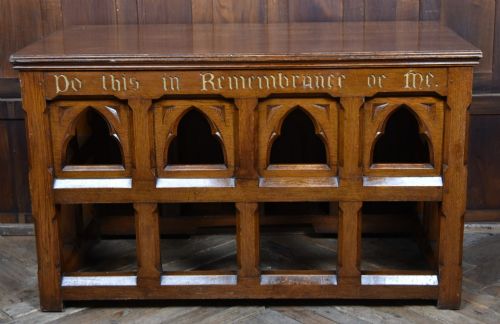
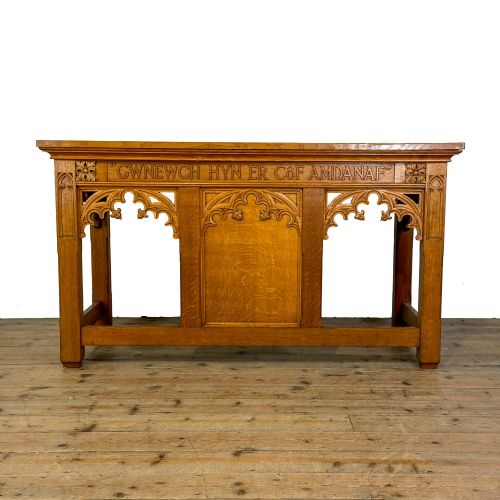
When a buyer explores gothic ecclesiastical carving, they encounter devotional figures, architectural fragments, and chapel furnishings originating from medieval workshops up to the nineteenth-century Gothic Revival. The pieces range from pre-sixteenth-century limewood saints and stone busts to Victorian oak altars, church pews, and Glastonbury armchairs.
The version most commonly met on this page is the nineteenth-century Gothic Revival oak seating or architectural salvage, alongside genuine sixteenth-century carved wood panels and altar figures. These works combine religious iconography with functional domestic forms adapted from church architecture.
Materials and construction methods
The primary material across the centuries is solid oak, selected for durability and worked with hand chisels to create deep relief panels, poppy head finials, and tracery. Earlier Continental examples often utilise limewood or walnut, which allowed carvers to achieve fine facial expressions and intricate drapery folds.
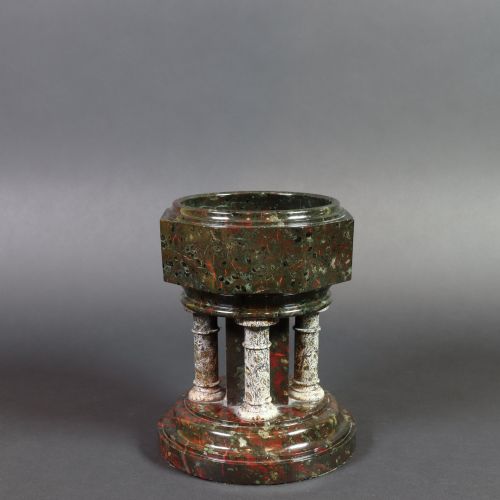
Surface treatments vary from bare timber and polished wax to historic polychrome paint, gesso, and gold leaf applications. Metalwork items incorporate forged brass and iron, while architectural elements utilise carved stone and pitch pine.
Gothic Ecclesiastical Carving Retail Price Guide 2026
Typical asking prices for gothic ecclesiastical carving among the pieces listed under this phrase on Sellingantiques today, from the lower quarter to the upper quarter. They describe what is for sale here now, not the wider market.
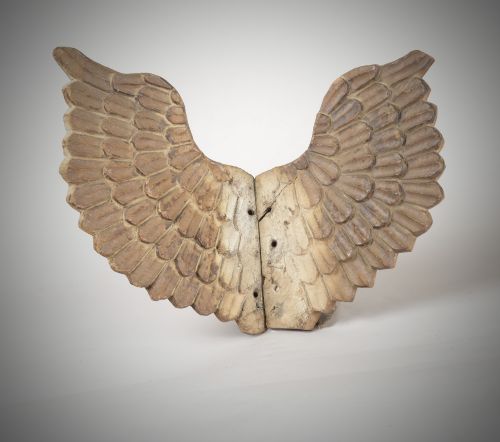
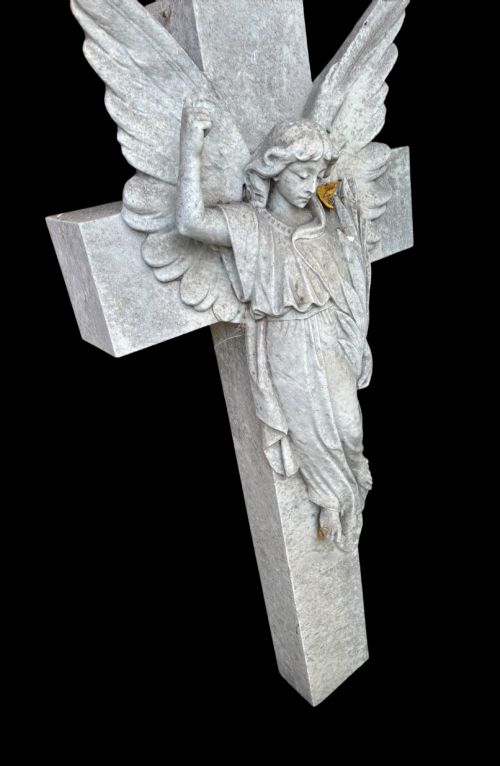
St John the Baptist and various angels keep a watchful eye over the collection, accompanied quite unexpectedly by a marble garden statue.
Evaluating the standard of workmanship
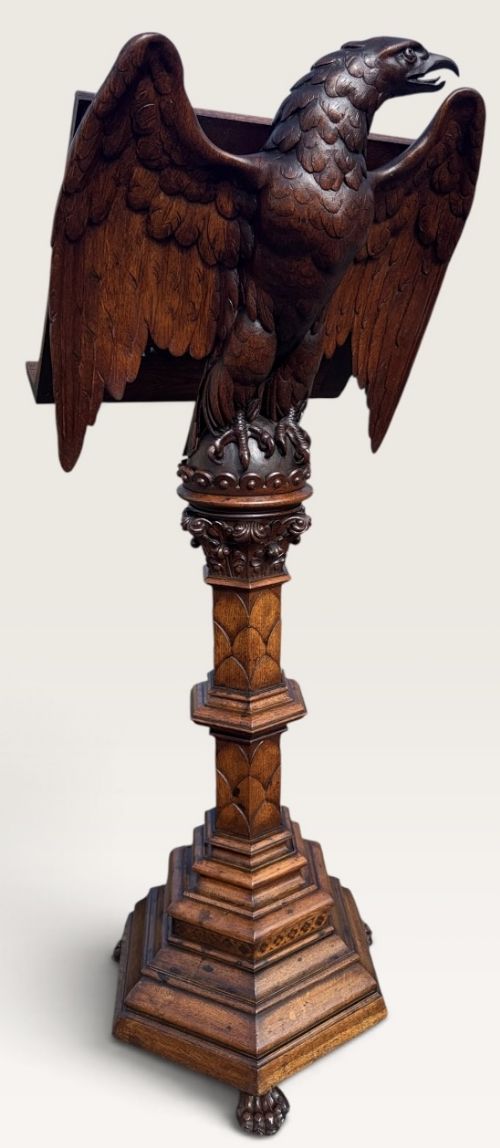
Quality in these works rests upon the depth of the carving and the anatomical precision of figures such as saints and angels. Master carvers achieved expressive hands, naturalistic drapery, and sharp geometric tracery that lower-grade workshop pieces rendered flat or formulaic.
Age, originality of surface, and structural integrity distinguish superior examples. Retained historic polychrome paint or untouched original timber patination elevates a piece above later adaptations or heavily restored items.
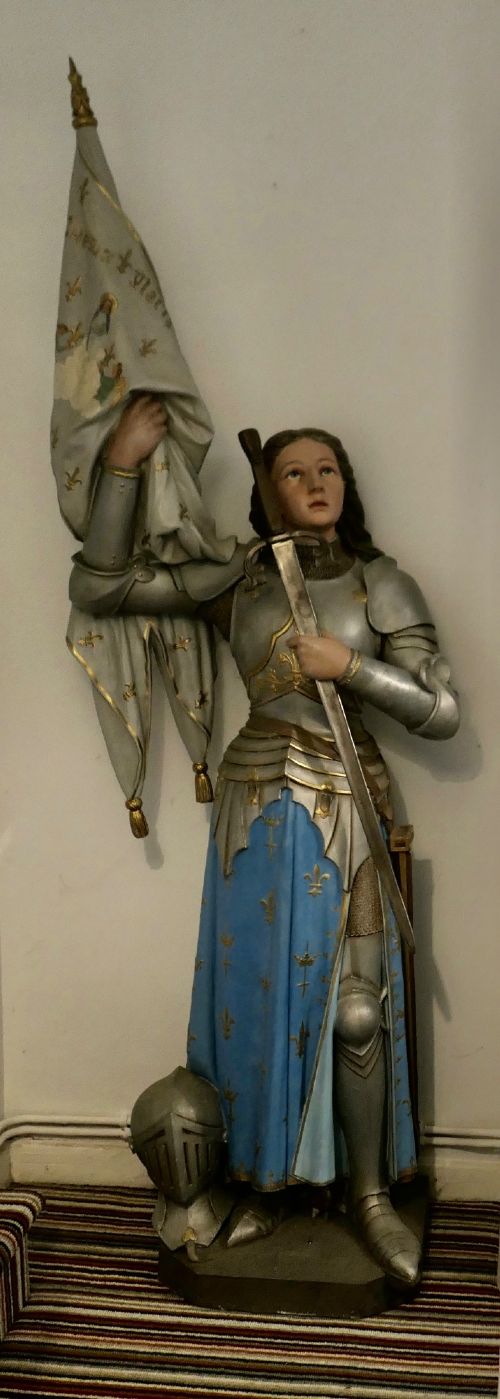
Rouillard Angers
The Gothic Ecclesiastical Carving Glossary
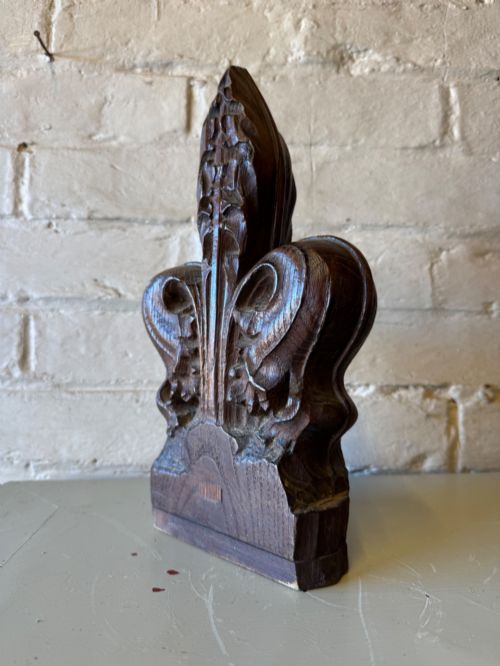
- Poppy head
- An ornamental finial carved on the top of bench ends in churches, often shaped like a stylised leaf or bud. These wooden carvings frequently appear as standalone fragments.
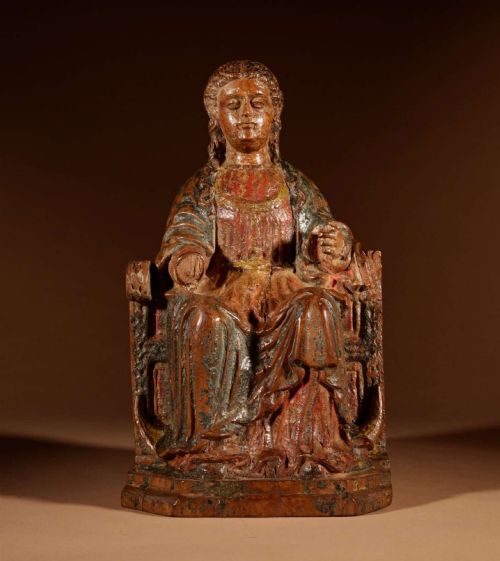
- Polychrome
- The practice of decorating architectural elements and sculpture in several colours. Medieval wood and stone figures often retained layers of painted pigment and gesso.
- Glastonbury chair
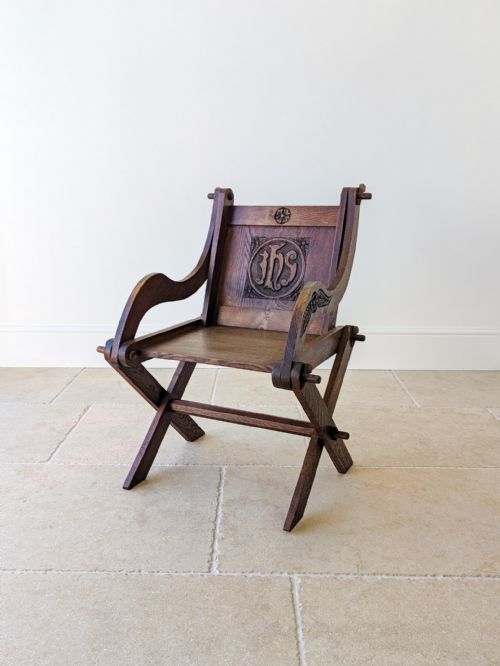
- A distinctive type of ecclesiastical armchair with an X-framed base and sloped wooden seat. Nineteenth-century Gothic Revival makers reproduced this form extensively in oak.
- Trefoil
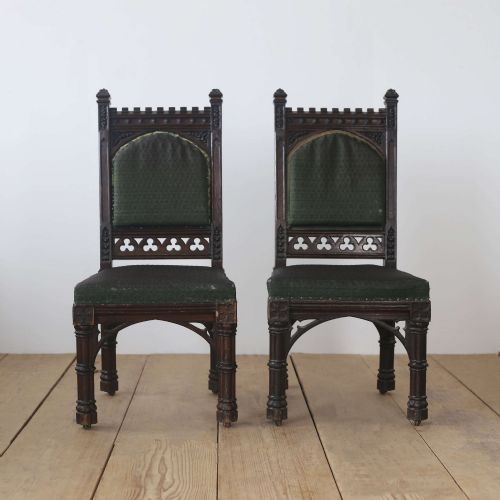
- A graphic ornament composed of three interlocking arcs resembling a clover leaf. It appears frequently in the tracery and panel details of Gothic revival furniture.
Gothic Ecclesiastical Carving: Frequently Asked Questions
What is a pricket candle holder?
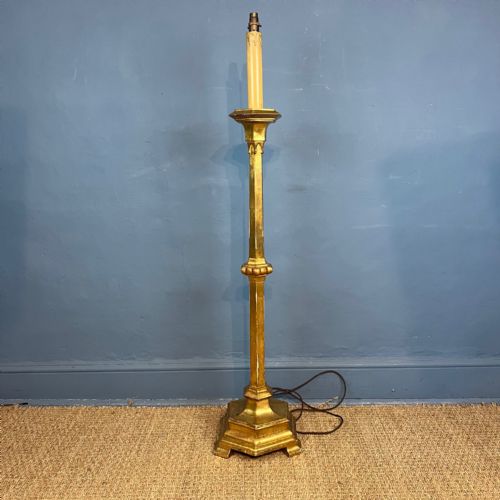
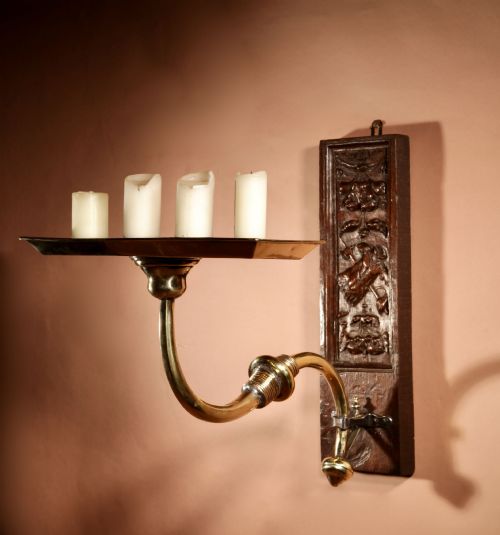
A pricket candle holder is an ecclesiastical lighting device featuring a sharp metal spike designed to hold large candles securely in place during church services.
Historically constructed from brass and iron, these items were placed on altars or wall brackets to illuminate sacred spaces.
How do I identify a Glastonbury chair?
A Glastonbury chair is recognised by its intersecting X-framed legs, flat wooden arms, and slanted panel backrest. This design derives from medieval manuscript illustrations and antique ecclesiastical seating.
Nineteenth-century revival examples often feature inscribed panels and oak construction mimicking the earlier monastic style.
What does polychrome mean on wood?
Polychrome refers to the application of multiple colours of paint onto wood or stone sculpture. This technique brought devotional figures to life with realistic flesh tones and gilded garments.
Surviving traces of original paint provide significant clues regarding the age and authenticity of early religious carvings.
Where were poppy head finials used?
Poppy head finials were carved at the top ends of church pews and stall seating in medieval and Gothic Revival architecture. They typically displayed plant motifs or symbolic figures.
As architectural salvage, these carved wooden elements function as decorative shelf ornaments or wall mounts.