

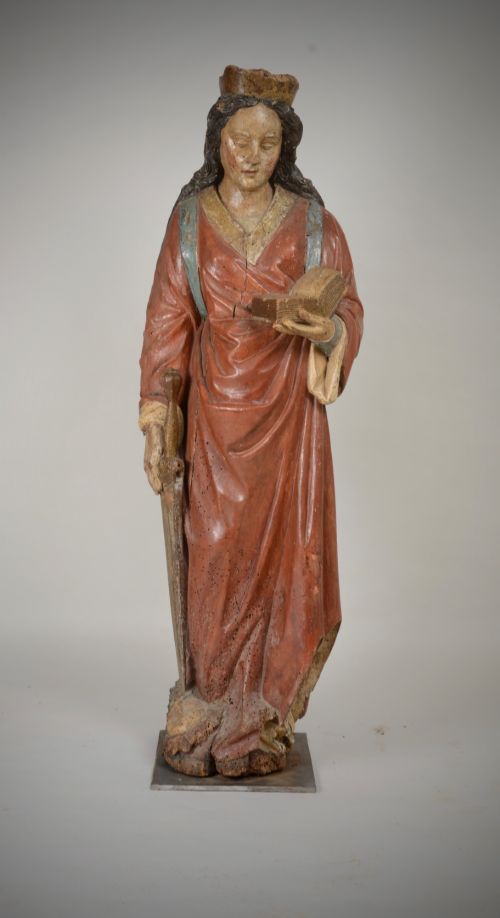


Medieval Carved Oak Figure
These pieces of medieval carved oak figure embody centuries of devotion, hewn from solid timber by hands that worked under the influence of Gothic and Renaissance traditions.
Medieval Carved Oak Figure
A medieval carved oak figure represents religious subjects, predominantly saints, the Madonna and child, or biblical scenes created for sacred and domestic spaces. Buyers pursuing a medieval carved oak figure encounter representations such as St Catherine, Pietas, and donor figures originating from regions including Germany, France, and the Low Countries. These works predominantly date from the pre-sixteenth century and the sixteenth century, with occasional later interpretations appearing from around nineteen hundred.
The sculptural forms range from substantial standalone statues and wall sculptures to fragments and groups depicting multiple figures like the Anna Selbdritt. Most surviving examples manifest the aesthetic shifts between Late Gothic, Late Medieval, and Renaissance styles, reflecting the evolving visual language of European woodcarvers. Scale and preservation vary significantly, from monumental saints to intimate devotional groupings intended for contemplation.
Assessing sculptural quality
The distinction between ordinary and exceptional carving lies in the anatomical fluency, drapery management, and expressive intensity of the faces. Master carvers achieved a convincing sense of movement and volume within the stiff constraints of timber, whereas lesser hands produced stiff, formulaic folds and blank expressions.
The survival of original surface treatments, including gesso and polychrome paint, elevates the significance of a piece. Depth of relief and the preservation of original timber edges without excessive modern intervention also define the upper tier of quality.
Medieval Carved Oak Figure Retail Price Guide 2026
Typical asking prices for medieval carved oak figure among the pieces listed under this phrase on Sellingantiques today, from the lower quarter to the upper quarter. They describe what is for sale here now, not the wider market.
The sculptural styles recorded include Gothic, Renaissance, and Flemish Renaissance across various forms of wall and freestanding sculptures.
The Medieval Carved Oak Figure Glossary
- Polychrome
- Decoration consisting of several colours applied to the surface of wood or gesso. This ancient technique brought lifelike realism to sacred sculptures.
- Gesso
- A plaster mix applied to wood as a smooth base for painting and gilding. It seals the timber and accepts fine detail.
- Pieta
- A subject depicting the Virgin Mary cradling the dead body of Jesus Christ. It is a common devotional motif in European wood sculpture.
- Gothic
- An artistic style prevalent in Europe from the twelfth to the sixteenth century, characterised by pointed arches and elongated, expressive figures. Sculptures from this period emphasise spiritual emotion over naturalistic proportion.
- Donor figure
- A portrait of the person who commissioned a work of art, often shown kneeling in prayer alongside saints. These figures appear frequently in late medieval devotional groups.
Medieval Carved Oak Figure: Frequently Asked Questions
Were these figures originally painted?
Most medieval and Renaissance wood sculptures were brightly painted and gilded to enhance their realism and visual impact in dimly lit churches. Pigments mixed with binders were applied over a gesso ground.
Over the centuries, many pieces were stripped down to the bare oak by later collectors who preferred natural wood, leaving only microscopic traces of the original polychrome.
Where were these carvings displayed originally?
These figures were created for churches, cathedrals, private chapels, and domestic devotional settings. Larger statues stood in niches or on altars, while wall sculptures were hung for private prayer.
Regional workshops in the Upper Rhine, France, and Flanders produced them to serve both communal liturgical functions and personal spiritual contemplation.
How should I care for an antique oak sculpture?
Keep wooden sculptures in stable environmental conditions away from direct sunlight, central heating, and dampness. Extreme fluctuations in humidity cause oak to split and gesso to flake.
Dust the surface gently with a soft, dry brush and avoid applying modern polishes, waxes, or cleaning liquids to historic painted or unpainted wood.