





Gothic Cast Iron Furniture
Gothic cast iron furniture combines sturdy metalwork with medieval architectural motifs to furnish gardens and hallways with lasting character.
Gothic Cast Iron Furniture
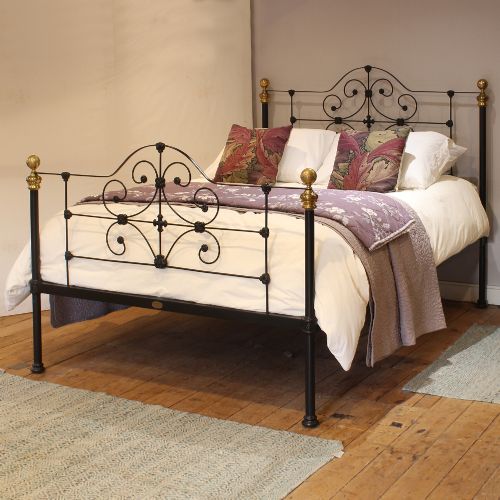
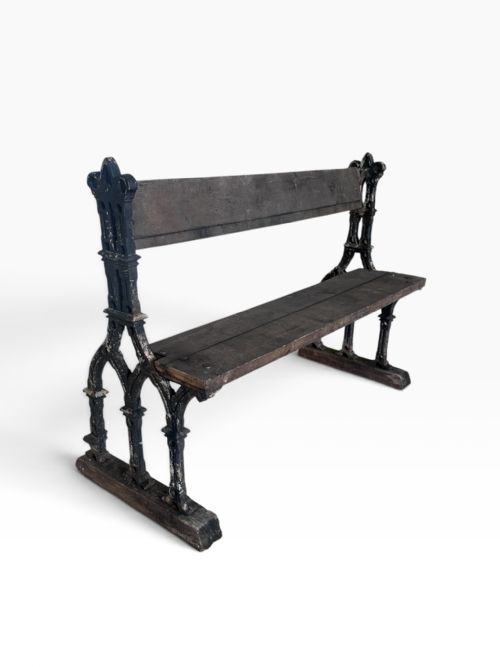
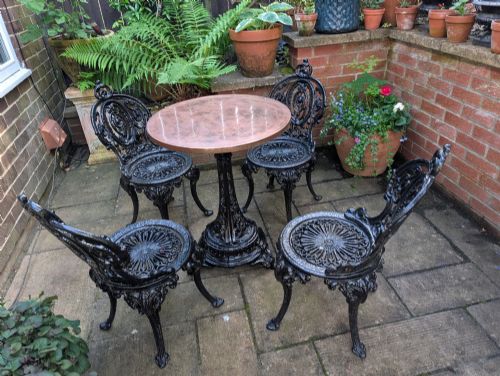
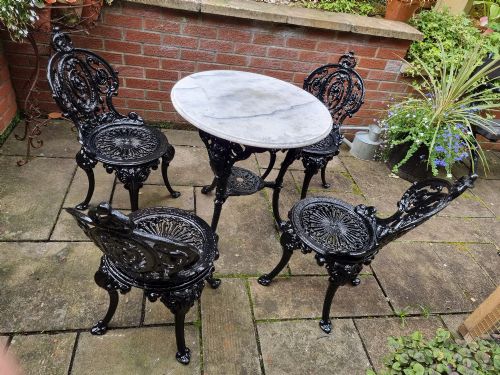
Most examples you meet here are garden benches, chairs, and tables, alongside functional indoor pieces like hall stands and umbrella stands. These objects utilise heavy cast iron, frequently displaying ornate tracery, pointed arches, and quatrefoil patterns typical of nineteenth century design.
How they were made
Foundries poured molten iron into sand moulds to achieve the intricate openwork patterns and relief details characteristic of nineteenth century metalwork. This technique allowed makers to produce complex gothic arches and floral motifs with remarkable consistency across chairs, benches, and architectural furniture.
Many items incorporate supplementary materials such as wood, marble, glass, and granite to complement the heavy iron framework. Painted surfaces often protected the metal from outdoor elements, while brass and copper components occasionally appeared on indoor accessories like andirons and hall stands.
Gothic Cast Iron Furniture Retail Price Guide 2026
Typical asking prices for gothic cast iron furniture among the pieces listed under this phrase on Sellingantiques today, from the lower quarter to the upper quarter. They describe what is for sale here now, not the wider market.
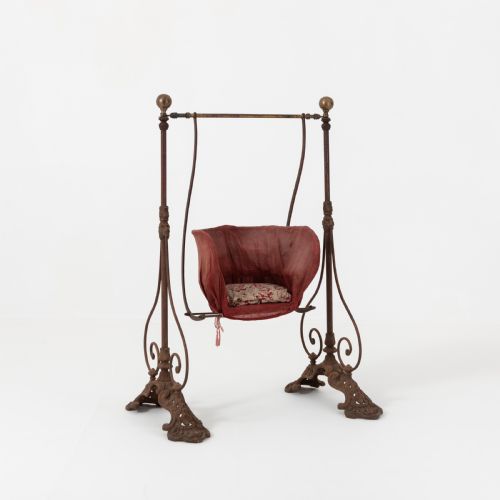
Nineteenth century children could swing in gothic splendour on ornate iron nursery swings suspended from heavy frames.
What varies in quality
The refinement of the casting defines the upper tier of these pieces, where sharp relief and clean lines show superior pattern-making. Lesser examples exhibit softened details and rough seams where the molten metal failed to capture the subtlety of the original design.
Proportion and structural integrity also separate standard production from exceptional work, particularly in seating where weight distribution matters. Heavier metal gauge and careful assembly ensure that benches and tables endure decades of use without losing their architectural form.
Falkirk Foundry·Coalbrookdale
The Gothic Cast Iron Furniture Glossary
- Gothic Revival
- An architectural and decorative style drawing inspiration from medieval design, featuring pointed arches, tracery, and quatrefoils. This aesthetic dominated nineteenth century furniture production for both indoor and outdoor settings.
- Cast Iron
- An iron-carbon alloy poured into moulds to create rigid components, prized for its ability to hold intricate decorative detail. It serves as the primary structural material for benches, tables, and hall stands.
- Tracery
- Openwork ornamentation resembling stone ribbing in gothic windows, frequently adapted into iron chair backs and table bases. This pattern provides both structural support and visual lightness to heavy metalwork.
- Hall Stand
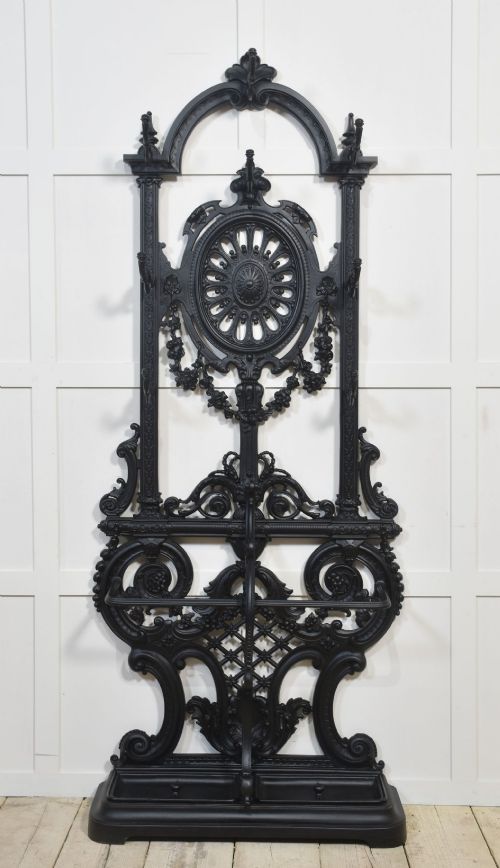
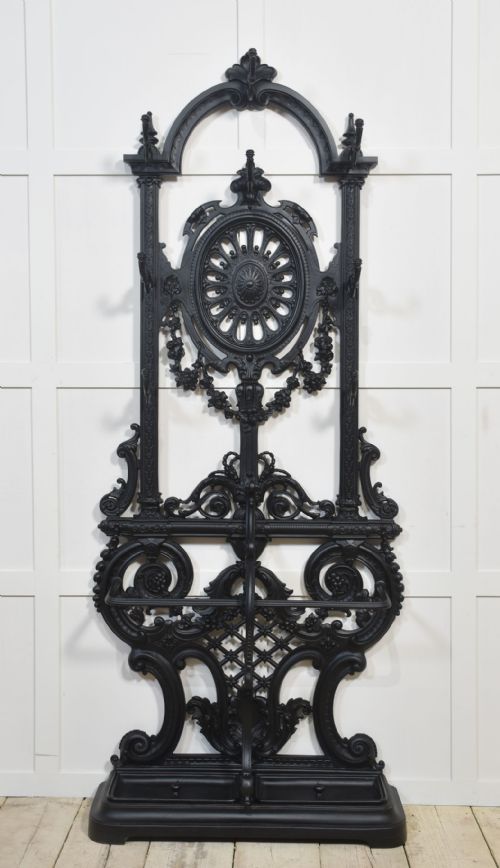
- A tall piece of hallway furniture designed to hold coats, hats, and umbrellas, often incorporating a mirror and a drip tray. Victorian versions in iron frequently display elaborate architectural motifs.
- Quatrefoil
- A decorative four-lobed shape derived from medieval architecture, commonly pierced into the panels of cast iron garden seats and table skirts.
Gothic Cast Iron Furniture: Frequently Asked Questions
Can cast iron garden benches stay outside all year?
Cast iron withstands outdoor conditions well, though prolonged moisture exposure leads to surface oxidation. Regular inspection of painted surfaces prevents weather damage during winter months.
Positioning furniture on paved surfaces rather than directly on damp earth helps preserve the feet of tables and benches. Protective covers provide additional defence against harsh weather.
How do I identify a Victorian gothic hall stand?
Victorian hall stands typically combine heavy iron frames with umbrella trays, coat hooks, and sometimes a central mirror. Look for architectural elements like pointed arches and quatrefoil piercing.
These pieces served a practical role in nineteenth century hallways, welcoming visitors with imposing medieval ornamentation.
Are nineteenth century garden sets comfortable to use?
Metal garden seats from this period were designed primarily for durability rather than ergonomic comfort. Adding fitted cushions softens the rigid iron contours for extended seating.
The substantial weight of these chairs and benches keeps them stable on uneven lawns and patios without fastening.
What is the difference between Coalbrookdale style and factory pieces?
Coalbrookdale style refers to the distinctive fern, vine, and gothic patterns popularised by the famous Shropshire foundry. Many regional foundries reproduced these successful designs during the nineteenth century.
Attribution relies on registration marks, foundry stamps, or distinctive casting quality rather than style alone.