
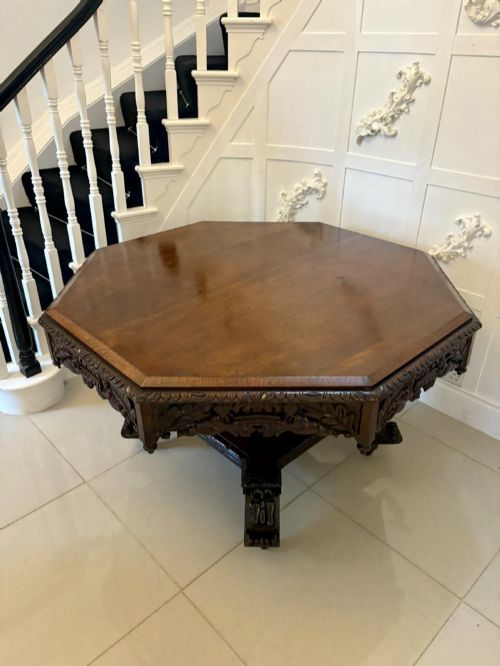


Gothic Carved Dining Table
A gothic carved dining table brings architectural presence into a room, using heavy timber and historic ornament to anchor a serious dining space.
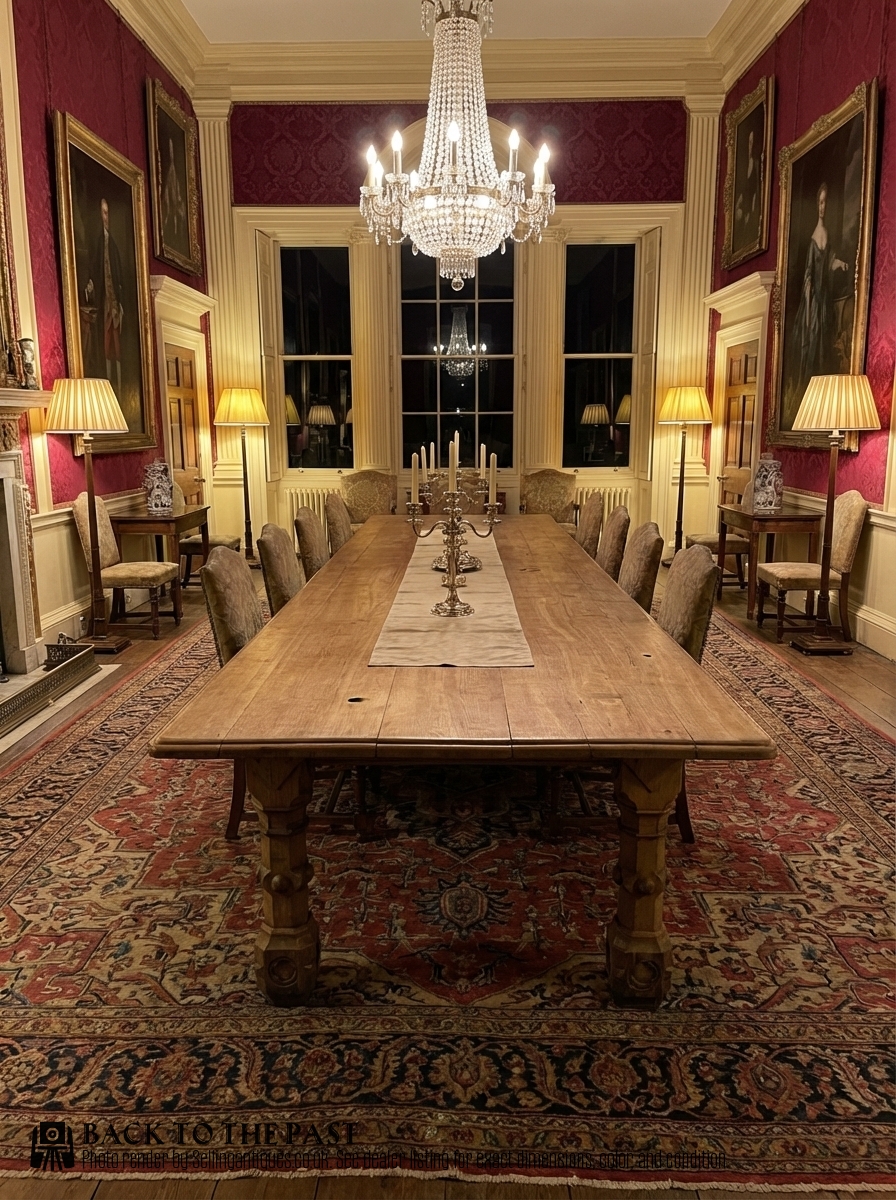
Gothic Carved Dining Table
A gothic carved dining table draws on medieval architectural motifs, appearing most frequently in solid oak across nineteenth-century Victorian and revival iterations. These pieces range from refectory and trestle formats to extending versions designed to seat large numbers.
The selection on this page centres heavily on nineteenth-century examples, spanning the decades from eighteen-fifty to nineteen-hundred. Alongside standard dining tables, buyers encounter refectory forms, centre tables, and occasional dining sets.
Makers and designers of the period looked to Pugin and historical precedents, translating stone tracery and ecclesiastical details into domestic furniture. The resulting forms serve practical dining functions while displaying distinct revival characteristics.
Materials and construction
Oak dominates the evidence, chosen for its strength and ability to take deep hand-carving on friezes, legs, and stretchers. Walnut and mahogany appear alongside rarer examples utilising bleached oak or incorporating brass and iron elements.
Joinery relies on traditional refectory and trestle construction, utilising heavy timbers designed to support substantial lengths. Carved details such as Green Man motifs, tracery, and linenfold panels are worked directly into the structural wood.
The listings span from eighteen-fifty to nineteen-twenty, featuring oak, walnut, and mahogany alongside iron and brass hardware.
Assessing quality
Quality rests upon the crispness and depth of the carving, distinguishing work executed by skilled hands from later or more mechanical output. Superior pieces show proportional harmony across extended lengths, particularly in eighteen-foot refectory formats or large extending tables.
The selection of timber dictates the integrity of the piece, with dense, well-figured oak providing stability across heavy tops and substantial bases. Original mechanisms in extending tables and untouched patination further separate standard production from exceptional examples.
Sir Robert Lorimer
The Gothic Carved Dining Table Glossary
- Refectory table
- A long, narrow dining table traditionally used in monasteries and great halls, characterised by substantial legs connected by a low longitudinal stretcher. Nineteenth-century revivals adapt this form for domestic dining.
- Gothic Revival
- An architectural and decorative style spanning the eighteenth and nineteenth centuries that revived medieval gothic forms. It manifests in furniture through pointed arches, tracery, and heavy carved woodwork.
- Green Man
- A sculptural motif depicting a human face disgorging or entwined with foliage and vines. It appears frequently in nineteenth-century Flemish and English revival carving.
- Trestle table
- A table supported by two or more vertical frames connected by a horizontal beam. This form allows for maximum legroom along the length of the table.
- Frieze
- The wide central section of the table frame situated immediately beneath the top. In these pieces, the frieze often carries the primary carved decoration.
Gothic Carved Dining Table: Frequently Asked Questions
How do I seat ten people at an antique gothic table?
Look specifically for extending models or long refectory formats that match your spatial requirements.
Verify the clearance beneath the frieze and stretchers to ensure comfortable legroom for chairs.
Are these tables suitable for everyday family dining?
Solid oak construction and heavy timbers make these tables exceptionally durable for daily use.
Apply appropriate heat mats and maintenance oils to protect the historic surface from regular wear.
How do I distinguish Victorian revival from older work?
Examine the tool marks, timber seasoning, and construction methods used on the underside and frame.
Nineteenth-century revival pieces often employ mechanical saw marks alongside hand-carving to recreate medieval styles.
What is the difference between a refectory and a centre table?
Refectory tables are built long and narrow with supporting stretchers designed for communal dining.
Centre tables tend to be more compact and freestanding, often finished on all sides for placement in the middle of a room.