
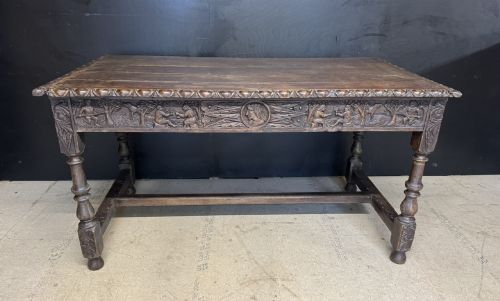


Gothic Style Refectory Table
These heavy timber boards make a gothic style refectory table the anchor of a large room.
Gothic Style Refectory Table
A gothic style refectory table brings substantial dining furniture into large spaces, drawing on medieval dining halls for inspiration. These pieces emerge across the nineteenth century and into the early twentieth century, spanning Victorian, Arts and Crafts, and revival movements.
Most examples found here are constructed from oak, though occasional mahogany or walnut variations appear. They take the form of long dining tables, abbey trestle tables, and heavy farmhouse centre serving hall tables.
Makers and designers of the period, such as Sir Robert Lorimer, reinterpreted these historic forms for domestic and institutional interiors. Buyers encounter sturdy heavy carved oak tables alongside simpler refectory formats equipped with drawers.
How they were made
Cabinet makers relied primarily on solid oak, utilising its dense grain to support long expanses of timber top without excessive sag. Mahogany and walnut also appear in the record, selected for deeper colour and finer cabinet work.
Construction techniques combine traditional joinery with decorative carving, creating sturdy heavy tables suited to daily use. Brass fittings or mounts appear on certain pieces to reinforce structural joints and add metallic contrast to the timber.
Some nineteenth-century farmhouse examples arrive equipped with hidden drawers, presumably for stashing extra cutlery.
What varies in quality
The distinction between standard production and exceptional work rests on the depth and execution of the carved ornamentation. Tables designed by notable architects or specific workshops display sharper chisel work and more coherent stylistic unity across the frame.
Timber selection and board width dictate visual balance, with single-piece top planks commanding greater presence than joined sections. Structural proportions also matter, separating utilitarian farmhouse tables from grand neo-gothic boardroom pieces.
Sir Robert Lorimer
The Gothic Style Refectory Table Glossary
- Refectory table
- A long narrow dining table traditionally used in monastic refectories for communal meals. These domestic iterations adapt the monastic form for Victorian and Edwardian dining rooms.
- Gothic Revival
- An architectural and decorative style reviving medieval gothic forms through pointed arches, tracery, and heavy carving. This aesthetic heavily influences nineteenth-century dining furniture.
- Trestle table
- A table supported by two or more trestles consisting of a horizontal beam and vertical feet. Abbey trestle variants provide stable floor contact for heavy timber tops.
- Arts and Crafts
- A design movement valuing handcraftsmanship, simple structural honesty, and traditional materials over industrial mass production. Tables from this movement show restrained surface decoration.
Gothic Style Refectory Table: Frequently Asked Questions
How do I seat guests around a long refectory table?
The generous length of these tables accommodates multiple chairs along both flanks. Benches or freestanding chairs fit easily beneath the stretchers.
Consider the position of the legs or trestle supports when planning seating arrangements. Centre stretchers can occasionally restrict legroom for diners seated at the sides.
Can I use a gothic oak table every day?
Solid oak construction provides the durability required for daily dining and family gatherings. These heavy tables are built to withstand frequent use.
Protect the timber surface with appropriate mats and coasters to prevent moisture rings. Regular waxing maintains the finish and nourishes the historic grain.
What rooms suit a long mahogany or oak refectory table?
These substantial pieces require large rooms with high ceilings to balance their heavy proportions. Dining rooms, open-plan kitchens, and large boardrooms provide adequate floor space.
Allow sufficient clearance around all sides for chairs to pull out comfortably. Positioning the table away from direct heat sources protects the timber from splitting.