

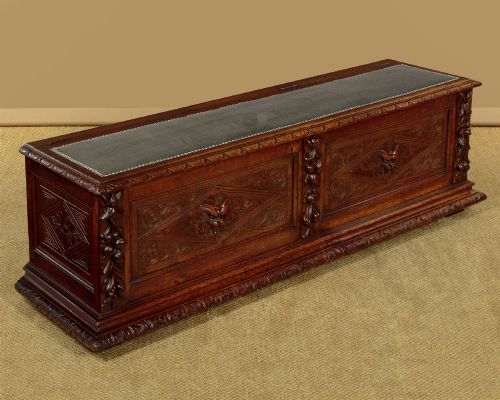
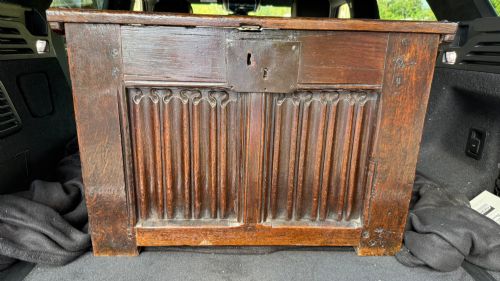
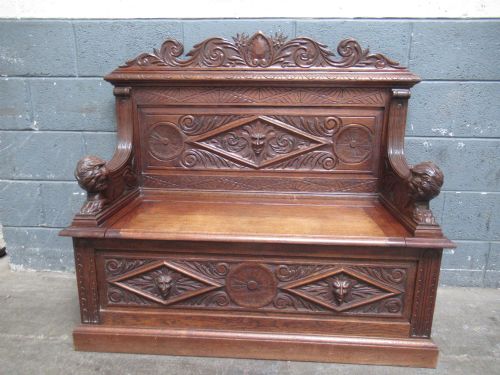
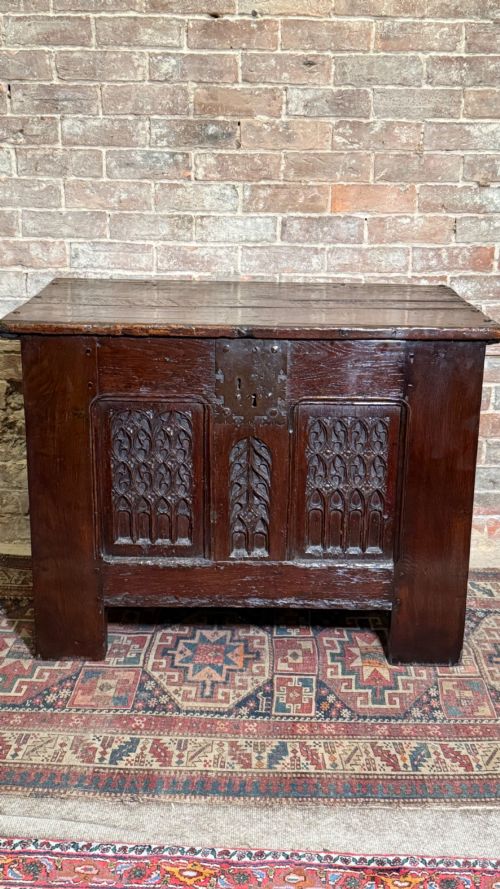




Gothic Carved Coffer
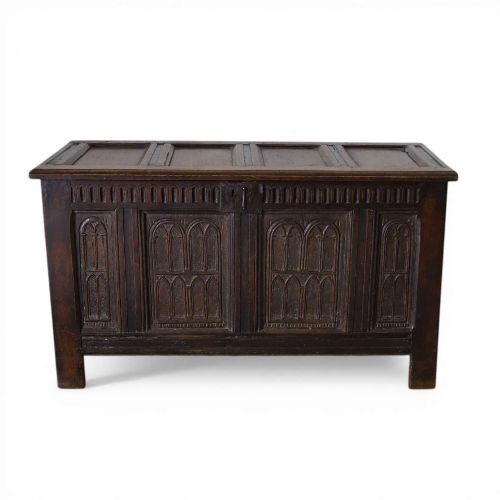
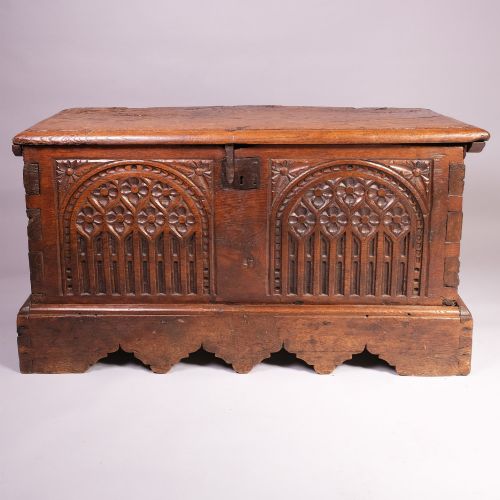
A gothic carved coffer brings medieval weight and architectural detail into a room, offering robust storage built to endure.
Gothic Carved Coffer
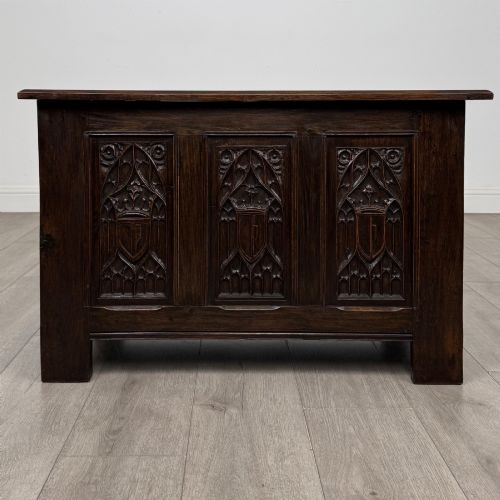
A gothic carved coffer provides sturdy storage through heavy timber chests and panelled boxes designed with architectural motifs. These pieces range from early sixteenth century examples to later revival interpretations that mimic medieval ecclesiastical work.
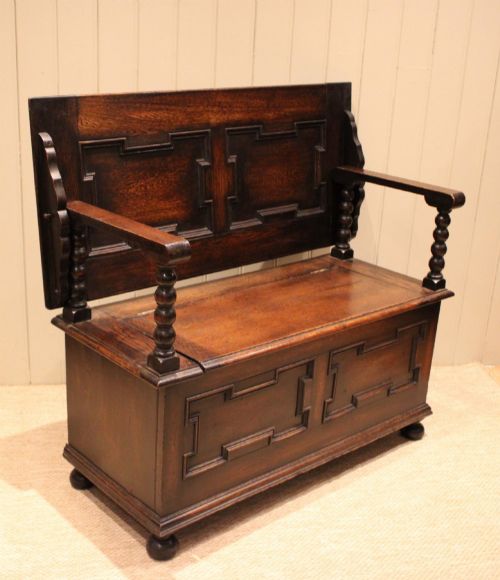
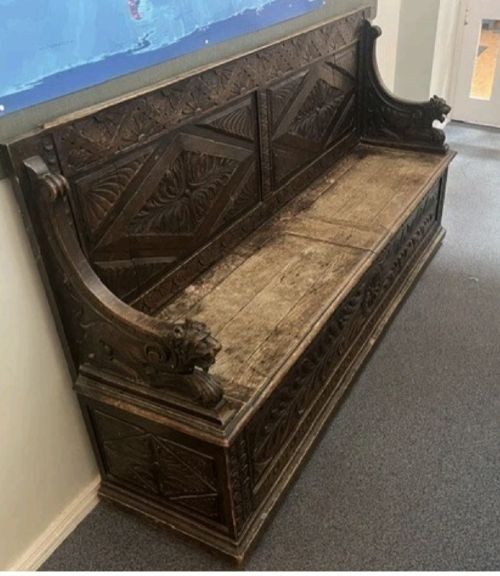
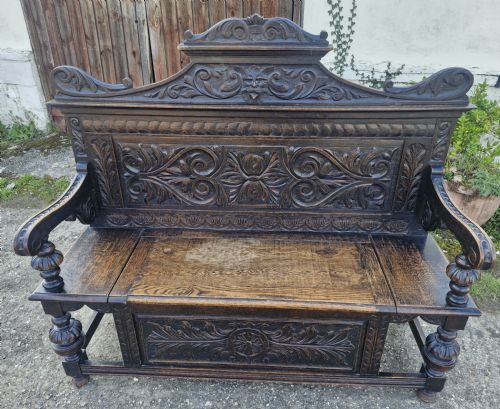
Buyers frequently encounter oak coffers alongside hall benches, settles, and monks benches sharing the same heavy carved vocabulary. Chests span origins from English workshops to continental sources including Spanish, French, and Italian makers.
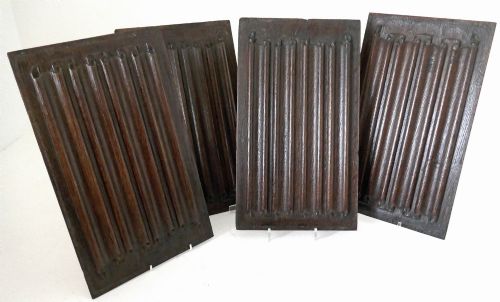
Earlier pieces show plain plank construction or linenfold panels, while later nineteenth century revivals lean heavily on tracery, saints, and Green Man carvings. The function remains consistent across periods: a secure container that doubles as a seat or surface.
Materials and construction
Makers relied primarily on native oak supplemented by elm, walnut, chestnut, and occasionally mahogany for later cabinet work. Boards were joined using traditional pegged framing and heavy plank construction designed to withstand seasonal movement.
Iron and wrought iron provided structural strapwork, hinges, and corner plates, while brass hardware appeared on later pieces. Surfaces received hand-carved linenfold, tracery, or chip carving directly into the timber rather than applied ornament.
Gothic Carved Coffer Retail Price Guide 2026
Typical asking prices for gothic carved coffer among the pieces listed under this phrase on Sellingantiques today, from the lower quarter to the upper quarter. They describe what is for sale here now, not the wider market.
Listings feature timbers spanning oak, elm, walnut, chestnut, and mahogany across pieces dated from the fifteenth century through the arts and crafts period.
Assessing the workmanship
Quality rests in the crispness and depth of the hand carving, distinguishing confident Tudor or seventeenth century work from mechanical nineteenth century revival repetition. The choice of timber grain and the integrity of the original joints dictate structural longevity.
Surfaces retaining genuine early polish and undisturbed patination command greater interest than heavily stripped or over-restored timber. Original ironwork hinges and locks add substantial character compared to modern replacements.
Jack Grimble
The Gothic Carved Coffer Glossary
- Linenfold
- A style of relief carving imitating folded linen fabric, frequently seen on sixteenth century panels. This linenfold motif gives flat timber boards the appearance of draped cloth.
- Tracery
- Openwork or cusped patterns in stone or woodwork derived from Gothic architecture. Tracery adorns the front panels of many ecclesiastical chests.
- Cassone
- A traditional Italian chest used for storing valuables and wedding trousseaux. These luxury chests often feature rich walnut or gilt decoration.
- Settle
- A wooden bench with a high solid back and storage beneath the seat. Settles functioned to keep draughts away from people sitting near fires.
- Green Man
- A sculptural motif of a human face emerging from or entwined with foliage. This pagan symbol appears frequently on revival carved woodwork.
Gothic Carved Coffer: Frequently Asked Questions
What is a gothic carved coffer used for?
These large wooden boxes served originally for storing valuables, documents, and textiles securely in domestic or ecclesiastical settings. Today they function practically as blanket boxes, coffee tables, or hallway storage.
Their heavy timber construction allows them to double as bench seating when placed in halls or reception rooms.
How do I tell sixteenth century from Victorian revival?
Early sixteenth century pieces show authentic tool marks, pegged joinery, and timber shrinkage consistent with age. Revival pieces from the nineteenth century often feature machine assistance, softer oak surfaces, and standardised tracery.
Examining the underside and interior boards reveals how the timber was sawn and worked.
Where were these chests made?
The evidence shows examples originating across England, France, Spain, Italy, and Germany. Regional workshops adapted local timbers such as oak, chestnut, and walnut to prevailing architectural styles.
Continental pieces often display distinctive regional motifs like Moorish decoration or ecclesiastical tracery.
How do I care for old oak furniture?
Keep wooden coffers away from direct heat sources and sudden humidity changes to prevent the oak panels from splitting. Natural beeswax applied sparingly helps nourish the grain without building up sticky residue.
Avoid modern silicon polishes that can permanently alter the dry patination of early timber.