





Gothic Candle Holders
These gothic candle holders bring architectural weight and ecclesiastical gravity to a room, offering genuine period character.
Gothic Candle Holders
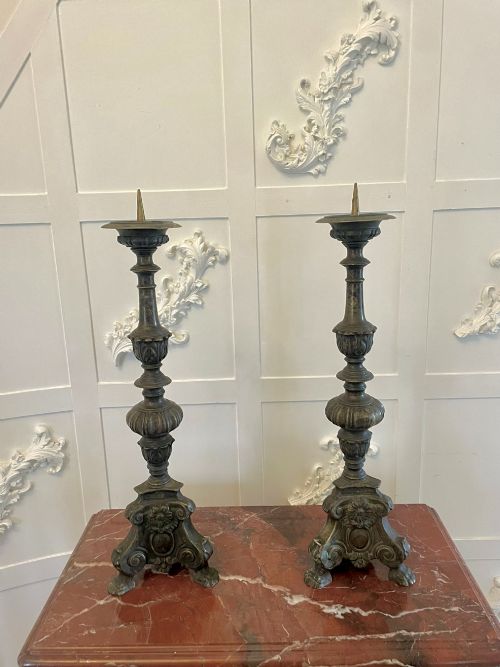
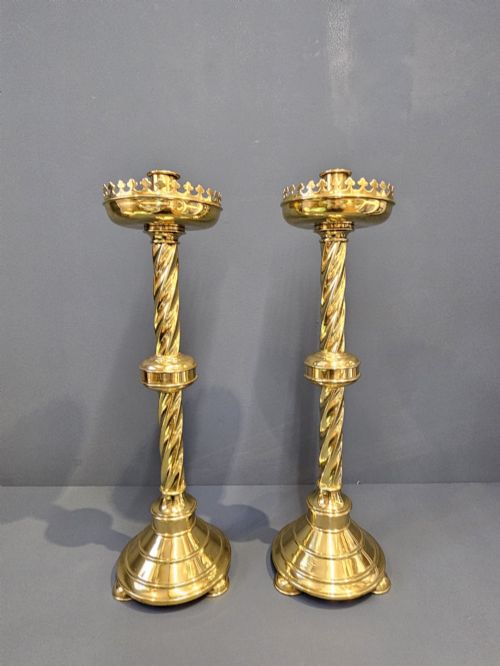
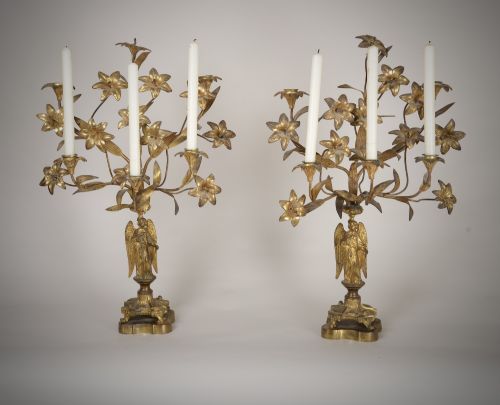
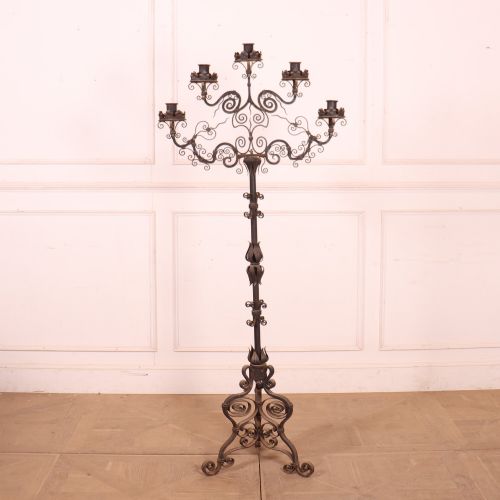
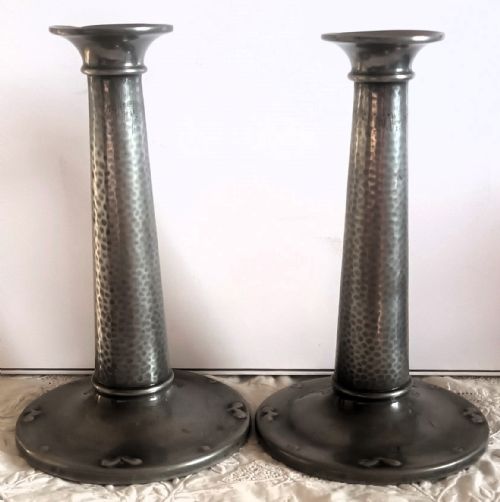
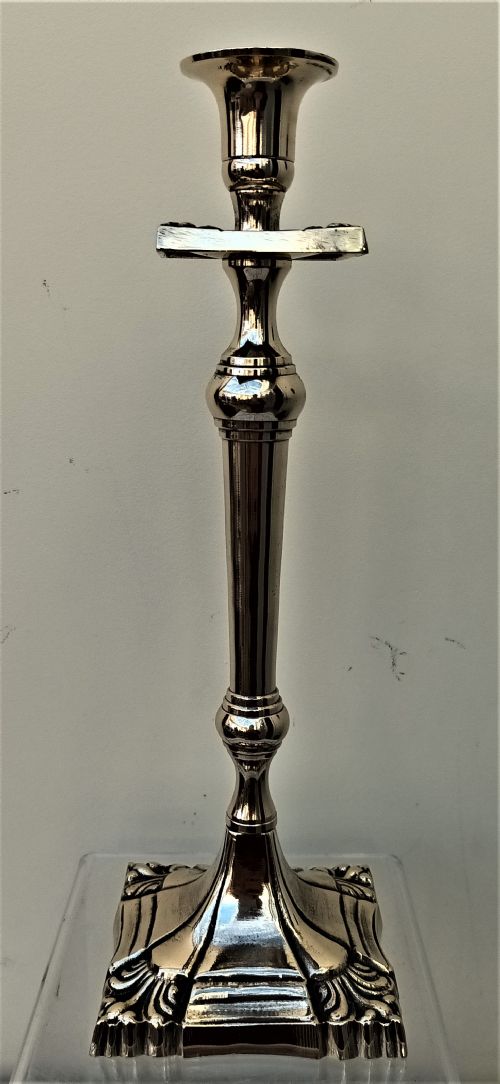
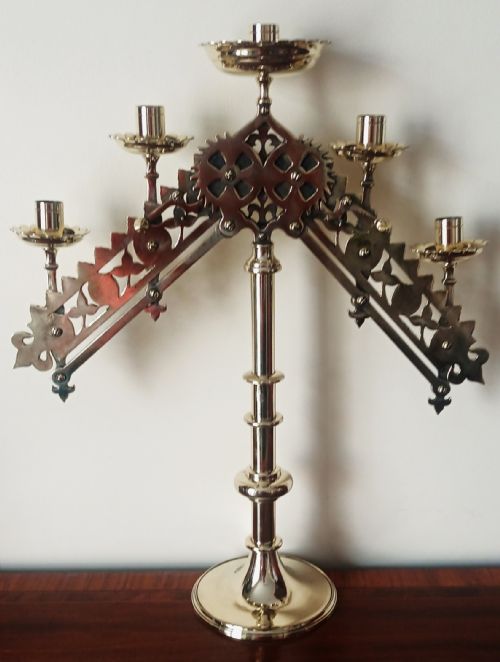
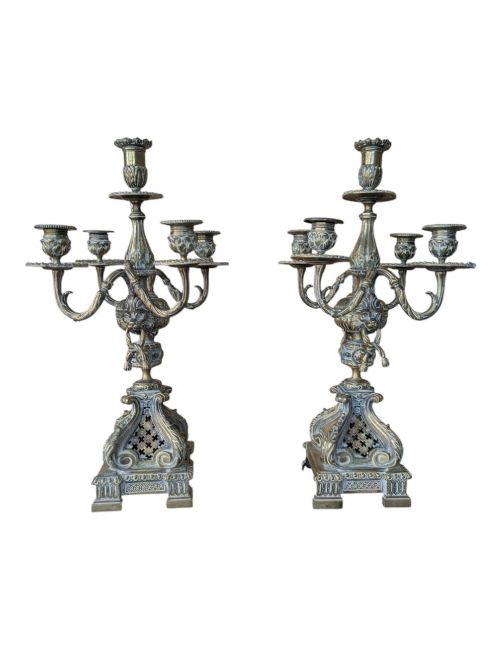
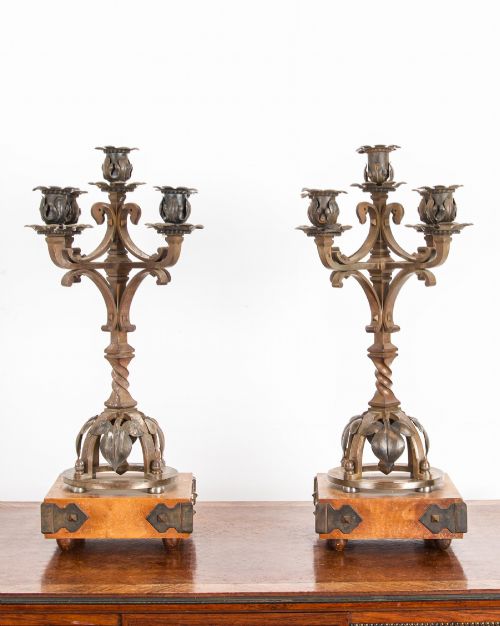
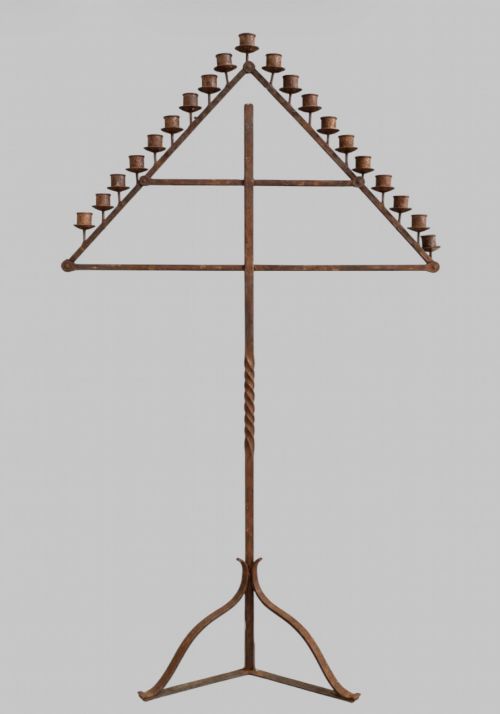
These gothic candle holders draw on ecclesiastical and medieval forms, appearing most frequently as heavy brass or bronze church candlesticks and multi-branch candelabra from the Victorian period and the wider nineteenth century. Buyers encounter tall floor standards, table-standing pricket sticks, and wall sconces that translate architectural motifs into domestic lighting. The selection spans straightforward brass pairs alongside wrought iron floor candelabra and Arts and Crafts designs.
The objects take their cues from Gothic Revival styles, incorporating structural elements such as quatrefoils, heavy bases, and articulated arms. While church pieces dominate the larger scale, domestic chamber sticks and table lamps modified from ecclesiastical lights also appear. The materials lean heavily toward cast and wrought metals, giving these pieces their characteristic solidity.
Distinctions in quality
Substantial weight and metal thickness set the finer ecclesiastical pieces apart from lighter domestic adaptations, reflecting the demands of heavy altar use. Cast components show crispness in the moulding and clean finishing at the seams rather than softening or shallow detail.
Integrity of construction defines the better examples, where articulated joints move smoothly and multi-branch candelabra maintain balance without tilt. The quality of the original surface patination, whether aged bronze or polished brass, indicates how well a piece has survived without aggressive cleaning.
One standout pair depicts medieval characters balancing on stilts, proving that even solemn ecclesiastical metalwork occasionally made room for theatrical whimsy.
Wm. Tonks & Sons·Dr Christopher Dresser
The Gothic Candle Holders Glossary
- Pricket
- A sharp metal spike on a candlestick designed to secure a wax candle rather than a socket holding a taper. This form is common on ecclesiastical and altar lights.
- Candelabra
- A branched candlestick holding multiple lights on separate arms branching from a central stem. These range from heavy altar pieces to domestic table lights.
- Quatrefoil
- A symmetrical decorative shape featuring four partially overlapping circles, frequently seen in Gothic Revival tracery and wall sconce designs. It provides a geometric anchor to metalwork.
- Ecclesiastical
- Pertaining to the Christian church and its architecture, describing items originally made for use in religious services. These pieces often feature heavier proportions and religious motifs.
- Torchere
- A tall stand or floor-standing holder originally designed to carry a torch or large candle. These architectural pieces provide strong vertical presence in a room.
Gothic Candle Holders: Frequently Asked Questions
What is a pricket candlestick?
A pricket candlestick uses a sharp upward-pointing metal spike to impale and hold the base of a candle. This design derives primarily from church and altar lighting.
Such pieces require candles with a small pre-pierced base or a flat bottom that rests securely on the circular drip pan surrounding the spike.
How do I date these metal candle holders?
Dating relies on examining the casting methods, wear patterns, and stylistic markers such as Gothic Revival proportions or Arts and Crafts simplicity. Nineteenth-century examples often display heavier brass casting and tool marks distinct from later reproductions.
Matching the construction style with period design movements helps narrow down the decade of manufacture.
Where were floor candelabras used?
Large floor-standing candelabras originated in churches and ecclesiastical settings for ceremonial illumination. Architectural iron and heavy bronze floor standards provided the necessary height and stability for large spaces.
In domestic settings, buyers place these substantial pieces in hallways or reception rooms to create a strong focal point.