

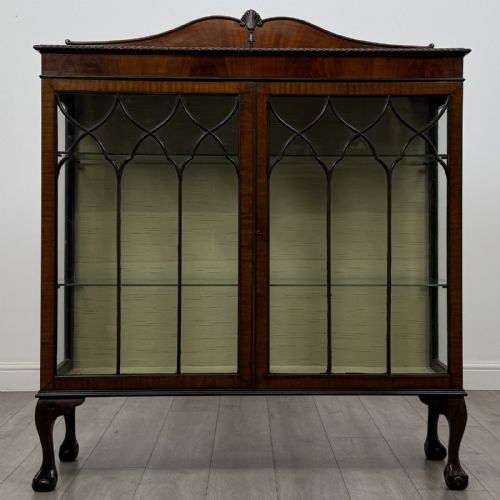
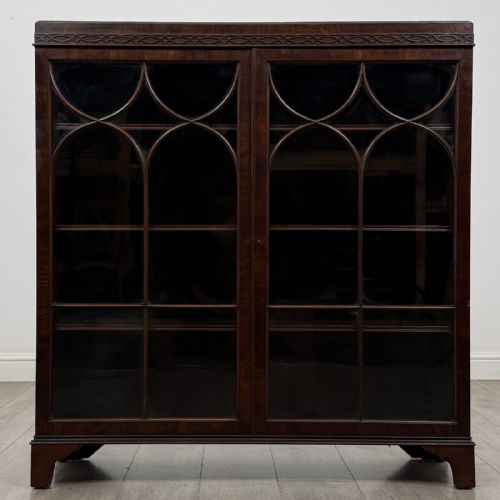
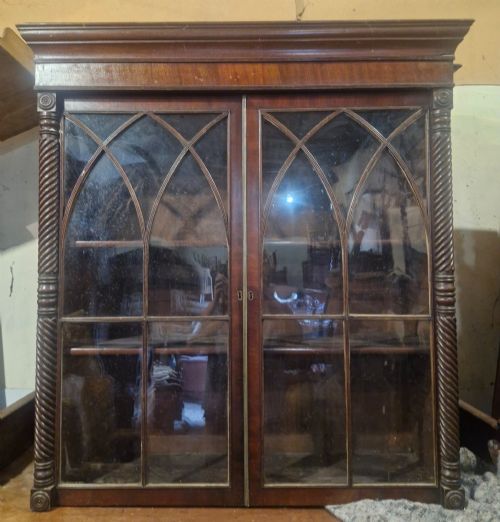
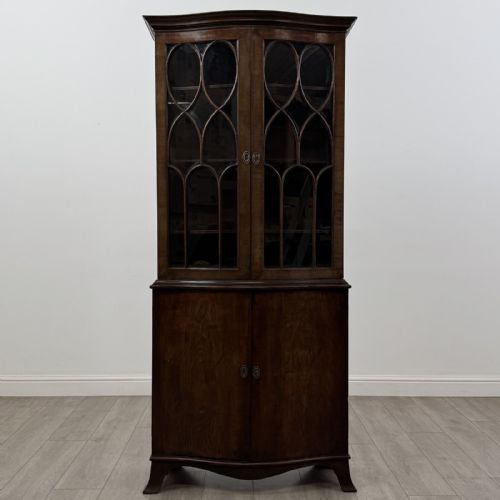

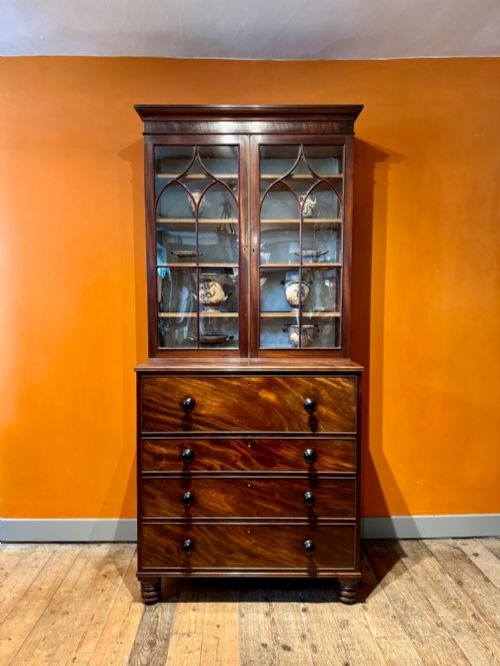


Gothic Astragal Bookcase
A gothic astragal bookcase brings architectural line and figured wood together, offering serious presence for any serious library or drawing room.

Gothic Astragal Bookcase
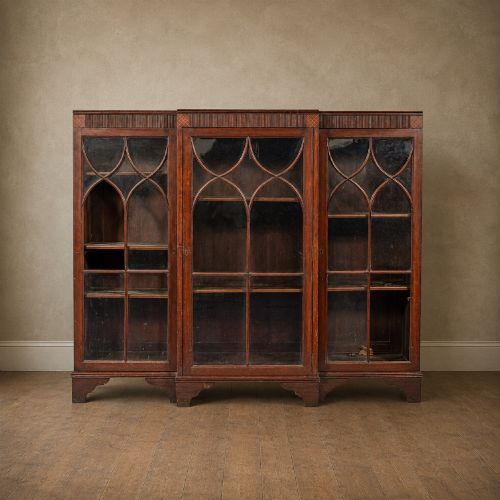
When searching for a gothic astragal bookcase, buyers encounter substantial timber cabinetry built to house libraries and display prized volumes behind glass. The pieces meeting this description span several periods, drawing on Georgian, Regency, and Victorian aesthetics where Gothic Revival glazing bars dominate the upper doors.
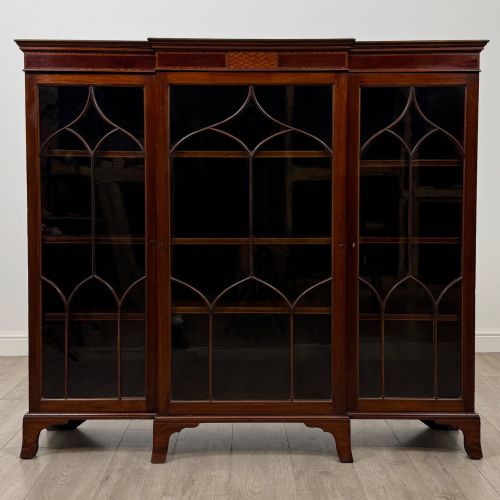
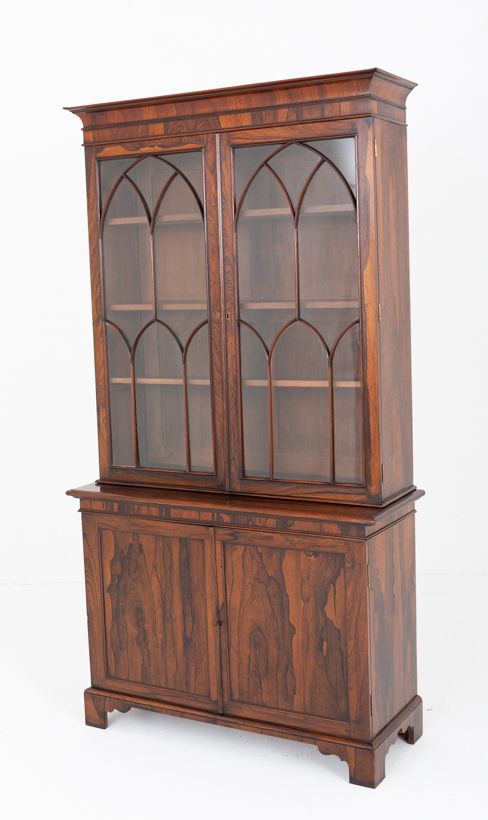
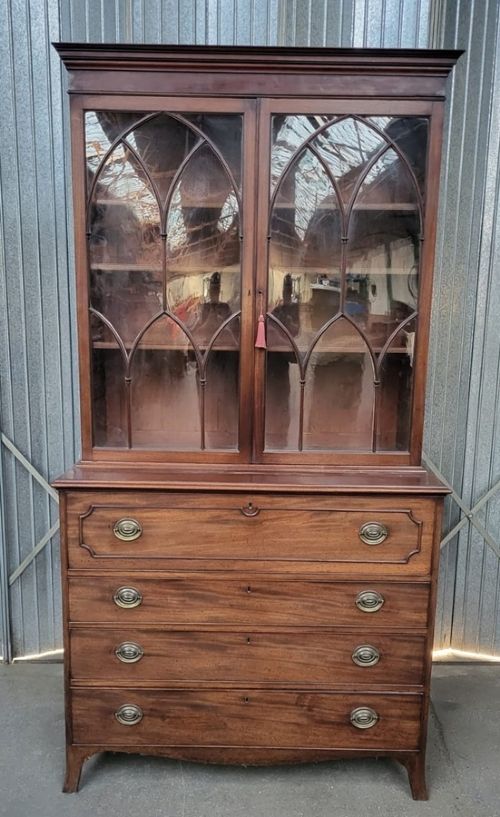
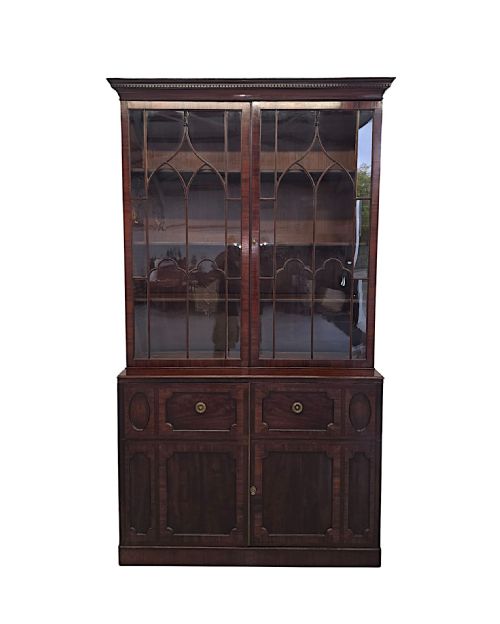
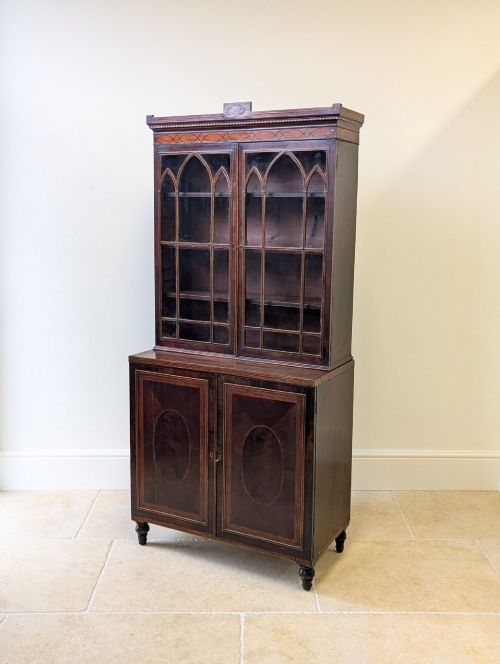
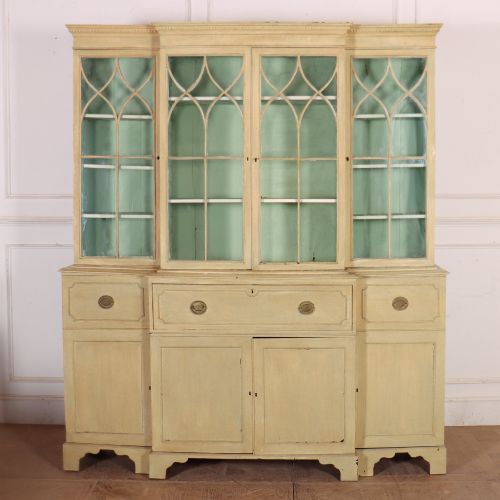
The most common forms on this page include breakfront library pieces, secretaire variants with fitted writing drawers, and taller two-door upright cabinets. These items originate primarily from eighteenth, nineteenth, and early twentieth-century workshops, maintaining traditional proportions across mahogany, rosewood, and satinwood constructions.
How they were made
Cabinet makers constructed these large pieces using solid timber frames overlaid with flame mahogany veneer, rosewood, or satinwood panels. The distinctive glazing bars, known as astragals, were shaped by hand to form pointed arches, cusps, and geometric Gothic tracery over the glass panes.
Internal joinery relied on dovetailed drawer construction and adjustable wooden shelving supported by traditional bearer systems. Brass hardware, including drop handles, escutcheons, and locking mechanisms, secured the lower cupboards and secretaire drops.
Gothic Astragal Bookcase Retail Price Guide 2026
Typical asking prices for gothic astragal bookcase among the pieces listed under this phrase on Sellingantiques today, from the lower quarter to the upper quarter. They describe what is for sale here now, not the wider market.
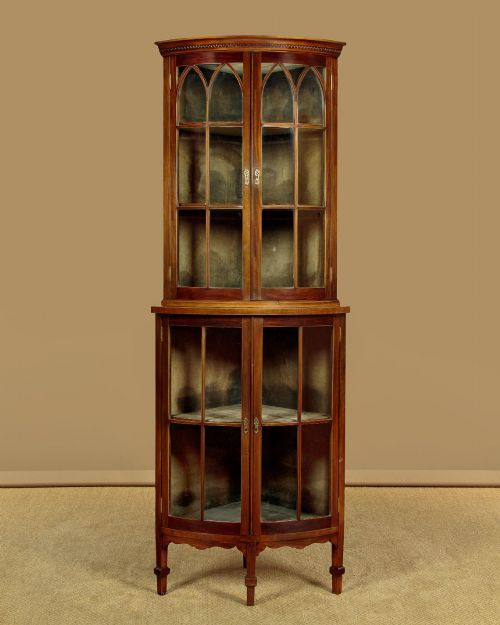
The furniture forms vary from compact corner display cabinets to extensive four-door breakfront library bookcases with integrated secretaire drawers.
What varies in quality
The standard of timber selection defines the upper tier of these pieces, particularly where symmetrical flame mahogany veneers or intricate marquetry inlay cover the surfaces. Lesser examples utilise plain secondary woods or show less disciplined grain matching across the drawer fronts and cupboard doors.
Execution of the glazing bars dictates architectural merit, separating sharp, finely moulded wooden tracery from heavier, clumsily joined alternatives. The precision of the drawer dovetails and the integrity of the original brass fitments further distinguish workshop output.
Jas Shoolbred
The Gothic Astragal Bookcase Glossary
- Astragal
- A moulding profile, often used in glazing bars to divide glass panes within a door. These narrow strips form the intersecting Gothic arches characteristic of the style.
- Breakfront
- A cabinet design where the central section projects forward from the flanking wings. This configuration creates visual depth and generous internal capacity.
- Secretaire
- A cabinet incorporating a pull-out drawer with a hinged writing flap that conceals small pigeonholes and internal compartments. It combines a writing desk with bookshelf storage.
- Marquetry
- Decorative inlay work using various coloured wood veneers to create pictorial or geometric patterns. It appears frequently on finer Edwardian and Victorian cabinet doors.
- Glazed
- Fitted with glass panels that protect books and objects while allowing them to remain visible. The glass is held securely within the intricate wooden astragal framework.
Gothic Astragal Bookcase: Frequently Asked Questions
What is a gothic astragal bookcase?
A gothic astragal bookcase is a large storage cabinet featuring glass doors divided by intricate wooden moulding bars shaped in pointed arch or Gothic Revival patterns.
These pieces combine functional library storage with architectural display, housing books and collections behind glazed upper doors while offering enclosed cupboard or desk space below.
How do I identify the period?
Period identification relies on timber selection, structural proportion, and glazing bar design, moving from eighteenth-century Georgian restraint to nineteenth-century Gothic Revival elaboration.
Earlier pieces often feature solid mahogany and hand-cut astragals, whereas later nineteenth and early twentieth-century examples incorporate machine-moulded tracery, satinwood, or elaborate marquetry inlay.
Where should I place one?
These tall cabinets require substantial wall space and stable ambient conditions away from direct heat sources to protect the veneered surfaces and solid timber frames.
Library rooms, studies, and drawing rooms suit their architectural scale best, providing sufficient clearance for breakfront projections and opening doors.
What maintenance do they need?
Regular dusting with a dry, soft cloth keeps the timber surfaces clean, while occasional application of appropriate wax preserves the polish on mahogany and rosewood.
Checking internal humidity levels prevents timber movement and keeps the delicate wooden astragal bars and glass settings secure within their frames.