

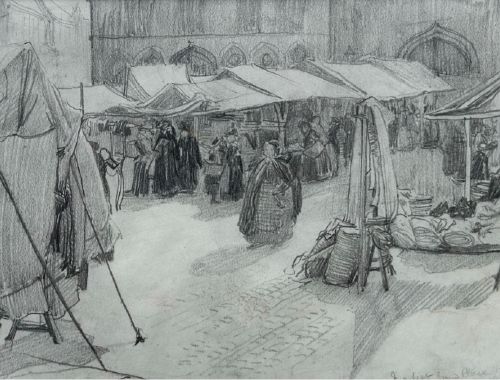


Gothic Architecture Artwork
Gothic architecture artwork captures the soaring arches, intricate stonework, and solemn majesty of medieval design through the eyes of later draughtsmen and painters.
Gothic Architecture Artwork
Gothic architecture artwork comprises framed watercolours, pencil drawings, oil paintings, and etchings depicting cathedrals, abbeys, and ancient churches. These pieces record the profound fascination artists held for medieval ecclesiastical buildings from the nineteenth century through the mid-twentieth century.
The watercolours and drawings on this page frequently capture specific British and European ecclesiastical sites, ranging from grand northern cathedrals to quiet abbey ruins. Artists often focused on the play of light across masonry, intricate tracery, and towering facades.
Buyers will encounter works spanning the Victorian, Edwardian, and mid-twentieth-century periods, demonstrating how successive generations interpreted medieval forms. These pieces vary from detailed architectural studies intended for publication to evocative atmospheric paintings in oil and watercolour.
Materials and Technique
Artists relied primarily on paper supports for architectural subjects, utilising pencil, graphite, and pen and ink to map precise stonework, arches, and buttresses. Watercolour washes were frequently applied over these foundational drawings to build light, shadow, and atmospheric depth around stone structures.
Oil paint on canvas or panel appears in works representing these architectural themes, allowing artists to explore moonlight, dusk, and interior gloom within sacred spaces. Etching offered another primary method, enabling printmakers to render the fine lines of masonry and stained glass with exceptional clarity.
Gothic Architecture Artwork Retail Price Guide 2026
Typical asking prices for gothic architecture artwork among the pieces listed under this phrase on Sellingantiques today, from the lower quarter to the upper quarter. They describe what is for sale here now, not the wider market.
Listings span the nineteenth century through the mid-twentieth century, employing paper, wood, glass, watercolour, ink, pencil, and oil paint.
Judging Quality and Execution
Quality in these architectural works rests upon the draughtsman's command of perspective and the accurate rendering of complex structural geometry. The finest pieces combine rigorous topographical precision with a sensitive handling of light, avoiding stiff technical illustration in favour of atmospheric presence.
The skill with which an artist manages tone determines whether a massive stone cathedral feels weighty and convincing or flat and schematic. Strong compositions use the dark recesses of portals and cloisters to create depth against sunlit stonework.
Joan Gillchrest·Walter Meegan·Fred Lawson·George De Paris·Tom Dudley·Frank Greenwood
The Gothic Architecture Artwork Glossary
- Watercolour
- A painting method where fine pigment is suspended in a water-soluble binder and applied to paper. It allows for transparent washes that imitate the play of daylight on stone surfaces.
- Etching
- A printmaking technique where lines are bitten into a metal plate with acid before being inked and pressed onto paper. This process produces sharp, enduring architectural details.
- Tracery
- The stonework supports within a Gothic window frame that hold the glass. Artists paid close attention to these intricate geometric patterns to convey the authenticity of a building.
- Gothic Revival
- An architectural and artistic movement beginning in the mid-eighteenth century and flourishing through the Victorian era. It revived medieval design principles in both buildings and visual art.
- Original Drawing
- A unique, hand-drawn work created directly by the artist using pencil, ink, or charcoal rather than a mechanical reproduction. These pieces often serve as preliminary studies or finished records of specific sites.
Gothic Architecture Artwork: Frequently Asked Questions
What subjects appear in these works?
These pieces focus primarily on medieval ecclesiastical buildings, including notable cathedrals, abbeys, and parish churches across Britain and Europe. Artists recorded specific locations such as Lincoln Cathedral, York, and continental sites like Reims.
Subjects range from expansive exterior views showing towering facades and spires to detailed studies of interior masonry, arches, and churchyards.
How do I date a piece?
Dating relies upon the stylistic indicators within the artwork, the framing, and any signatures, inscriptions, or gallery labels attached to the piece. Victorian and Edwardian works often display specific architectural recording styles popular during those eras.
Many drawings and watercolours include contemporary pencil inscriptions naming the location and date of the sketch, providing a direct record of the artist's journey.
Where should I hang these artworks?
These works suit traditional studies, libraries, or hallway spaces where their architectural detail can be appreciated at close range. Framed watercolours and delicate ink drawings require placement away from direct sunlight to protect the paper and pigments.
Pairing works of similar periods or framing styles can create a cohesive display celebrating historical architecture.
Are these works original art?
The selection includes unique hand-drawn and painted works such as pencil sketches, pen and ink drawings, and original watercolours and oils. Each unique piece represents the direct hand of the artist recording a specific architectural subject.
Period etchings are also present, representing original printmaking techniques executed during the active period of the artist.