





Gothic Arch Oak Chairs
Gothic arch oak chairs bring unmistakable ecclesiastical presence into a room, combining pointed tracery with heavy timber.
Gothic Arch Oak Chairs
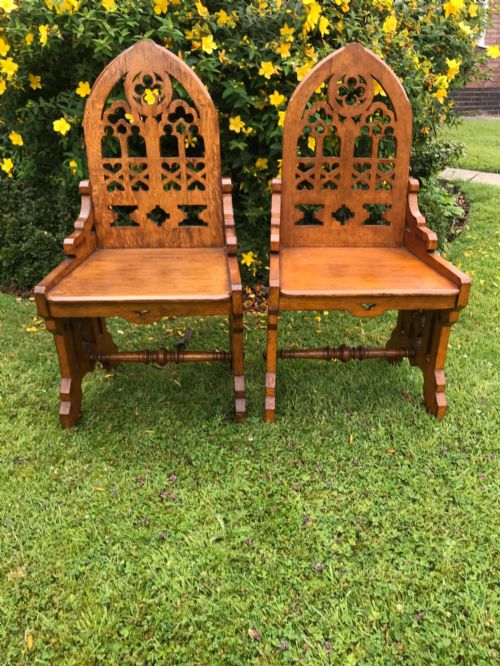
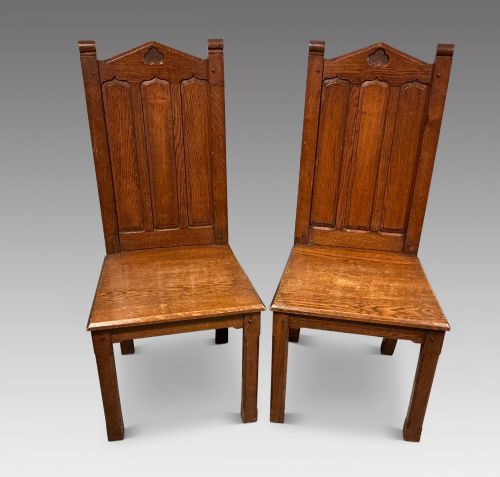
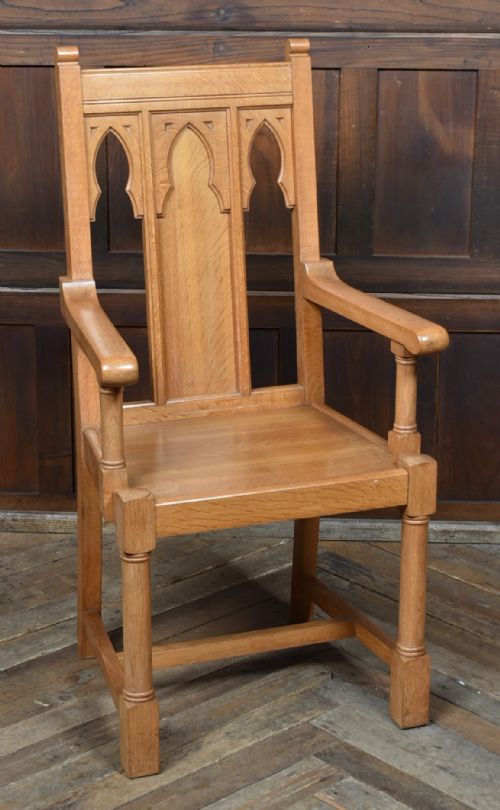
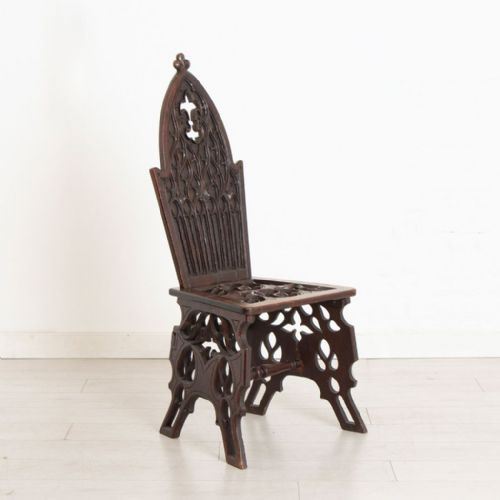
When you search for gothic arch oak chairs, you are looking at sturdy seating built primarily from oak, featuring distinct pointed architectural motifs derived from medieval church architecture. These pieces emerge predominantly in nineteenth-century revivals, spanning dining chairs, hall chairs, armchairs and church seating.
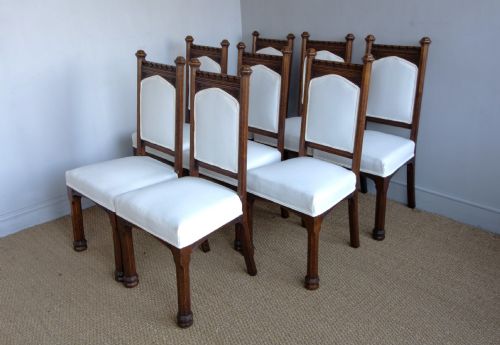
You are most likely to meet Victorian Gothic Revival hall chairs and dining chairs on this page, often constructed in pairs or sets with tall backs and geometric tracery. The selection includes regional variations from English workshops alongside Scottish examples and pieces attributed to specific notable makers.
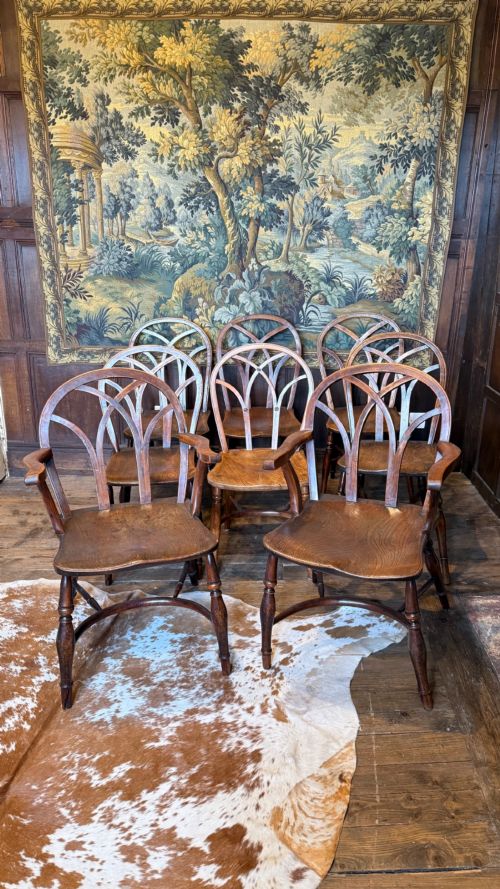
Form follows function across several distinct seating types, ranging from simple side chairs to substantial armchairs, chapel thrones and devotional kneelers. The overarching style draws heavily on Gothic Revival, Victorian Gothic and Georgian traditions.
How they were made
Joinery forms the backbone of these pieces, utilising solid oak alongside secondary timbers like elm and yew in vernacular variations such as Windsor forms. Timber selection prioritises durability, often showing prominent medullary rays in quarter-sawn oak boards.
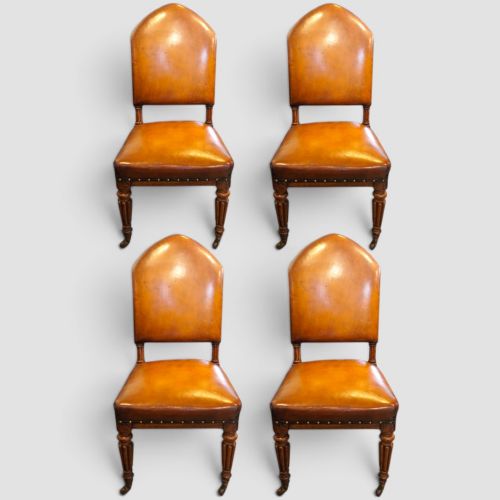
Upholstery appears frequently in the form of leather, buttoned leather, velvet and durable fabrics secured with brass or metal tacks. Carved tracery, fretted tops and armorial details are worked directly into the timber frame by hand.
Seating forms on this page range from modest hall chairs and chapel kneelers to substantial armchairs and multi-piece dining sets.
What varies in quality
The sophistication of the architectural carving separates standard production from exceptional work, particularly in the depth and crispness of the pointed arches and tracery. Pieces bearing maker stamps or credible attributions to notable designers command greater distinction.
The integrity of the timber framing and the preservation of original upholstery materials, such as aged leather or velvet, influence the overall character and historical value of each chair.
Gillows of Lancaster·A.W.N. Pugin·Charles Bevan·Norwich Maker
The Gothic Arch Oak Chairs Glossary
- Gothic Revival
- An architectural and decorative style popular in the nineteenth century that revived medieval forms, pointed arches and structural tracery. It heavily influenced domestic furniture design.
- Tracery
- Openwork ornamental stone or woodwork forming patterns in the head of a gothic window or chair back. It defines the characteristic silhouette of these seats.
- Hall Chair
- A rigid wooden seat traditionally placed in an entrance hall, usually featuring a high carved back and a solid wooden seat rather than upholstery.
- Glastonbury Chair
- A specific nineteenth-century folding armchair design based on an ancient relic, featuring pegged construction and sloping armrests.
- Armorial
- Bearing heraldic arms or crests, often carved into the crest rail or back panel of a chair to denote lineage.
Gothic Arch Oak Chairs: Frequently Asked Questions
Where were these chairs used originally?
These chairs served multiple settings, from grand entrance halls and dining rooms to churches, chapels and domestic reception spaces. Ecclesiastical examples functioned as devotional seating or chapel thrones.
Domestic versions provided formal seating in Victorian and Edwardian homes, where heavy architectural furniture reflected medieval interests.
How do I identify the period?
Dating relies on stylistic clues, timber characteristics and construction methods visible across Victorian, Edwardian and Georgian examples. Nineteenth-century revivals often display precise machine assistance alongside hand carving.
Earlier Georgian pieces tend toward simpler structural lines, while later Edwardian items incorporate refined revival details alongside church furnishings.
Are these chairs comfortable for daily use?
Many of these chairs feature upright wooden seats designed for formal posture rather than lounging. Hall chairs specifically prioritize architectural presence over cushioning.
Armchairs upholstered in leather or velvet offer a softer sit, though overall ergonomics reflect nineteenth-century standards rather than modern comfort.
How do I care for oak and leather furniture?
Solid oak benefits from occasional treatment with appropriate natural waxes to nourish the grain and prevent the timber from drying out. Avoid placing the wood near direct heat sources.
Leather seats require gentle cleaning and conditioning to maintain flexibility, protecting the original material from cracking over time.