
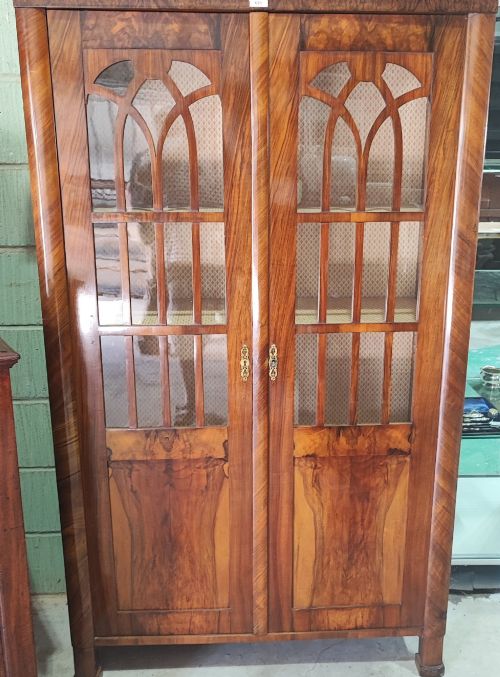
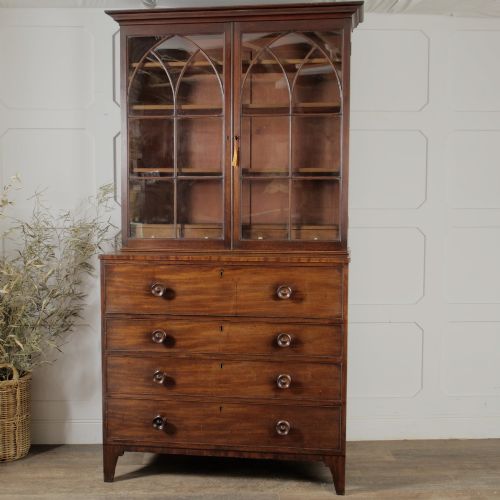
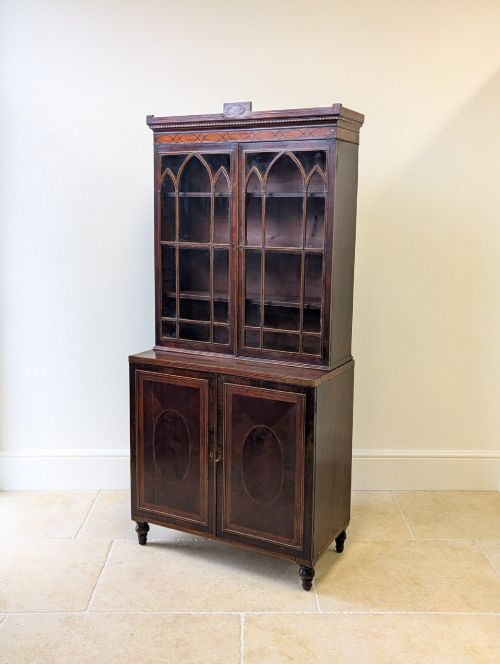


Gothic Arch Glazed Cabinet
A gothic arch glazed cabinet brings architectural line and glass display together, offering storage that draws the eye in any room.
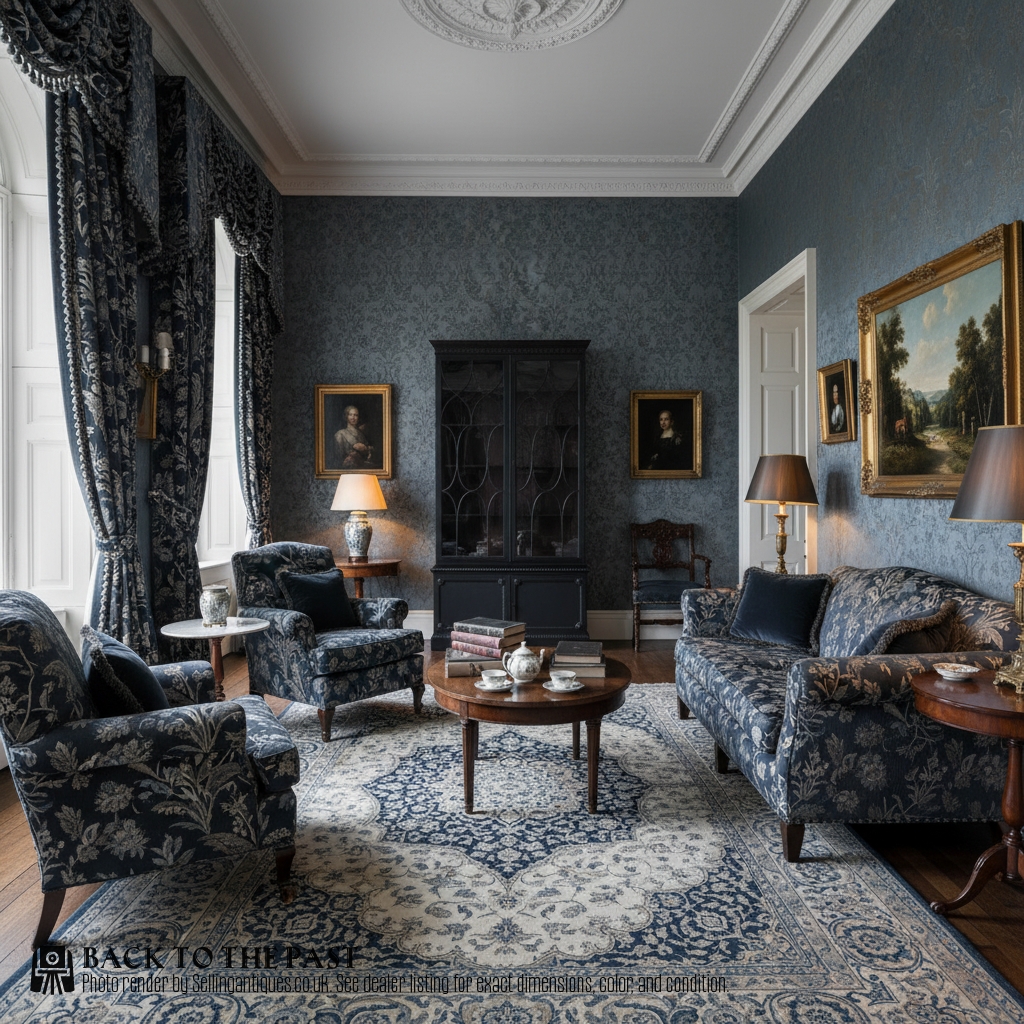
Gothic Arch Glazed Cabinet
When you search for a gothic arch glazed cabinet, you encounter timber furniture built to house books or display objects behind glass doors shaped with pointed arches. The examples on this page span the Georgian, Regency, and Victorian periods, taking forms such as breakfront bookcases, corner cabinets, and upright display cabinets.
Most pieces date from the nineteenth century, reflecting the Gothic Revival and related stylistic movements across England, Ireland, and Northern Europe. Cabinet makers constructed these items in mahogany, walnut, rosewood, and pine, combining utilitarian storage with decorative architectural tracery in the glazing bars.
The layout ranges from tall library bookcases with secretaire drawers to smaller corner cupboards and side cabinets designed for domestic rooms. Glazed upper sections protect contents while exposing them to light, while solid wooden doors or cupboard bases below conceal larger items.
Materials and construction
Cabinet makers relied primarily on dense hardwoods like mahogany, walnut, and rosewood, frequently selecting figured veneers for fronts and panels while employing pine and oak for internal carcases. Timber selection dictated both the structural integrity and the visual depth of the finished piece, particularly when polished to a high sheen.
Glazing bars demand precise joinery to form the complex geometry of the pointed arch without weakening the door frame. Glass panes were cut and bedded individually into wooden rebates, supported by brass hardware on hinges and locks.
Secondary decorative techniques include Tunbridgeware inlay, marquetry, and painted surfaces, adding colour and texture to the primary timber framework. Construction joints typically incorporate hand-cut dovetails and mortise and tenon framing, demonstrating traditional workshop methods of the Georgian and Victorian eras.
Gothic Arch Glazed Cabinet Retail Price Guide 2026
Typical asking prices for gothic arch glazed cabinet among the pieces listed under this phrase on Sellingantiques today, from the lower quarter to the upper quarter. They describe what is for sale here now, not the wider market.
Secret compartments inside secretaire drawers meant valuable letters stayed safe from wandering eyes.
Evaluating quality and execution
Quality rests on the precision of the architectural glazing bars and the selection of timber veneers. Superior cabinets display fine, even grain patterns and sharp, well-defined timber mouldings that echo genuine stone or timber cathedral architecture.
The structural ambition of the piece also separates standard utilitarian furniture from exceptional cabinet work. Breakfront forms, unusual concave shapes, and integrated secretaire drawers require advanced carpentry to maintain alignment and balance across large surfaces.
Originality of hardware, glass, and surface finish determines the integrity of a piece. Cabinets retaining their period brass locks, handles, and untouched patinated timber surfaces command greater interest than those altered or stripped down during later restorations.
The Gothic Arch Glazed Cabinet Glossary
- Breakfront
- A cabinet design where the central section projects forward from the flanking wings, adding architectural depth to large bookcases.
- Glazing bars
- The narrow wooden strips that divide a glass door into smaller panes, forming the pointed arch patterns characteristic of Gothic design.
- Secretaire bookcase
- A tall storage piece containing a pull-out desk drawer with a fitted interior of pigeonholes and small drawers behind a drop-front panel.
- Marquetry
- Decorative veneer work forming pictorial or geometric patterns using various coloured woods applied to the carcase surface.
- Tunbridgeware
- A form of intricate mosaic woodwork using tiny blocks of naturally coloured timbers to create geometric decorative bands.
- Scrumbled paint
- A decorative surface technique where translucent paint layers are manipulated with combs or brushes to imitate the grain of finer woods.
Gothic Arch Glazed Cabinet: Frequently Asked Questions
What periods do these cabinets come from?
The pieces listed span the Georgian, Regency, and Victorian eras, with many examples originating from the nineteenth century during the height of the Gothic Revival style.
Craftsmen across these periods adapted medieval architectural motifs for domestic interiors, producing bookcases and display cabinets in various regional European workshops.
How do I distinguish Gothic Revival from Georgian furniture?
Georgian furniture often relies on classical proportions and symmetry, whereas Gothic Revival pieces incorporate pointed arches, lancet windows, and ecclesiastical architectural detailing.
Cabinet makers blended these influences during transitional periods, producing items that pair classical carcase forms with pointed glazing bars.
What woods were commonly used?
Makers favoured dense hardwoods such as mahogany, walnut, and rosewood for their durability and capacity to take a deep polish. Regional workshops also utilised painted or scrubbed pine for country house furniture and kitchen dressers.
Veneers were frequently applied to larger flat surfaces to showcase figured grain patterns while maintaining structural stability.
How were these cabinets used originally?
These cabinets served primarily to store and display bound volumes in libraries, drawing rooms, and studies of substantial homes. The glazed upper doors protected valuable books from dust while allowing titles to be read from across the room.
Lower cupboard sections and secretaire drawers provided concealed storage for writing materials, household ledgers, and personal papers.