



Gothic Arch Chairs
Gothic arch chairs bring pointed architectural geometry and timber solidity into domestic interiors.
Gothic Arch Chairs
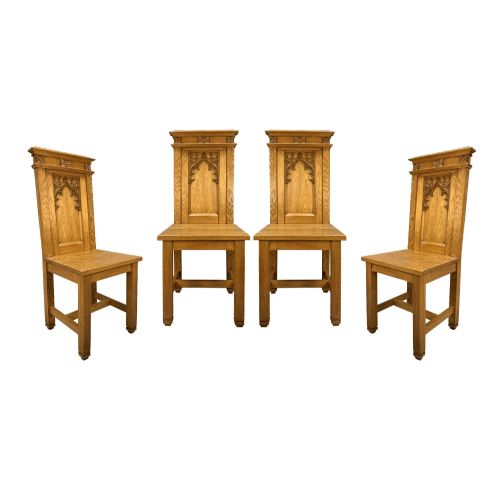
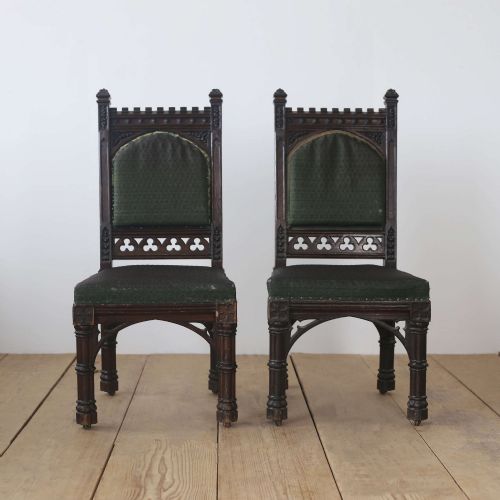
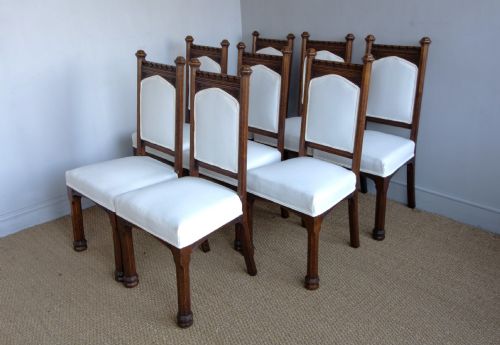
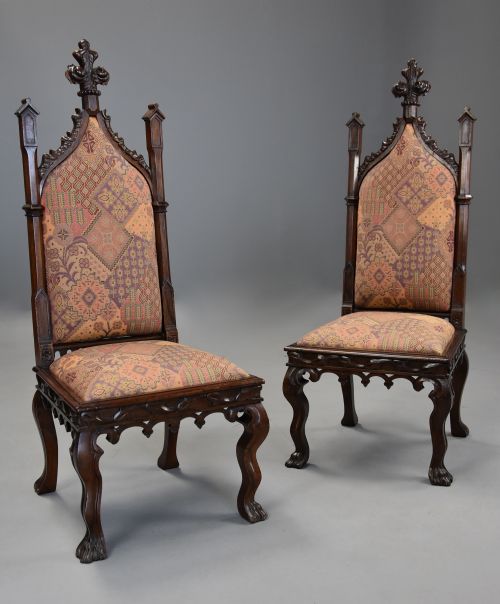
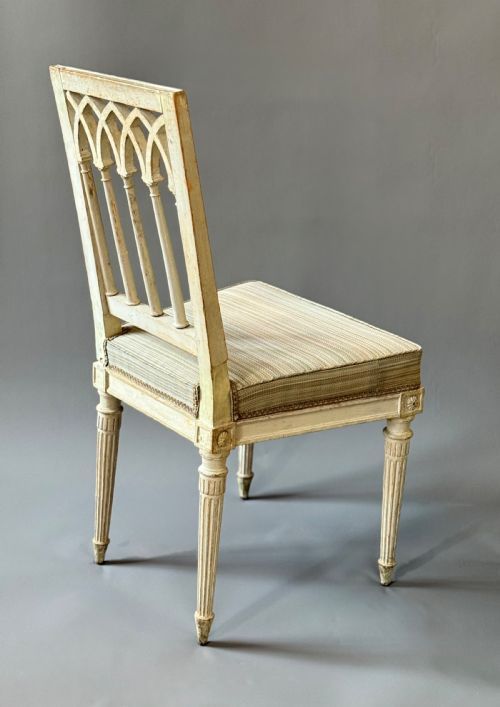
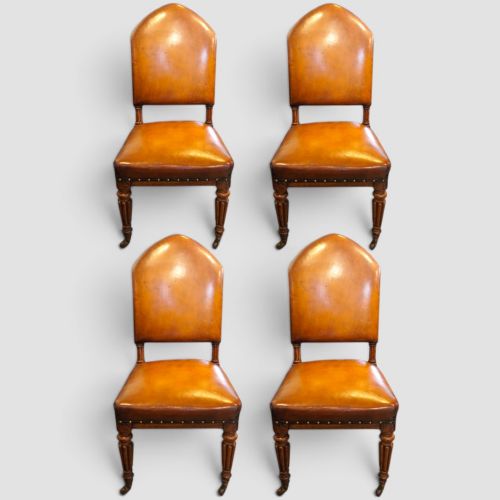
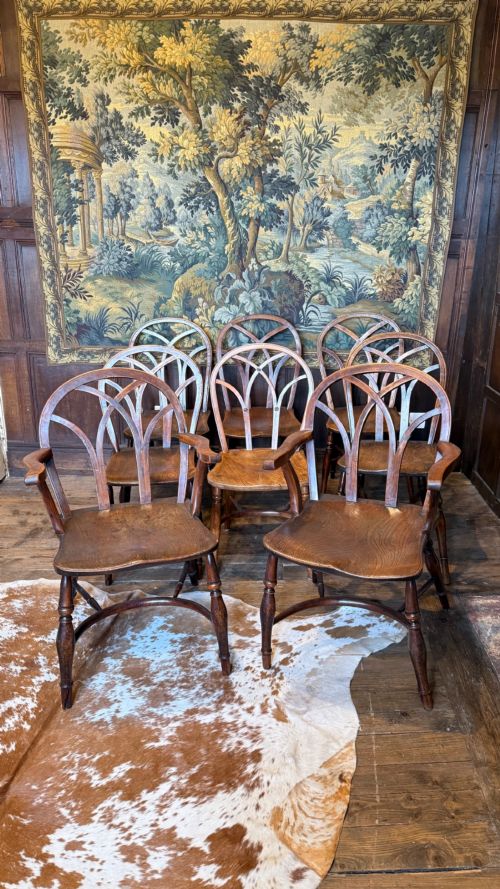
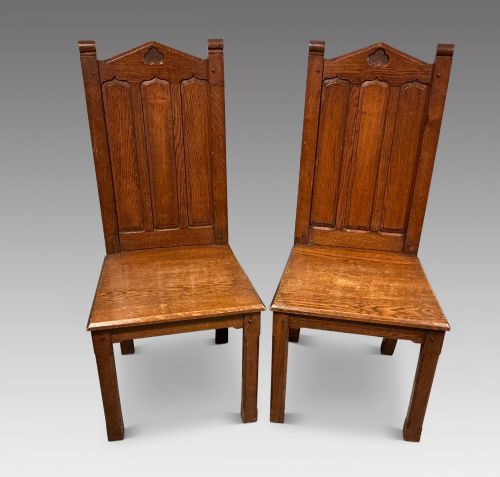
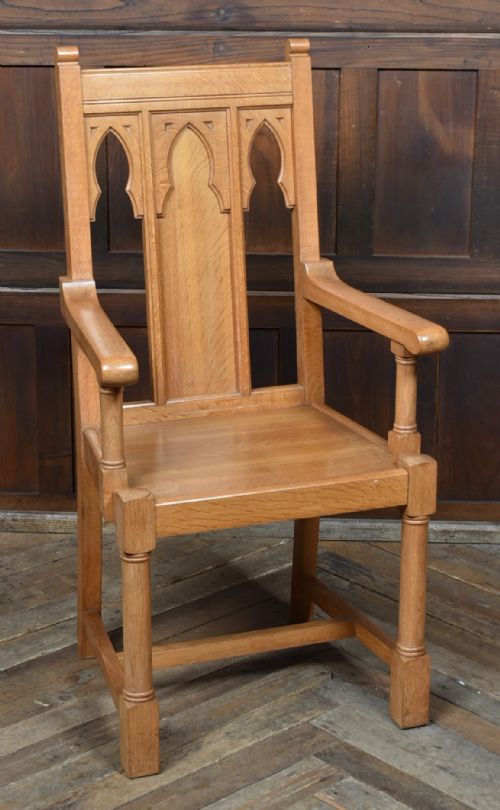
These gothic arch chairs encompass dining seats, hall chairs, armchairs, and throne forms spanning the eighteenth, nineteenth, and early twentieth centuries. Buyers search for these pieces to introduce pointed arches, trefoils, and ecclesiastical verticality into traditional rooms.
Origins stretch across English workshops, Scottish regional makers, French ateliers, and Channel Islands joiners. Forms range from rustic pitch pine chapel seats to stamped mahogany dining sets attributed to notable nineteenth-century designers.
Materials and construction
Timbers dictate the build of these seats, with oak and mahogany providing the structural strength required for carved tracery and deep relief work. Pitch pine and rosewood appear in regional and domestic examples, while painted wood and cast iron serve specific garden or decorative functions.
Joinery methods rely on traditional framing to support pointed arch backrests, fretted tops, and armorial details. Upholstery materials such as leather, fabric, and buttoned textiles are integrated into seat pads and armchairs where comfort meets architectural severity.
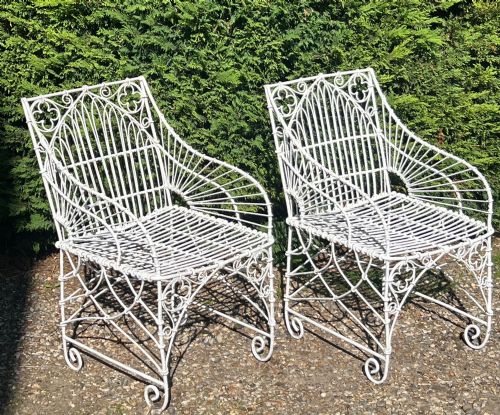
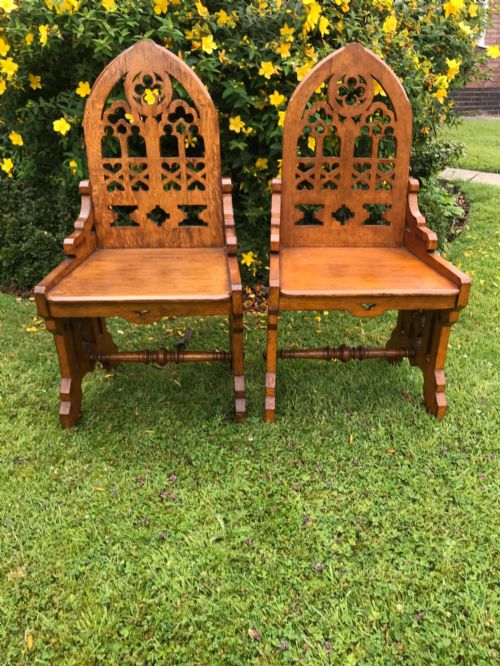
Even the garden benches decided they needed pointed arches.
Judging quality
Depth and crispness of the architectural carving separate standard production from exceptional pieces. Sharp trefoils, well-defined crockets, and clean tracery indicate skilled hand-workmanship within the Gothic Revival idiom.
Substance of timber and integrity of construction determine longevity in heavy forms like throne chairs and hall seats. The presence of maker stamps, original labels, or documented attribution elevates historical importance.
Norwich Maker·W.A. Willcocks·Gillows of Lancaster·A.W.N. Pugin·Charles Bevan·Val D'osne
The Gothic Arch Chairs Glossary
- Gothic Revival
- An architectural and decorative style drawing inspiration from medieval forms, prevalent during the nineteenth century. It utilises pointed arches, quatrefoils, and heavy timber construction.
- Tracery
- Ornamental stonework-style openwork in wood or metal, forming the characteristic patterns in chair backs. This element defines the architectural appearance of the seating.
- Glastonbury chair
- A specific type of folding wooden armchair with an X-frame base and sloping panel back, associated with medieval ecclesiastical furniture. Nineteenth-century revivals adapted this medieval pattern for domestic use.
- Hall chair
- A rigid wooden seat placed in entrance halls, typically featuring a solid carved back and no upholstery. These pieces often display armorial bearings or prominent architectural motifs.
- Throne chair
- A large, high-backed ceremonial armchair designed with exaggerated vertical proportions and heavy carving. Such seats served functional roles in chapels or grand reception rooms.
Gothic Arch Chairs: Frequently Asked Questions
Where were gothic arch chairs used?
These chairs served multiple environments depending on their form and material. Hall chairs and armchairs filled grand domestic entrances and reception spaces.
Simpler pitch pine or oak variants furnished churches, chapels, and institutional buildings, while cast iron versions populated nineteenth-century gardens.
How do I date a gothic chair?
Dating relies on timber choice, construction methods, and stylistic shifts between Georgian Gothick, Victorian Gothic Revival, and Edwardian interpretations. Eighteenth-century pieces often employ mahogany with lighter proportions, while nineteenth-century items favour heavier oak and cast iron.
Makes stamped by firms like Gillows or bearing nineteenth-century paper labels provide precise historical markers.
Are these chairs comfortable for daily use?
Many hall chairs and architectural side chairs were built primarily for display and posture rather than lounging. Their upright wooden backs and solid seats encourage formal sitting.
Armchairs fitted with leather upholstery or buttoned padding offer a softer sit suited to studies and living rooms.
How do I care for antique oak and mahogany?
Maintain timber surfaces by dusting regularly with a dry cloth and applying appropriate beeswax sparingly. Keep furniture away from direct heat sources and dramatic humidity shifts to prevent wood splitting.
Protect leather and fabric upholstery from prolonged sunlight to preserve original textures.