
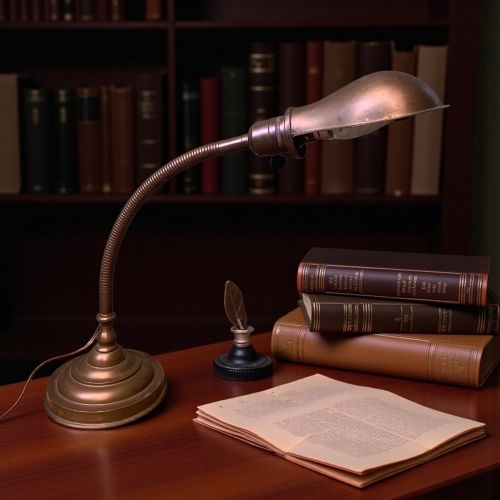


Gooseneck Table Lamp
These gooseneck table lamp examples span the nineteenth century through the nineteen-thirties, offering adjustable metal illumination for desks and reading spaces.
Gooseneck Table Lamp
A gooseneck table lamp provides directional lighting through a flexible or adjustable arm, serving as a practical desk or reading light. The selection centres heavily on Edwardian pieces alongside nineteenth-century and nineteen-thirties examples.
Most pieces on this page appear in brass or bronze, frequently incorporating adjustable angles or swan neck designs. Forms range from utilitarian desk lamps to decorative student reading lights with glass, fabric, or porcelain elements.
How they were made
Construction relies primarily on cast metals such as brass, bronze, and cast iron to provide stability for the extending arm. Flexible tubing and pivoting joints allow the light to direct downwards onto a surface.
Shades and decorative components integrate etched glass, porcelain, and fabric flex, balancing functional durability with period aesthetic details.
The listings span multiple decades, incorporating Edwardian, Art Nouveau, Art Deco, and French Industrial styles executed in brass, bronze, and cast iron.
What varies in quality
The sophistication of the articulation mechanism separates standard models from superior examples. Smooth adjustment in the flexible or swan neck arm indicates finer engineering.
Material depth and finish integrity also define the range, distinguishing simple cast iron bases from heavier, chased bronze or detailed brass assemblies with original shades.
Hawkins
The Gooseneck Table Lamp Glossary
- Swan neck
- A curved upper arm resembling a bird's neck that directs light downward. This profile appears frequently in Edwardian desk lamps.
- Flexible flex
- The insulated wire supplying power, sometimes retained in its original fabric form on nineteen-twenties pieces. It connects the power source to the lamp holder.
- Student lamp
- A reading lamp with a rigid or adjustable arm designed originally for focused task illumination. These often feature brass construction and specialised glass shades.
- Art Nouveau
- A decorative style from the late nineteenth and early twentieth centuries emphasising organic, flowing lines. Examples in bronze display these characteristic curving motifs.
Gooseneck Table Lamp: Frequently Asked Questions
What is a gooseneck table lamp?
A gooseneck table lamp is a task light featuring a flexible or adjustable arm that directs illumination precisely where needed. These pieces date from the nineteenth century through the nineteen-thirties.
They appear predominantly in brass and bronze, designed for desks, tables, and reading areas. The flexible structure allows the user to alter the height and angle of the light beam.
How do I use a vintage desk lamp safely?
Vintage desk lamps require checking the wiring, as many period examples feature older cords or require rewiring for modern use. Consulting a qualified electrician ensures safe operation.
Matching the bulb wattage to the lamp's capacity protects original components like fabric flex, porcelain, and glass shades from excessive heat.
How do I date an adjustable brass lamp?
Dating relies on examining the manufacturing materials, base design, and articulation methods. Edwardian models often feature specific brass patination and swan neck profiles.
Nineteen-thirties examples introduce industrial elements and streamlined bases associated with Art Deco or early anglepoise designs.
What is the difference between a student lamp and a notary lamp?
A student lamp typically incorporates an adjustable metal arm designed for extended reading, often paired with a glass or porcelain shade. They prioritize functional, directional illumination.
A notary lamp often utilises heavier bronze or brass casting with a distinct weighted base suited for institutional or office desks.