


1930s Brass Desk Lamp
A 1930s brass desk lamp brings period utility and polished metal warmth to a working surface, combining heavy cast bases with adjustable arms.
1930s Brass Desk Lamp
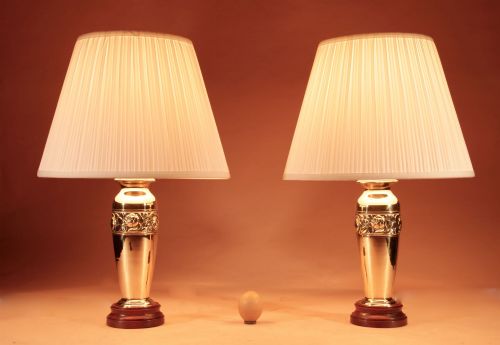
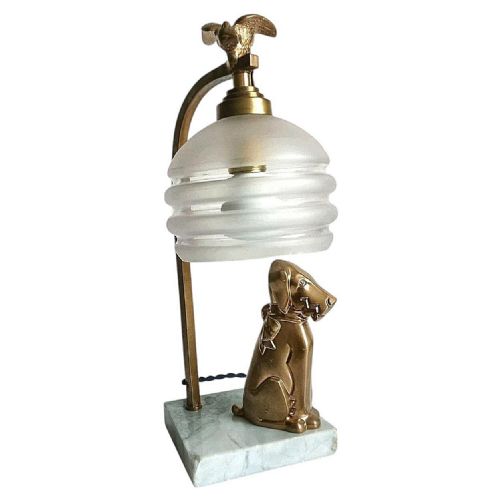
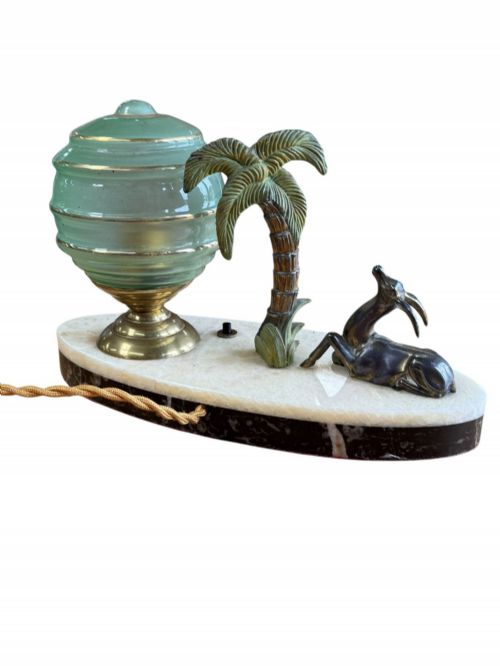
Art Deco styling heavily influences the selection, often pairing polished or coppered brass with frosted glass, marble, or novelty figural elements such as dogs and birds. Buyers will frequently encounter cast brass constructions alongside adjustable steel and brass hybrids intended for direct task illumination.
Origins span across British, French, and Italian workshops, reflecting a diverse international output during the 1920s and 1930s. The common thread remains the use of durable metal framing combined with functional articulation for focused light.
How they were made
Construction relies heavily on cast and spun brass, often paired with weighted marble, onyx, or granite bases to maintain balance during adjustment. Flexible tubing and articulated joints allow the metal arms to reposition smoothly without straining the internal wiring channels.
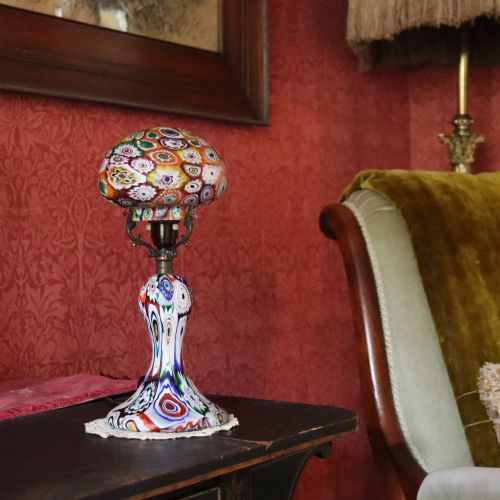
Diffusers and shades incorporate moulded frosted glass, opaline glass, or millefiori glass techniques alongside traditional fabric covers. These transparent and translucent elements soften the concentrated glare from early electric bulbs while maintaining the distinct geometric lines of the period.
Listings demonstrate a strong presence of Art Deco styling, combining brass with marble, frosted glass, and figural spelter elements.
What varies in quality
The weight and gauge of the brass components dictate the structural integrity of each piece, distinguishing solid cast creations from lighter sheet metal assemblies. High quality examples maintain precise tension in their adjustable joints and flexible necks over decades of movement.
The integration of secondary materials such as carved marble bases, specialised opaline shades, or intricate figural castings elevates the overall execution. Superior finishing shows clean casting seams, well-preserved patination, and robust mounting of original sockets and switches.
Fratelli Toso
The 1930s Brass Desk Lamp Glossary
- Art Deco
- A design style characterised by streamlined geometric forms, stylized motifs, and modern industrial materials that dominated the interwar decades.
- Swan Neck
- A curved tubular metal arm that arches over the workspace to direct illumination downward onto a specific surface.
- Opaline Glass
- A milky, translucent glass type used to create soft, diffused light without harsh glare.
- Spelter
- A zinc alloy frequently cast into figural sculptures and decorative bases, often finished to resemble bronze or brass.
1930s Brass Desk Lamp: Frequently Asked Questions
How do I adjust a flexible lamp safely?
Support the lower stem with one hand while gently guiding the flexible metal tubing into the desired position with the other. This prevents undue strain on the internal wiring and older soldered joints.
Avoid bending the arm past its natural radius to maintain proper tension and prevent damage to the vintage conductive core.
Can I use modern LED bulbs in these?
Most desk lamps from this period accept standard screw or bayonet cap bulbs, provided the wattage matches safe operating limits for historic fixtures. Modern LED alternatives generate less heat, which helps protect vintage fabric shades and delicate wiring.
Check the interior of the original brass shade to ensure physical clearance for the chosen bulb size.
How do I clean polished brass safely?
Dust the metal surfaces regularly with a soft, dry cloth to prevent the accumulation of grime in decorative recesses. Avoid harsh chemical polishes that can strip away desirable historical patination from the brass.
A mild solution of soap and warm water, applied sparingly and dried immediately, handles tougher marks on solid metal components.
What indicates a 1930s origin?
Key indicators include heavy cast brass construction, specific switch mechanisms, and characteristic Art Deco geometric or figural motifs. The presence of weighted marble bases and flexible metal tubing points directly to interwar manufacturing practices.
Materials such as frosted opaline glass and spun brass shades reinforce the chronological context of the design.