

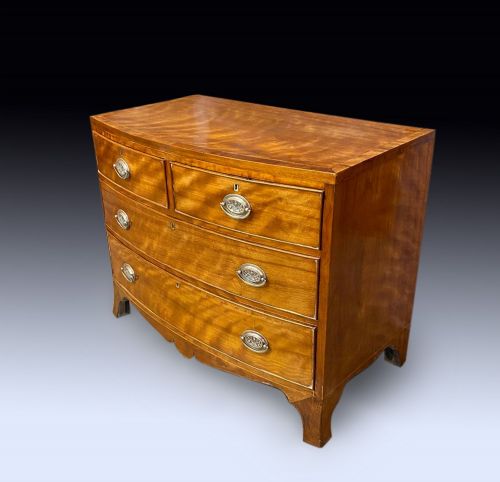


Golden Wood Dresser
These golden wood dresser pieces span centuries of cabinetmaking, bringing warmth and figured grain to any interior.
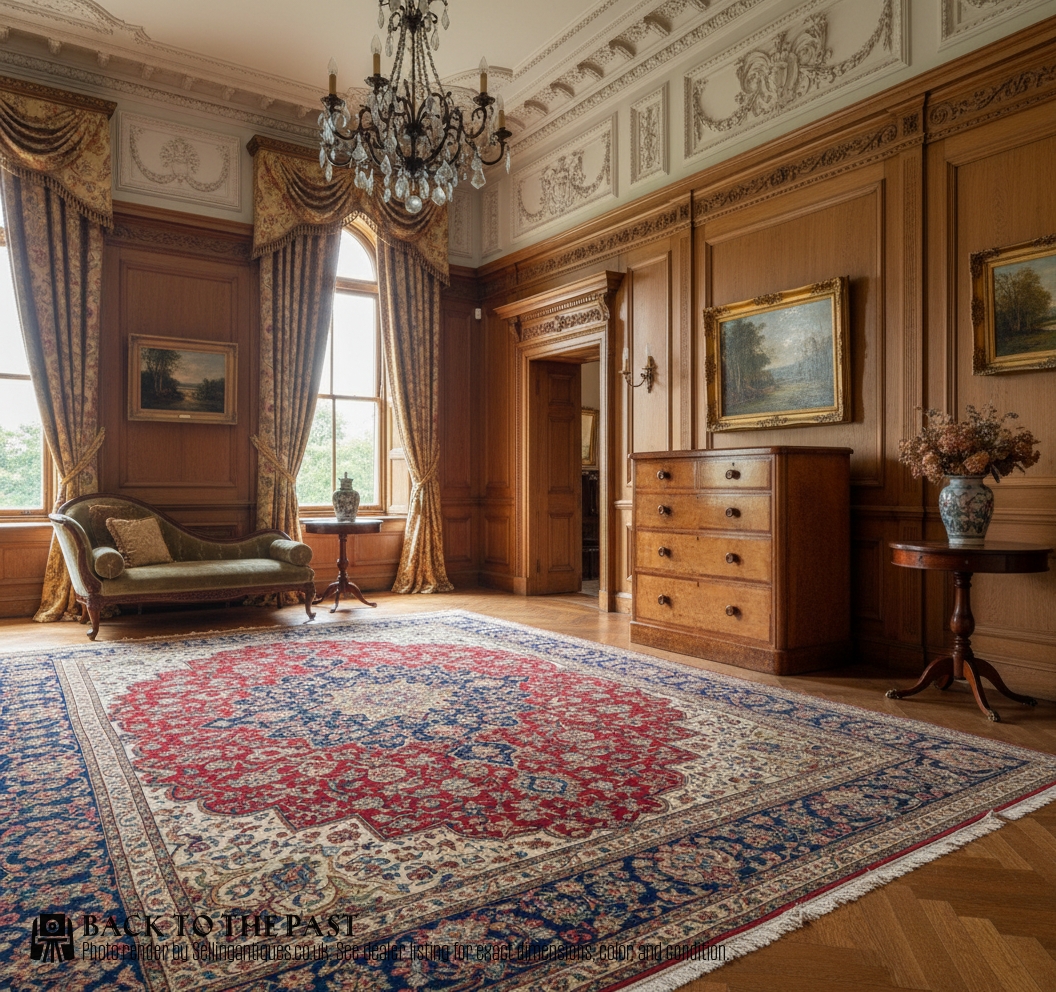
Golden Wood Dresser
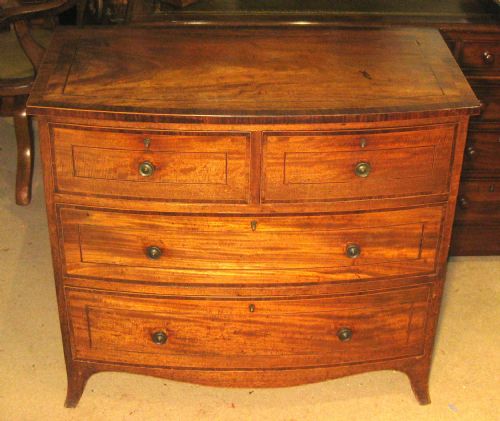
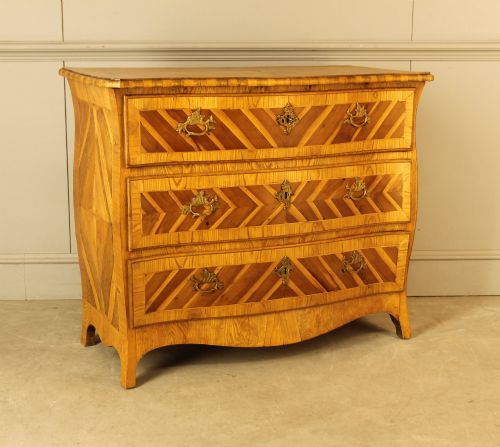
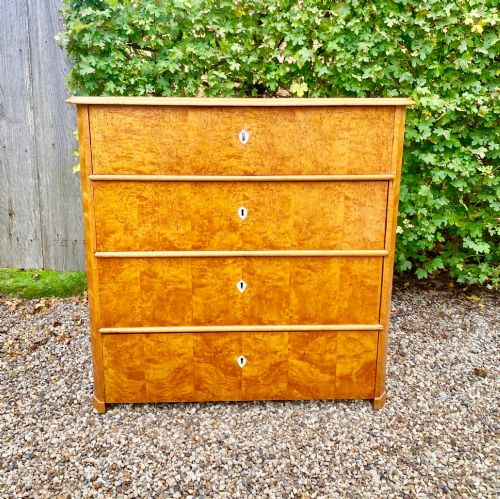
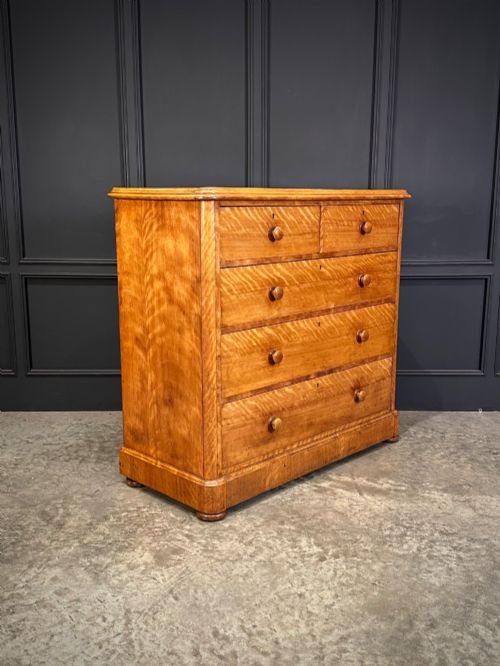
Swedish birch and tiger birch chests feature prominently alongside English satinwood and mahogany examples. Forms range from George III bow fronts to Swedish Rococo bombe shapes and Arts and Crafts designs.
Materials and construction
Cabinetmakers utilised timbers such as birch, satinwood, mahogany, oak, and yew wood, often highlighting natural grain patterns. Decorative details include brass hardware, bone escutcheons, and intricate inlay work.
Construction methods reflect the period, from Georgian cabinetwork to 19th-century Scandinavian joinery and Arts and Crafts solid timber building techniques.
Materials recorded include birch, satinwood, mahogany, amboyna, burr elm, yew wood, and birdseye maple.
Qualities of distinction
Quality rests upon the choice of timber and the handling of figured grains like tiger birch, birdseye maple, and satinwood. Superior examples display balanced proportions and precise execution of period details such as bow fronts or bombe curves.
The sophistication of secondary woods, original hardware, and refined inlay distinguish finer workshop output from standard domestic furniture.
Harris Lebus of Tottenham
The Golden Wood Dresser Glossary
- Bombe
- A bulging, outward-curving chest shape associated with Rococo design. This silhouette requires advanced woodworking skill to form.
- Bow front
- A convex curved front facade popular in Georgian and later furniture. It softens the linear profile of a chest of drawers.
- Satinwood
- A lustrous, fine-grained hardwood yielding a natural golden sheen. It serves as a favored veneer for high-status 18th and 19th-century pieces.
- Tallboy
- A tall chest of drawers consisting of one chest stacked upon another. This form maximises vertical storage space.
Golden Wood Dresser: Frequently Asked Questions
How do I identify a Swedish birch chest?
Swedish pieces often exhibit pale blonde birch or striking tiger birch grain patterns with minimal ornamentation, relying on clean lines.
Many date from the 19th century and feature simple rectangular proportions or curved Caddy tops.
Where should I place a satinwood chest?
Satinwood pieces suit bedrooms, living rooms, or hallways where their warm, golden tones can catch natural light.
Keep them away from direct heat sources to protect the polished wood surfaces.
What is a George III bow front?
A George III bow front refers to a chest of drawers from the late 18th century featuring a gently rounded front.
These pieces often employ mahogany or satinwood veneers with subtle inlay details.
How do Arts and Crafts chests differ?
Arts and Crafts pieces emphasise solid construction in timbers like oak or yew wood, often reflecting the philosophies of makers such as Edward Barnsley.
They showcase structural honesty rather than heavy surface veneering.