


Golden Walnut Dresser
A golden walnut dresser offers rich timber tones and practical storage spanning multiple centuries of craftsmanship.
Golden Walnut Dresser
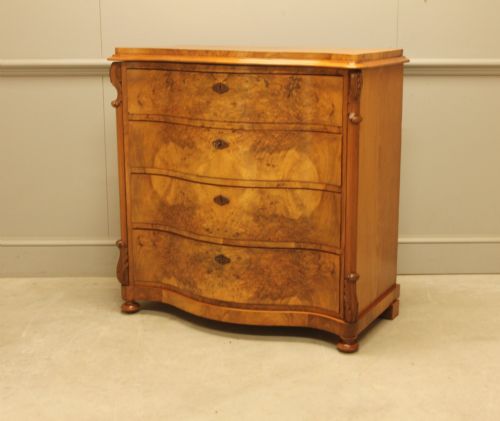
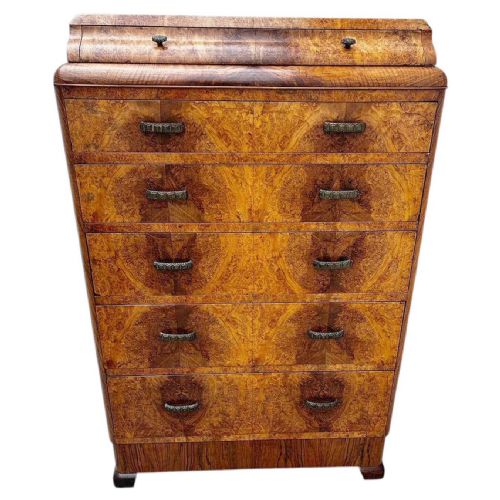
The objects span centuries of design, ranging from seventeenth-century William and Mary marquetry pieces to sleek 1930s Art Deco drawer chests. Continental European pieces, such as South German and Swedish serpentine forms and Biedermeier commodes, appear alongside English productions.
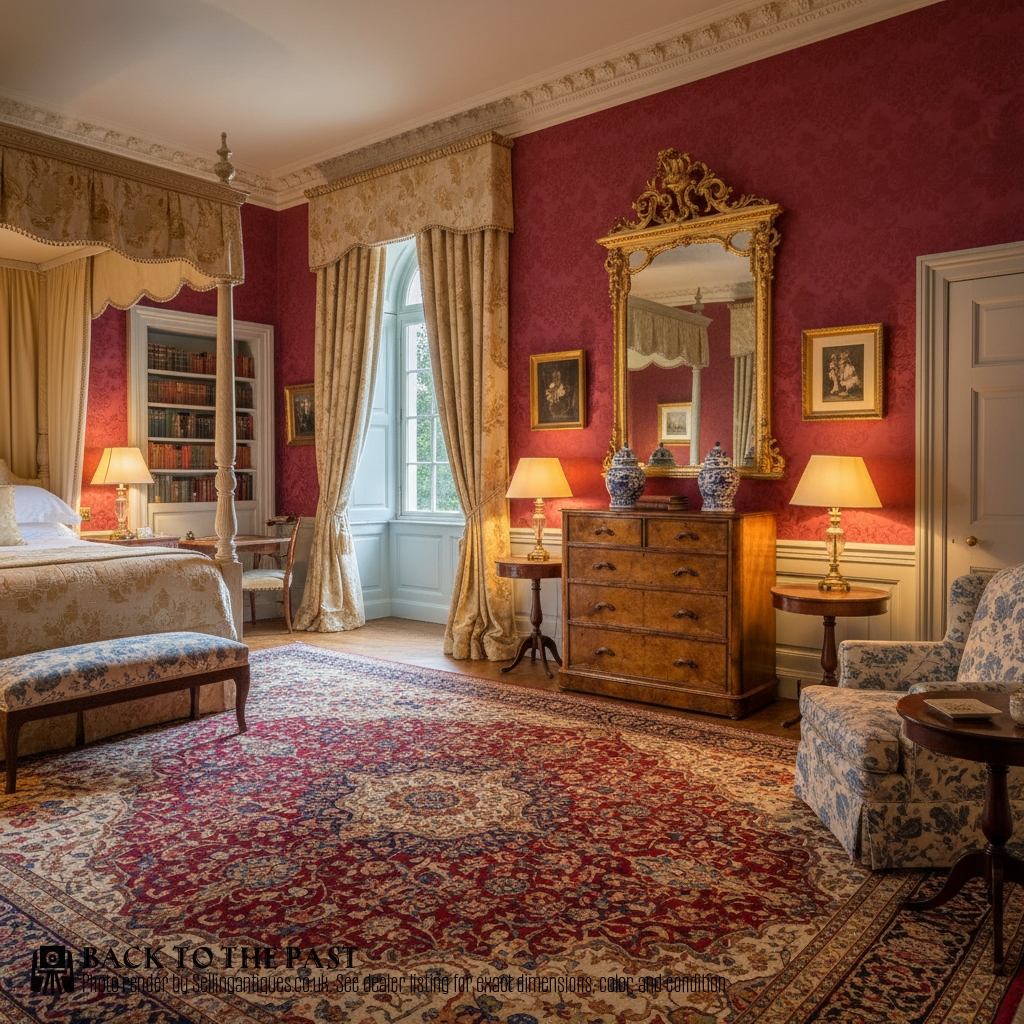
Materials and construction
Cabinet makers utilised walnut, burr walnut veneer, oak, birch, and fruitwood over the centuries. Brass hardware often complements the rich timber grain and polished surfaces.
Veneering techniques allowed craftsmen to display intricate grain patterns across drawer fronts, particularly using burr walnut to create striking visual movement.
Listings feature walnut, burr walnut, oak, birch, fruitwood, and brass across centuries of cabinet making.
Understanding quality differences
Quality rests in the selection of timber veneers and the precision of the cabinet work. Superior examples display carefully matched grain patterns across multiple drawers and expert handling of serpentine or curved forms.
The sophistication of the period detailing, from early marquetry inlay to clean Art Deco proportions, dictates the distinction between standard utilitarian storage and exceptional cabinet making.
Heals
The Golden Walnut Dresser Glossary
- Burr walnut
- A highly figured wood veneer derived from the excrescences or wart-like growths on walnut trees. It produces a swirling, mottled pattern prized by cabinet makers.
- Serpentine
- A furniture front or chest shape that curves outward in the centre and inward at the sides. This undulating profile requires advanced woodworking skill.
- Marquetry
- The art of applying pieces of veneer to a structure to form decorative patterns and pictures. Seventeenth-century examples often showcase intricate floral designs.
- Biedermeier
- A style of Central European furniture from the nineteenth century focusing on utilitariansim and clean lines. It highlights clean wood veneers without excessive ornamentation.
Golden Walnut Dresser: Frequently Asked Questions
What periods do these pieces cover?
The listings span from the seventeenth century through the Victorian and Edwardian eras up to the Art Deco period of the 1930s.
Earlier pieces often feature elaborate marquetry or serpentine fronts, while later twentieth-century items lean towards streamlined modernist designs.
How do I identify burr walnut?
Burr walnut is recognisable by its swirling, highly figured grain patterns which originate from tree growths. It was frequently used as a veneer on drawer fronts to create decorative visual appeal.
Cabinet makers selected these striking sections to elevate the visual presence of chests and commodes.
Are these pieces English or continental?
The selection includes both British pieces and continental European examples, notably from Germany, Sweden, and Austria.
Regional preferences influenced shapes, such as the curved fronts seen on Swedish and South German commodes.
What alternative forms are included?
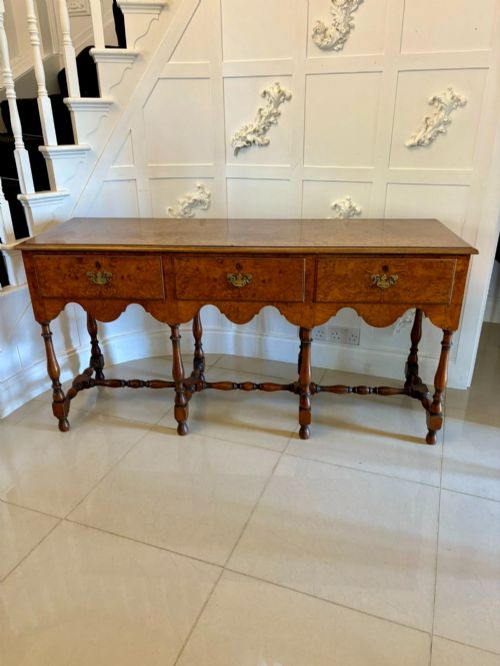
While traditional chests of drawers dominate, the category also embraces dresser bases, dressing tables, commodes, sideboards, and bookcases.
Each form serves storage needs while displaying the characteristic warm tones of walnut timber.