

Golden Walnut Cupboard
These golden walnut cupboard pieces span centuries of cabinet-making, offering warm figured timber and practical storage for the home.
Golden Walnut Cupboard
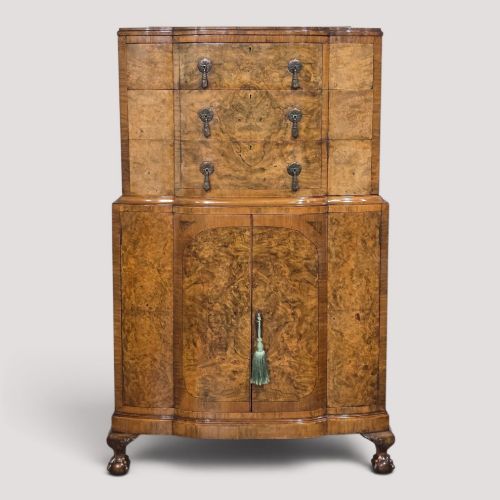
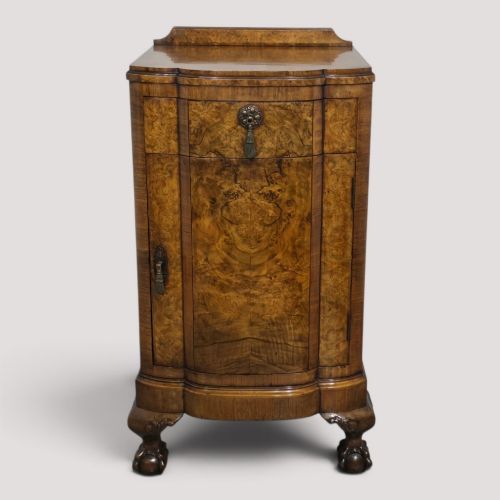
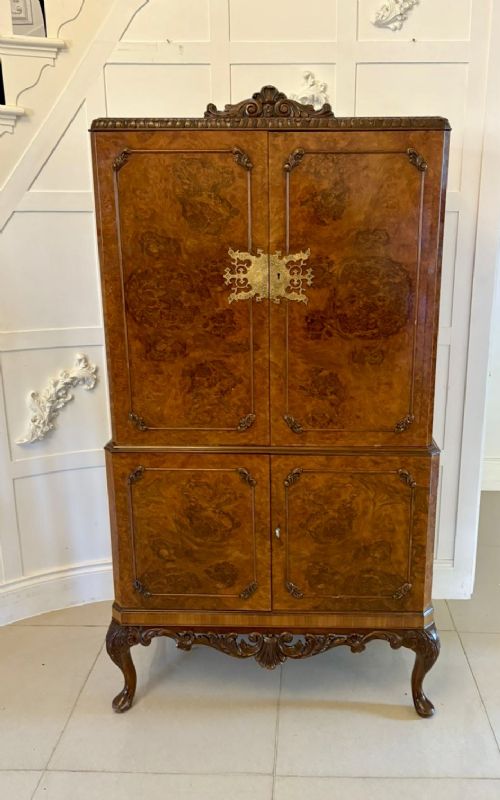
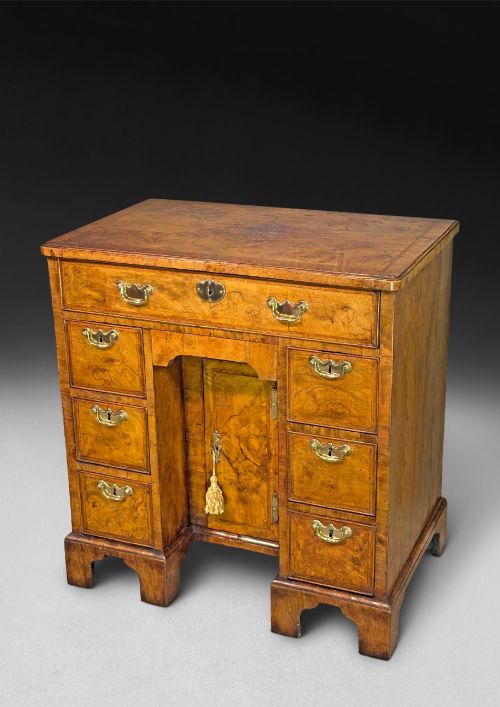
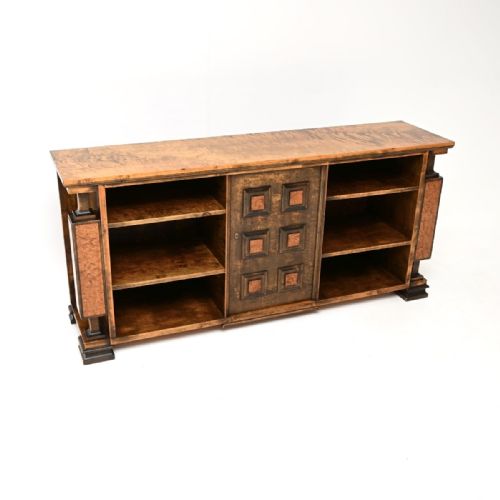
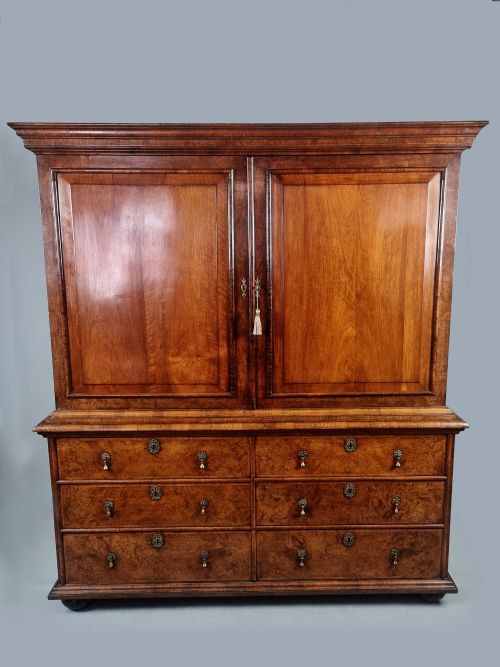
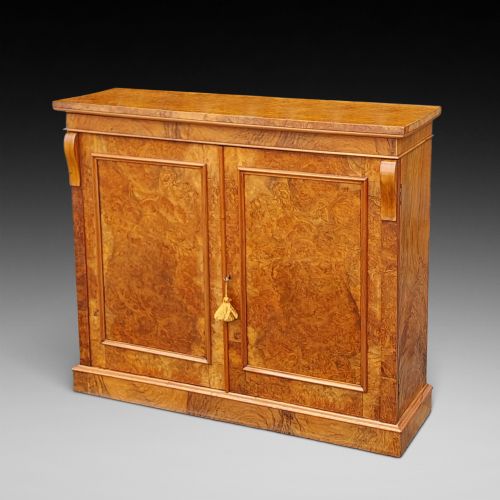
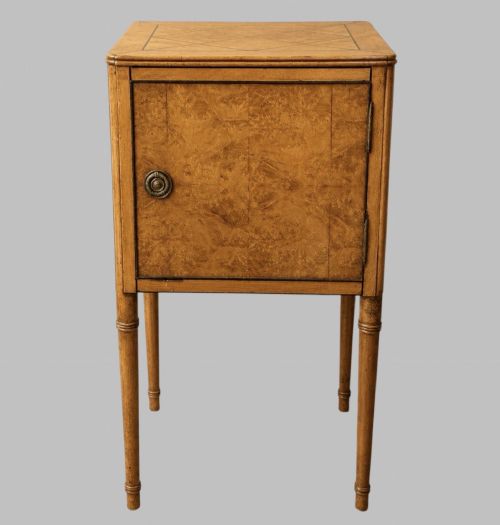
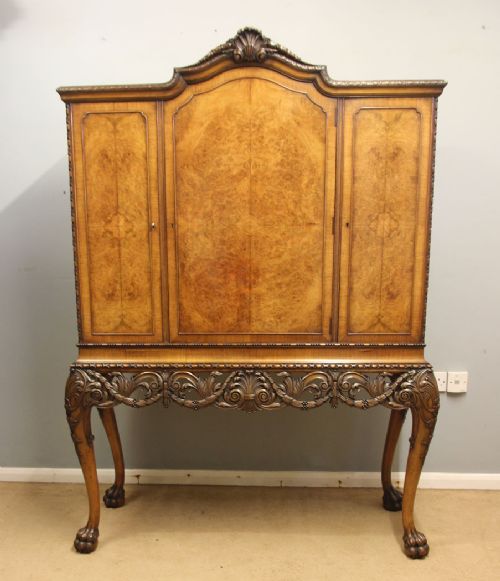
A golden walnut cupboard search brings up a remarkably varied group of furniture forms, stretching from early Georgian kneehole desks and press cupboards right through to Art Deco cocktail cabinets and bedside tables. You will encounter numerous twentieth-century pieces, particularly 1930s cocktail cabinets and side cabinets, alongside Victorian pier cabinets and Edwardian bedside furniture.
The objects themselves serve many domestic functions, operating as display cabinets, bookcases, compactum wardrobes, and bedside chests. While earlier centuries offer formal architectural pieces like the Queen Anne press cupboard, the later eras lean towards entertaining and bedroom storage with fitted cocktail bars and matched pairs of bedside cabinets.
What separates the grades of quality
Quality reveals itself in the selection and matching of the walnut veneer across the primary surfaces, where symmetrical grain patterns require high skill from the cabinet-maker. The crispness of carved details, the weight of the brass or ormolu hardware, and the internal fitting of drawers and cocktail compartments all separate standard production from exhibition pieces.
The integrity of the timber and the retention of original glass, fabric linings, and maker labels heavily influence the standing of any individual cabinet. Pieces bearing attribution to known firms or showcasing exceptional veneering display the higher tier of craftsmanship found within this selection.
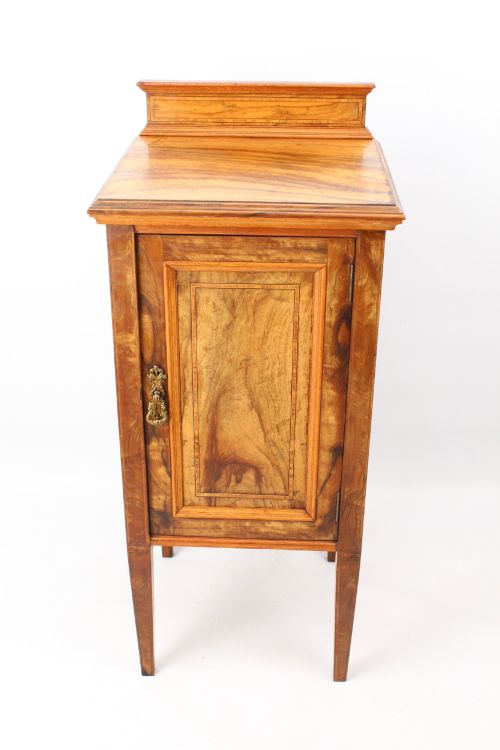
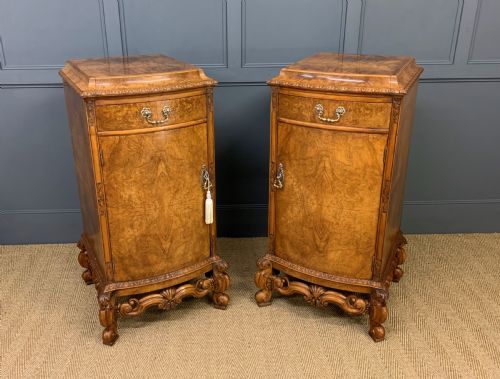
Even French Gothic bedside cupboards can wear a coat of golden walnut.
Maple and Co·Harry and Lou Epstein·Walter Carter Harrods·Epstein
The Golden Walnut Cupboard Glossary
- Burr walnut
- A figured wood harvested from walnut tree growths, prized for its swirling grain patterns. Cabinet-makers slice this timber into thin veneers to cover large surfaces.
- Compactum wardrobe
- A multi-compartment wardrobe combining hanging space, shelves, and internal drawers. This form provides comprehensive bedroom storage within a single unit.
- Kneehole desk
- A writing desk featuring a recessed central space for the user's knees, flanked by pedestals of small drawers. Georgian examples often conceal central cupboards behind the knee recess.
- Pier cabinet
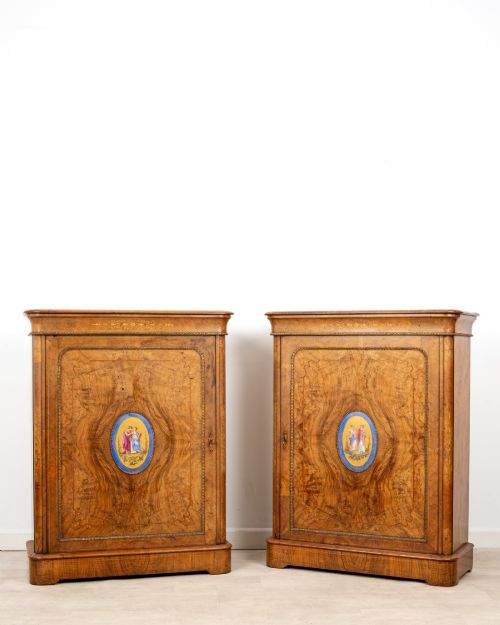
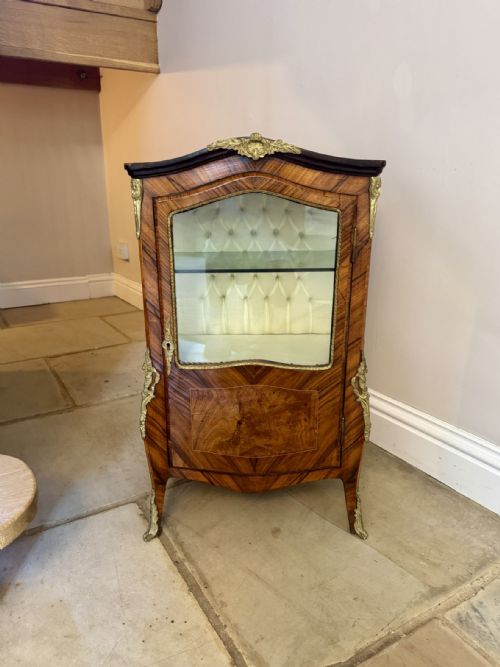
- A tall, narrow display cabinet designed to fit the wall space between windows. These Victorian and Regency pieces frequently incorporate glazed doors and velvet linings.
- Press cupboard
- A large storage furniture piece consisting of a double-door upper section above drawers or lower cupboards. Early versions store linen and garments on internal shelves.
Golden Walnut Cupboard: Frequently Asked Questions
What is a golden walnut cupboard?
A golden walnut cupboard covers various storage furniture pieces made from walnut timber, displaying warm honey and golden tones through figured grain and burr veneers. The term encompasses everything from antique Georgian desks to Art Deco cocktail cabinets.
These pieces function as practical storage units while serving as decorative focal points due to the natural figuring of the walnut timber.
How do I identify a 1930s cocktail cabinet?
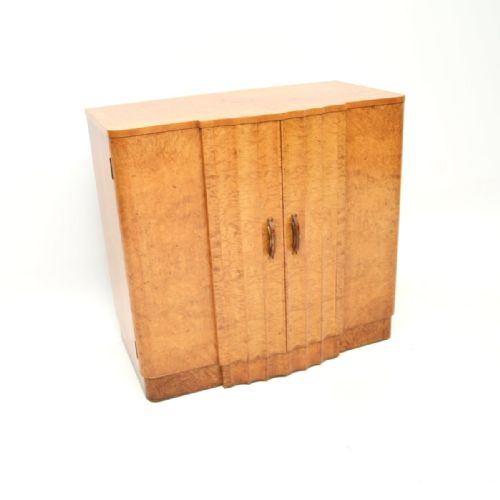
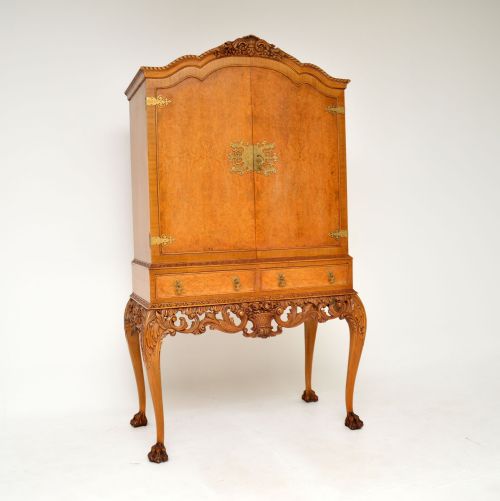
Art Deco cocktail cabinets from the 1930s typically feature striking burr walnut veneers, streamlined silhouettes, and fitted interior mirrors for bottle storage. Makers like Epstein produced these with drop-down serving flaps and glass shelves.
They stand distinct from Victorian and Georgian cabinets through their geometric lines and specific focus on home entertaining.
Where should I place a bedside cabinet?
Bedside cabinets suit bedroom spaces where their compact proportions provide convenient surface space and enclosed storage next to a bed. Many listed items come in matched pairs, allowing symmetrical placement on either side of a bed frame.
Ensure you measure the height of your mattress against the cabinet top for comfortable daily access.
How do I care for antique walnut furniture?
Maintain walnut furniture by keeping pieces away from direct sunlight and heat sources to prevent the burr veneers from drying out or cracking. Regular dusting with a soft, dry cloth preserves the finish without building up heavy wax residues.
Apply a quality beeswax polish sparingly only when the timber appears dry, buffing gently along the grain.