
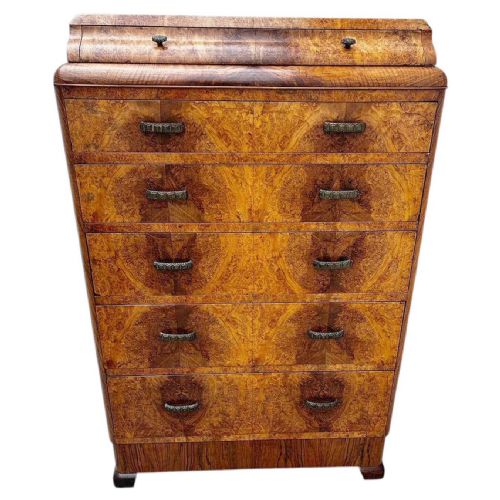
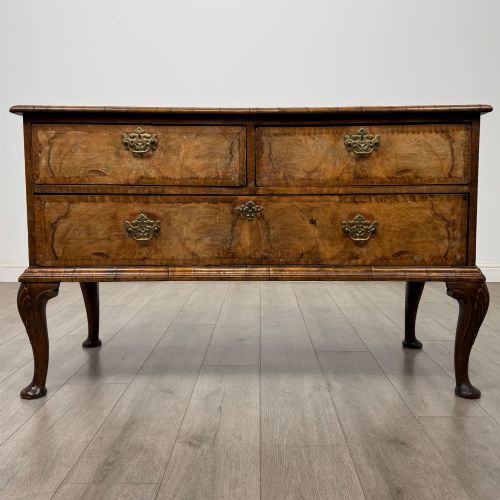


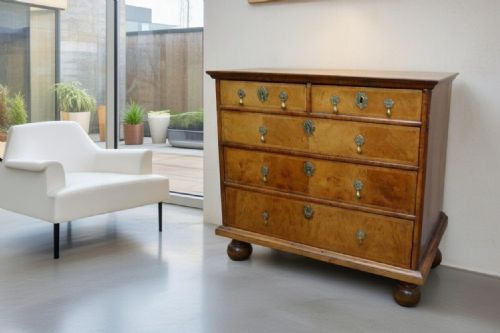


Golden Walnut Commode
These golden walnut commode pieces are timber chests of drawers prized for warm tones, offering practical storage with striking grain.
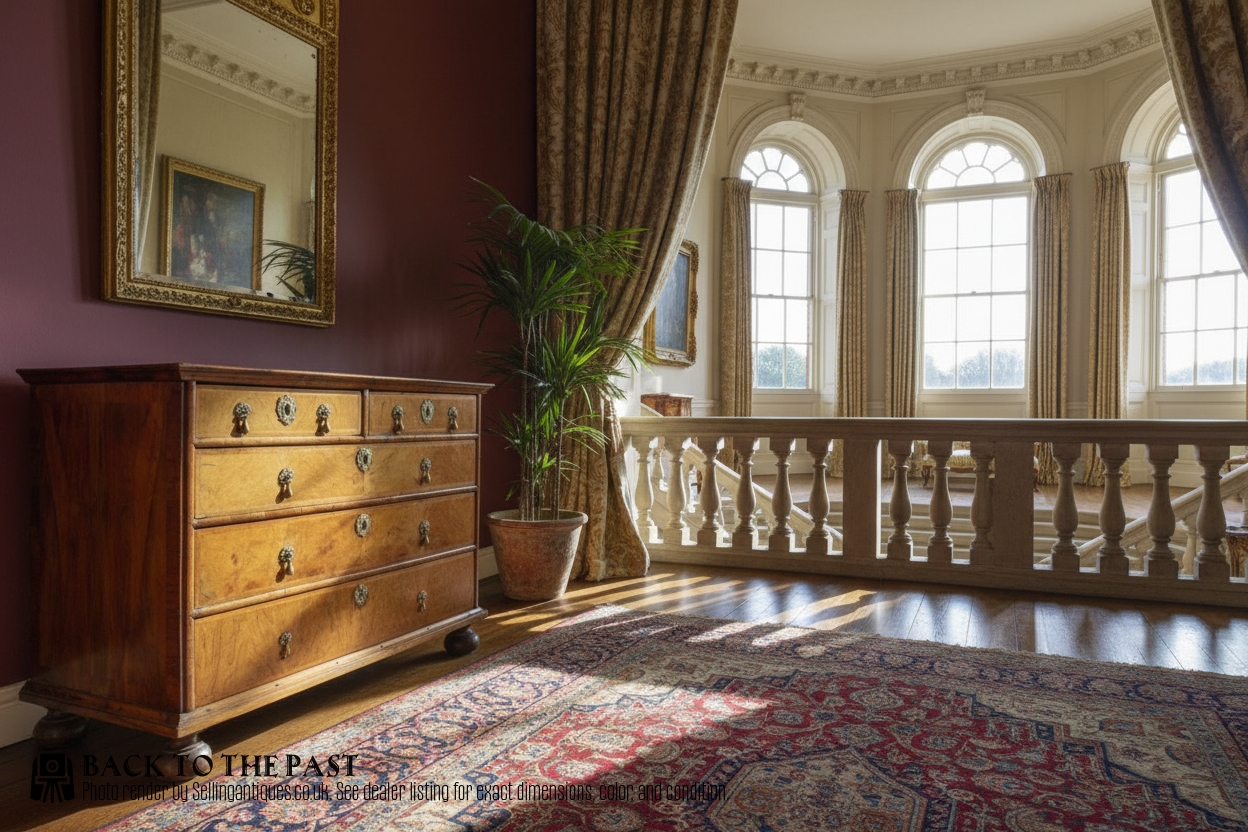
Golden Walnut Commode
When you search for a golden walnut commode, you encounter timber chests of drawers spanning from the seventeenth century through to the Art Deco era and the nineteen-thirties. These pieces function primarily as bedroom or living storage while serving as strong decorative statements through their figured timbers.
You are most likely to meet eighteenth-century examples or nineteenth-century Swedish serpentine forms on this page. The selection encompasses diverse stylistic influences including Queen Anne, Biedermeier, Louis XV Rococo, and Baroque designs.
Makers shaped these chests as rectangular or serpentine forms utilising walnut, burr walnut, oak, birch, fruitwood, and satin walnut. Origins stretch across England, Sweden, Germany, and broader European workshops.
How they were made
Cabinetmakers constructed these commodes using solid oak, pine, or fruitwood carcases faced with carefully chosen walnut and burr walnut veneers. Marquetry details also appear on select seventeenth-century pieces, demonstrating intricate timber inlay techniques.
Craftsmen shaped drawer fronts and sides into gentle serpentine curves using steam and sawing methods on dense woods. Brass handles, escutcheons, and mounts were fitted to secure drawers and punctuate the warm grain patterns.
Listings span from the 17th century to 1930, featuring walnut, burr walnut, oak, birch, and fruitwood across English, Swedish, and German styles.
What varies in quality
The selection of timber veneer dictates visual impact, with tightly figured burr walnut commanding attention for its rich golden movement. Plain walnut surfaces rely instead on clean proportions and balanced cabinetmaking.
Construction methods reveal the standard of work, distinguishing provincial utility from master joinery in the thickness of drawer linings and the precision of dovetail joints.
Heals
The Golden Walnut Commode Glossary
- Commode
- A low chest of drawers or cabinet standing on legs or feet. The form originated in France before spreading across European cabinet workshops.
- Serpentine
- A front shape curving outward in the centre and inward at the sides. This contour demands advanced woodworking skill to execute properly.
- Burr walnut
- Timber taken from a tree growth where grain swirls tightly around multiple buds. It yields highly decorative veneer sheets with dramatic golden figuring.
- Marquetry
- The art of applying pieces of veneer to a structure to form decorative patterns. Craftsmen use various woods to create pictorial or geometric designs.
- Biedermeier
- A Central European style from the first half of the nineteenth century emphasising utility and clean lines. These pieces highlight natural wood grains over heavy ornamentation.
Golden Walnut Commode: Frequently Asked Questions
How do I date a walnut commode?
Examine the construction of the drawers, timber thickness, and secondary woods like oak or pine inside the carcase. Styles such as Queen Anne or Art Deco provide clear chronological markers.
Hardware placement and fixing methods also shift across centuries, helping to distinguish seventeenth-century work from later nineteenth-century interpretations.
Where should I place a commode?
These chests suit living rooms, hallways, or bedrooms where their warm timber tones can stand clear of heavy moisture or direct heat. Keep them away from radiators to protect the veneer.
Allow enough floor space around serpentine or bombe shapes so the curved silhouette remains visible in the room.
How do I care for walnut veneer?
Dust regularly with a dry cloth and apply occasional high-quality beeswax to nourish the timber surface. Avoid synthetic sprays that can degrade historic finishes.
Maintain steady indoor humidity levels to prevent the walnut veneer from lifting or cracking over time.
What is the difference between a chest and a commode?
A chest of drawers typically refers to tall upright storage furniture, while a commode traditionally describes a lower, wider chest or cabinet standing on legs.
In many regional traditions, the terms overlap, particularly when describing European decorative storage pieces from the eighteenth and nineteenth centuries.