


Golden Satinwood Games Table
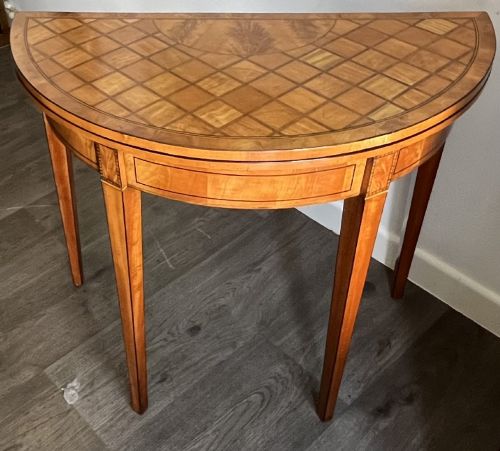
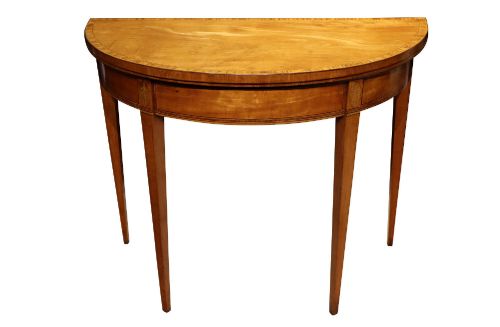
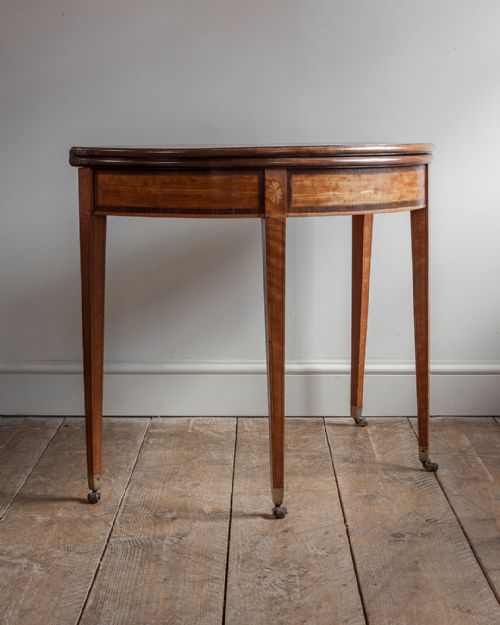
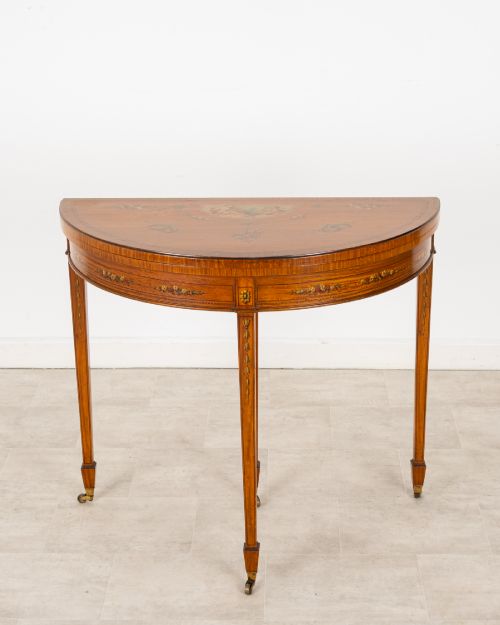
A golden satinwood games table brings refined eighteenth and nineteenth century craftsmanship to the room with its shimmering timber and folding top.
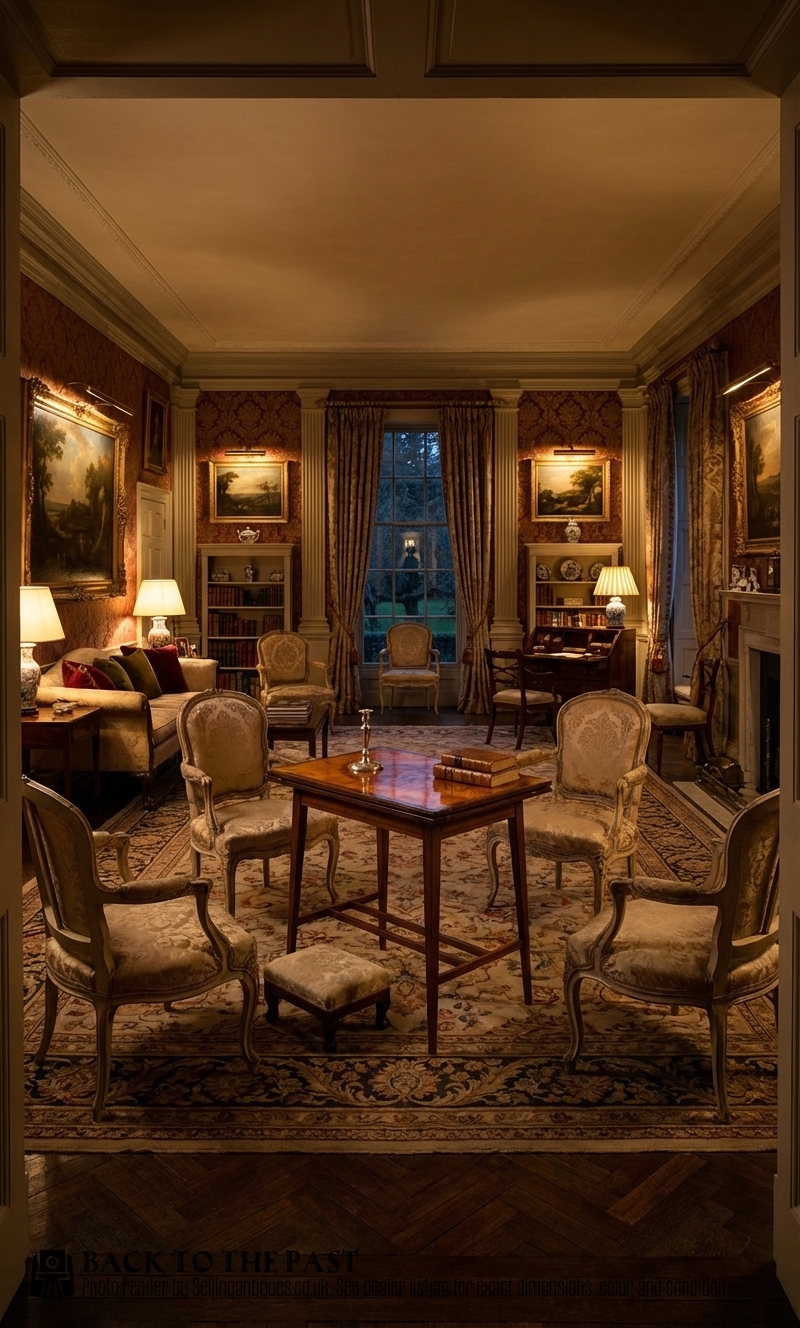
Golden Satinwood Games Table
A golden satinwood games table is a piece of antique furniture designed for card playing and social evenings, taking the form of card tables, games tables, and combined card and games tables. These items appear across Georgian, Edwardian, and nineteenth-century periods, capturing the refined tastes of eras that valued versatile domestic furniture.
The version most commonly met on this page is the demi-lune or foldover card table, often displaying crossbanding in kingwood or rosewood. Makers from George III workshops through to Edwardian revivalists utilised this bright timber to catch the light in drawing rooms and parlours.
Examples span several distinct stylistic phases including Sheraton, Hepplewhite, and George III Neoclassical designs. Buyers encounter both eighteenth-century originals and later revival pieces from around nineteen hundred and nineteen thirty.
Construction and materials
Cabinet makers constructed these tables using a carcase of oak or mahogany as a stable base for decorative veneers. Satinwood provides the primary golden surface, selected for its natural chatoyancy and shimmering grain.
Inlays of boxwood, rosewood, and kingwood create geometric borders and delicate stringing details. Marquetry and painted decoration appear on specific examples, adding floral motifs or classical swags to the folding tops.
Secret compartments inside these tables occasionally still hold forgotten eighteenth-century gaming counters.
Assessing quality in satinwood tables
The calibre of a golden satinwood games table rests upon the figuring of the timber and the precision of its crossbanding. Superior pieces display bookmatched satinwood veneers that create a balanced, symmetrical glow across the foldover top.
Joinery execution around the hinge mechanisms and the alignment of folding leaves distinguish higher workshops from standard production. The crispness of inlaid boxwood lines and the preservation of original polish further separate the tiers.
The Golden Satinwood Games Table Glossary
- Demi-lune
- A half-moon shape popular for console and card tables designed to stand flat against a wall when closed. This form allowed tables to occupy minimal space until opened for play.
- Crossbanding
- A strip of veneer applied perpendicularly to the grain of the main surface, framing the top. This technique creates a distinct border using contrasting timbers such as kingwood or rosewood.
- Foldover
- A hinged top design where the surface opens outward to double its area, revealing a baize-lined interior for card games. Supporting legs swing out to hold the extended leaf.
- Marquetry
- The art of forming decorative patterns by fitting together small pieces of tinted woods and veneers. Craftsmen applied these pictorial designs to the main surfaces of tables.
- Stringing
- Very narrow inlaid lines of contrasting wood used to outline panels and borders. This linear detail defines the edges of satinwood tabletops.
Golden Satinwood Games Table: Frequently Asked Questions
How do I use a folding games table?
The hinged top rotates or lifts to unfold into a stable playing surface, often supported by a swing leg. When not in use, the table folds flat against a wall to function as a side table.
Interior compartments beneath the top historically stored playing cards, counters, and dice. Modern owners continue to use them for card nights or as display surfaces in living spaces.
What is satinwood?
Satinwood is a hard, durable timber originating from tropical regions, known for its lustrous golden yellow colour and reflective grain. Cabinet makers prized it for high-status furniture during the eighteenth and nineteenth centuries.
The wood takes a fine polish that gives surfaces a characteristic shimmer. Over time, exposure to light deepens the golden tones to a warm amber.
How do I date a satinwood table?
Dating relies on stylistic markers, construction methods, and timber choice. Georgian pieces often show restrained classical proportions and fine boxwood stringing, while Edwardian examples display lighter framing and revival influences.
Hinge types, secondary woods like oak or pine inside the frame, and the style of the taper on the legs provide further chronological clues.
Where should I place a games table?
These tables suit drawing rooms, studies, or hallways where their decorative folding tops remain visible. Placing them against a wall protects the hinges while showing off the veneered satinwood surface.
Keep them away from direct sunlight and heat sources to protect the delicate veneers and natural wood oils from drying out.