
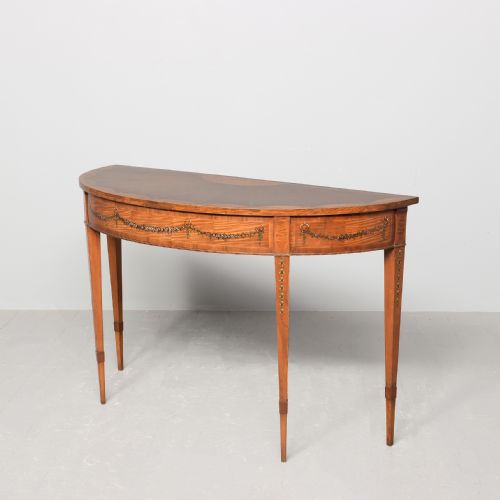


Painted Satinwood Console
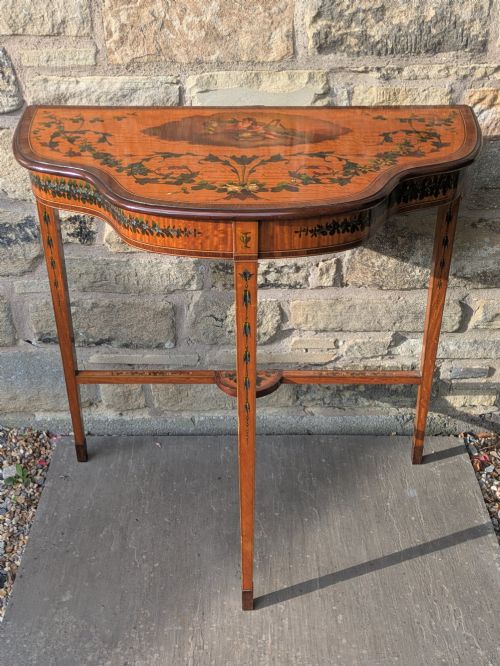
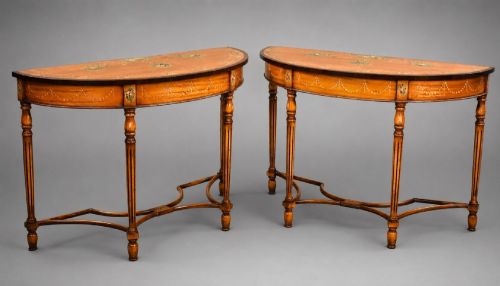
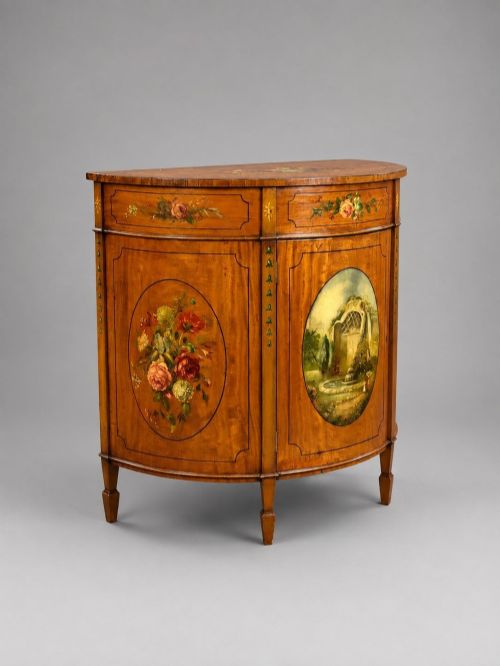
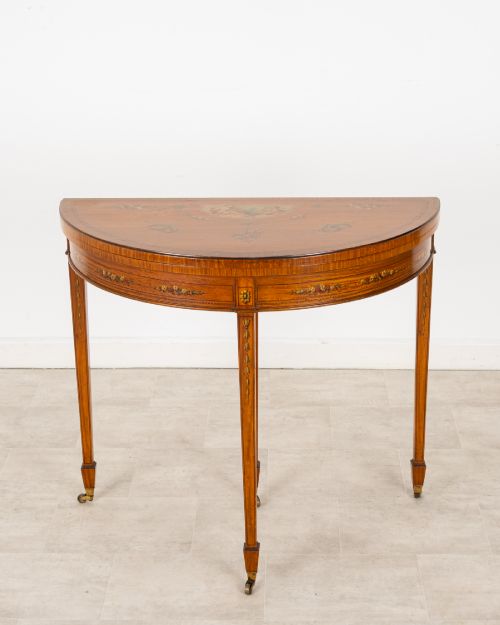
These painted satinwood console tables bring lightness to a room, offering classical painted panels and polished timbers.
Painted Satinwood Console
When you search for painted satinwood console, you encounter half-moon and demi-lune shapes designed to sit flat against a wall, frequently appearing alongside card tables and side cabinets from the eighteenth and nineteenth centuries. The pieces on this page span the Georgian, George III, and Edwardian eras, drawing heavily on Sheraton revival and Neoclassical styles.
The demi-lune console is the version most commonly met here, often featuring fold-over tops that transform a side table into a games table. Makers working in the Sheraton taste utilised this curved silhouette to showcase elaborate painted decoration across the top surface.
Materials and Construction
Cabinetmakers constructed these tables using timber and satinwood veneers, occasionally incorporating mahogany, rosewood, and harewood beneath decorative paintwork. Fine brushwork brought floral garlands, classical panels, and decorative motifs directly onto the wood.
Inlaid details and brass hardware frequently accompany the painted surfaces, while giltwood accents appear on selected pieces to highlight the Neoclassical design. The combination of figured timber and hand-applied pigment defines the physical construction of these items.
Materials recorded across the archive include satinwood, mahogany, rosewood, harewood, timber, brass, and giltwood.
Distinctions in Quality
The refinement of the hand-painted panels separates the standard examples from the exceptional ones, with crisp classical motifs indicating superior workshop output. The quality of the satinwood veneer and the precision of the underlying timber joinery also dictate the standing of a piece.
Proportion and the handling of the demi-lune curve dictate visual balance, while the integration of inlaid elements reveals the skill of the maker. Pieces created during the original George III period display different construction nuances compared to later Sheraton revival interpretations.
The Painted Satinwood Console Glossary
- Demi-lune
- Half-moon shape. This curve defines the silhouette of the most frequently seen console and card tables.
- Satinwood
- A durable exotic timber with a lustrous sheen. It serves as the primary canvas for painted decoration and inlay.
- Sheraton Revival
- A late nineteenth-century design movement. It reinterprets the lighter classical forms of the eighteenth century.
- Neoclassical
- A style rooted in classical antiquity. It introduces symmetrical motifs, urns, and floral swags to furniture surfaces.
Painted Satinwood Console: Frequently Asked Questions
How are demi-lune consoles used?
These tables stand flat against a wall in hallways or living spaces as decorative side furniture. Many versions feature folding tops that open to create a surface for card and games playing.
Their curved profile allows them to occupy less floor space than rectangular tables while still offering a display area.
What is Sheraton revival furniture?
Sheraton revival pieces date mainly from the late nineteenth and early twentieth centuries. They emulate the lighter furniture forms of the eighteenth-century designer Thomas Sheraton.
These items frequently employ painted satinwood and classical inlay rather than heavy carving.
How do I spot an 18th-century piece?
Eighteenth-century examples display construction methods characteristic of the Georgian and George III periods. The timber patination and hand-cut joinery differ from later revival pieces.
Examine the underside and drawer linings for the tool marks and wood species typical of the 1700s.
What is painted satinwood?
Painted satinwood combines the golden, reflective grain of satinwood timber with hand-applied artwork. Artists painted floral garlands, ribbons, and classical scenes directly onto the wood.
This technique was popular during the Georgian era and saw a major revival during the Victorian and Edwardian periods.