

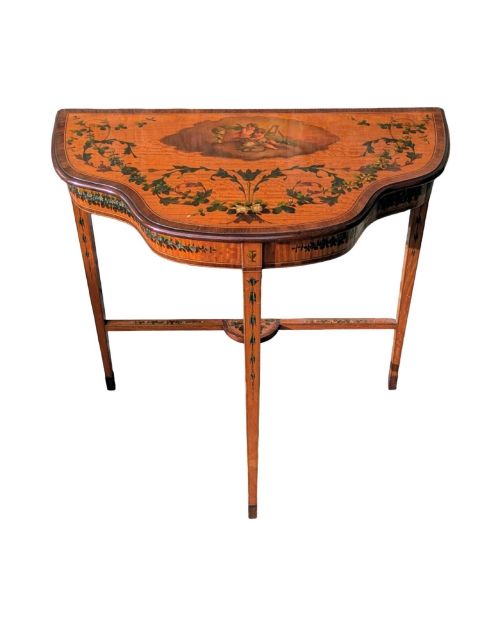
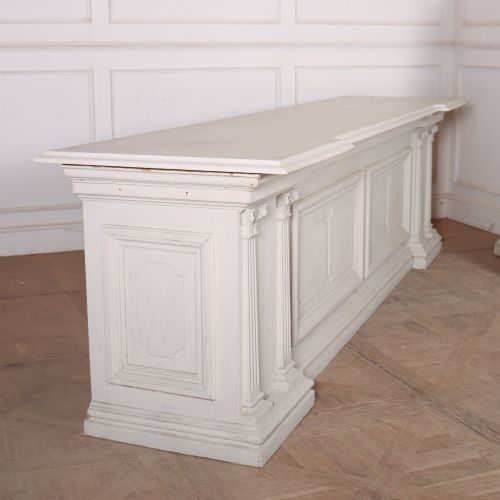
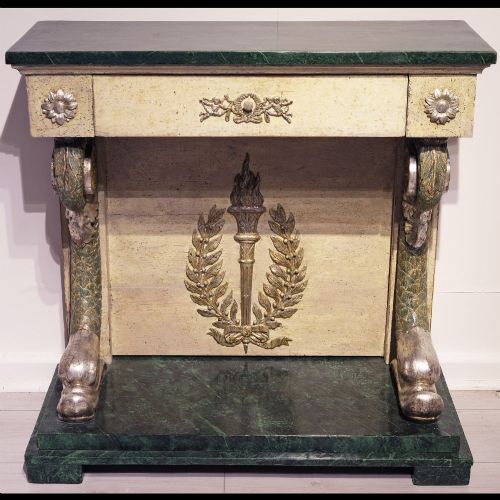

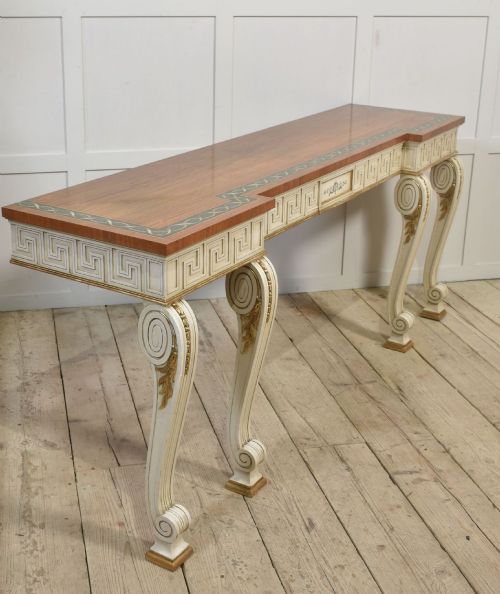


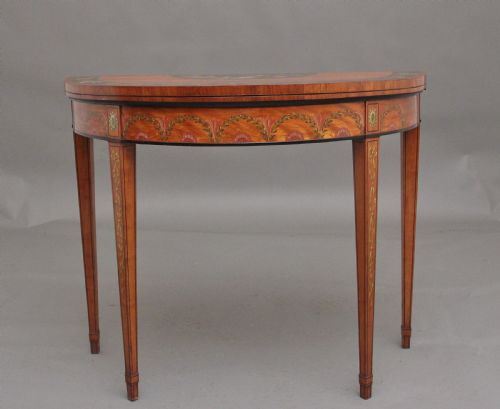


Painted Classical Console Table
A painted classical console table brings architectural symmetry and refined surface decoration to a hallway or drawing room.
Painted Classical Console Table
A painted classical console table is typically encountered in 18th century, 19th century, and Victorian forms, drawing on Neoclassical, Gustavian, Louis XVI, and Sheraton styles.
The inventory on this page includes console tables, card tables, side tables, and shop counters, spanning origins from Italy, France, and England.
These items range from Italian neoclassical faux porphyry examples to French satinwood demi-lune pieces and Gustavian hall furnishings designed to stand against a wall.
How they were made
Wood serves as the primary structural foundation, utilising timber such as mahogany, satinwood, pine, and general hardwoods shaped into console, card, and side tables.
Surfaces receive decorative treatments through applied paint, gesso, and gilding, frequently paired with inset marble tops or faux porphyry finishes.
Carving defines structural elements such as dolphin supports, tapered legs, and decorative crests, reflecting neoclassical and Victorian revival aesthetics.
Painted Classical Console Table Retail Price Guide 2026
Typical asking prices for painted classical console table among the pieces listed under this phrase on Sellingantiques today, from the lower quarter to the upper quarter. They describe what is for sale here now, not the wider market.
Carved wooden dolphins occasionally hold up the tabletop, proving that historical joiners had a sense of aquatic whimsy.
What varies in quality
The refinement of the painted surface and decorative top separates standard items from superior examples, particularly where faux finishes or detailed motifs are executed with precision.
The integrity of the structural timber, whether mahogany, satinwood, or pine, alongside the quality of carved elements like dolphin supports and tapered legs, dictates the standard of execution.
The integration of materials such as marble or gilt details with the painted wood body demonstrates the maker's adherence to classical, Gustavian, or neoclassical design canons.
The Painted Classical Console Table Glossary
- Demi-lune
- A half-moon shape used for console and card tables designed to sit flush against a wall.
- Gesso
- A plaster-like mixture applied to wood surfaces as a base for paint or gilding.
- Faux porphyry
- A decorative paint technique intended to imitate the rich purple-red igneous rock valued in antiquity.
- Neoclassical
- A style spanning the 18th and 19th centuries inspired by the art and architecture of classical Greece and Rome.
- Gustavian
- The Swedish interpretation of French neoclassical and Louis XVI styles, noted for lighter painted finishes.
Painted Classical Console Table: Frequently Asked Questions
Where should a console table go?
These tables are traditionally placed against a wall in a hallway, drawing room, or reception area where floor space is measured. Their shallow depth allows them to sit neatly without obstructing movement.
Pairing a console with a matching mirror, such as a trumeau style setup, creates a balanced focal point in an interior scheme.
How do I spot an 18th century piece?
Eighteenth century pieces typically exhibit hand-mixed paint surfaces, older timber construction methods, and authentic wear patterns consistent with age. Stylistic markers include strict neoclassical symmetry and proportions.
Later Victorian revivals often incorporate heavier proportions or machine-assisted construction details beneath the painted finish.
Were these tables used for cards?
Many examples on this page double as card or games tables featuring folding tops that conceal a baize-lined surface underneath. These were essential for social gatherings in grand homes during the 18th and 19th centuries.
When closed, they function as standard console or side tables against a wall.
What is Gustavian style?
Gustavian design originates from Sweden during the late 18th century, drawing heavy inspiration from French Louis XVI aesthetics but with a restrained, lighter touch. It is frequently characterised by pale painted finishes and subtle neoclassical carving.
These pieces offer a brighter, simpler alternative to darker Victorian furniture.