



Golden Satinwood Dressing Table
A golden satinwood dressing table brings a luminous, figured warmth to a bedroom through its pale timber and polished brass fittings.
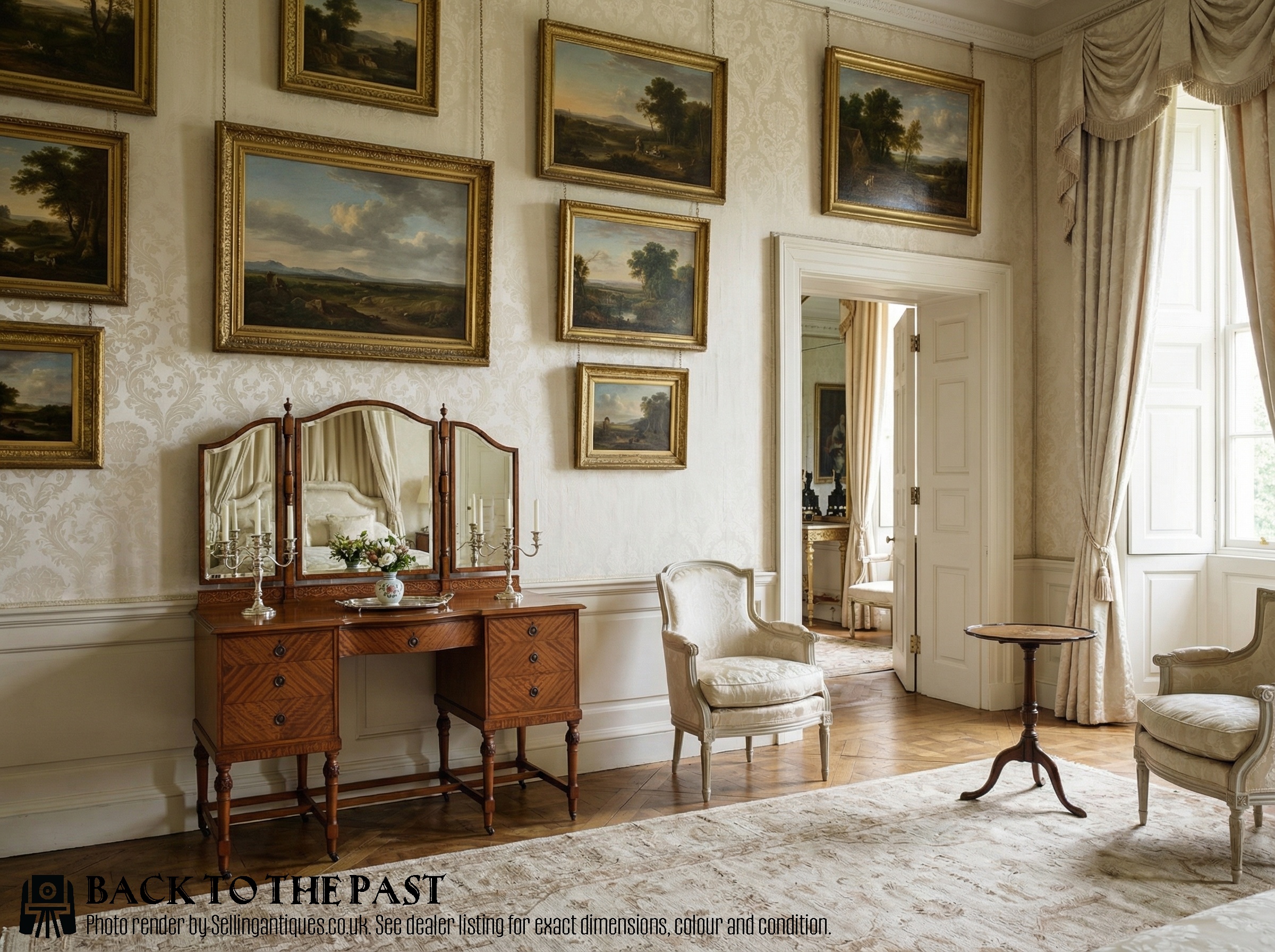
Golden Satinwood Dressing Table
A golden satinwood dressing table is a sophisticated piece of bedroom furniture designed for personal grooming and writing, appearing most frequently in Victorian and Edwardian iterations alongside earlier Georgian and 18th Century examples.
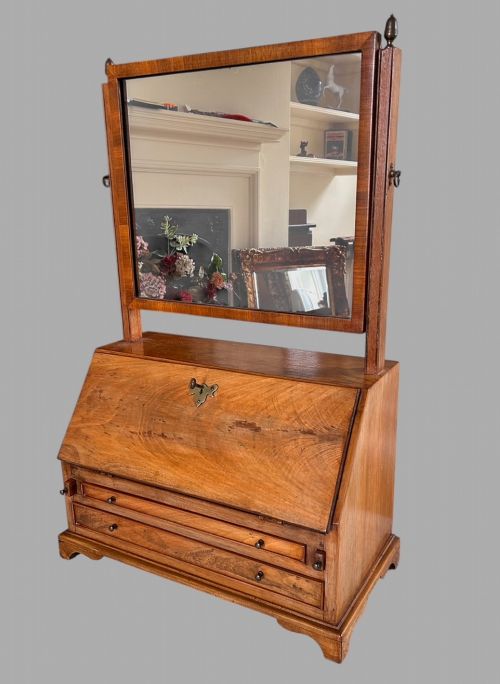
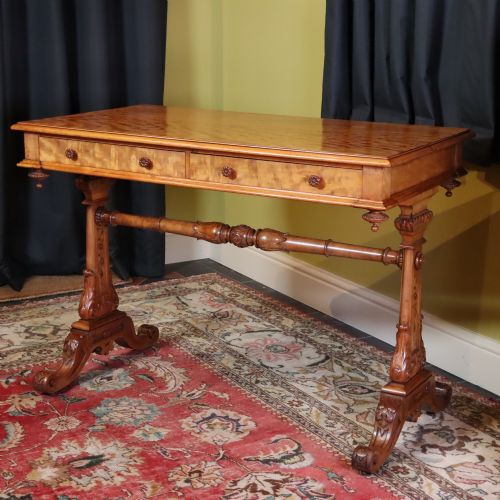
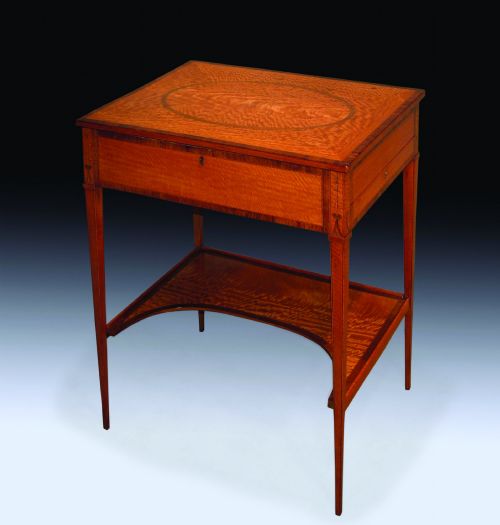
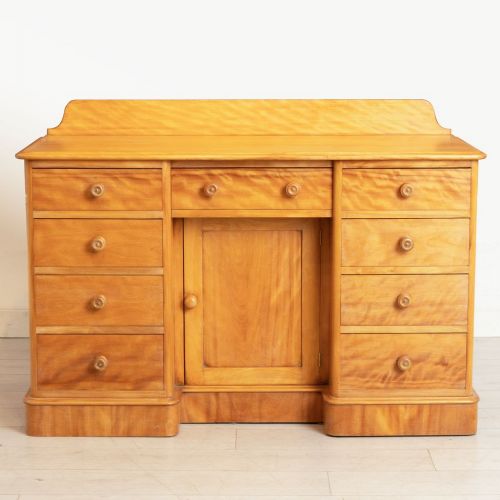
Buyers seeking a golden satinwood dressing table encounter various forms ranging from grand mirrored superstructures and kneehole desks to compact tabletop mirrors and side tables.
The aesthetic bridges several design movements, incorporating Sheraton Revival elegance, painted decoration, and English Country House character into domestic interiors.
Materials and construction
Cabinetmakers utilised satinwood, satin birch, and satin walnut as primary timbers, frequently combining them with pine carcasses and banding details in tulipwood.
Functional hardware relied on brass for handles and fittings, whilst glass formed the adjustable dressing mirrors and table tops found across many pieces.
Selected examples incorporate hand-painted motifs and leather writing inserts, demonstrating the diverse techniques employed by period workshops.
Some nineteenth-century dressing tables hide secret compartments once intended for storing clandestine love letters and rouge pots.
Assessing quality and craftsmanship
Quality rests in the intensity of the timber figure and the precision of the veneered surfaces, where superior pieces exhibit a consistent, shimmering grain across every drawer front.
Maker attribution elevates a piece significantly, with documented works by firms such as Gillows, Mappin & Webb, and John Taylor of Edinburgh representing superior standards of cabinetmaking.
The integration of fitted interior compartments, original brass hardware, and well-executed painted decoration distinguishes exceptional examples from standard production.
Mappin & Webb·Gillows·John Taylor of Edinburgh
The Golden Satinwood Dressing Table Glossary
- Satinwood
- A lustrous hardwood native to tropical regions, prized for its golden colour and reflective, satiny grain. It forms the primary surface timber for high-status furniture of the eighteenth and nineteenth centuries.
- Kneehole desk
- A form of bureau or dressing table featuring a central recessed space for the legs, flanked by pedestals of small drawers. This layout provides a comfortable seated position for writing or grooming.
- Superstructure
- An upper framework attached to the rear of a table, typically housing mirrors, small drawers, or shelves. It elevates the utility of a dressing table by placing grooming essentials within reach.
- Sheraton Revival
- A late nineteenth-century design style inspired by the neoclassical furniture of George III designer Thomas Sheraton. It relies on satinwood, delicate banding, and painted ornamentation.
- Tulipwood
- A pale yellowish or reddish wood with darker contrasting streaks, utilised for decorative crossbanding and geometric stringing on fine tables and desks.
Golden Satinwood Dressing Table: Frequently Asked Questions
How do I clean satinwood?
Dust surfaces regularly with a soft, dry cloth to prevent particulate accumulation on the polished timber. Avoid modern chemical sprays or excessive moisture.
Apply a traditional microcrystalline wax periodically to nourish the grain and maintain the natural sheen of the golden surface.
Are these tables suitable for modern use?
Many examples function well as compact desks or vanity surfaces in contemporary bedrooms and studies. The built-in drawers and mirrors provide practical storage for daily essentials.
Care should be taken to protect the polished top from moisture and direct heat sources during everyday use.
How do I distinguish Edwardian from Victorian pieces?
Victorian examples often display heavier proportions, rich figuring, and solid structural forms associated with mid to late nineteenth-century production. Painted decoration also appears frequently on later Victorian pieces.
Edwardian furniture tends toward lighter silhouettes, delicate Sheraton Revival influences, and precise satinwood veneers dating around nineteen hundred.
What is a fitted vanity box?
A fitted vanity box is an internal compartment system designed to organise grooming bottles, brushes, and small personal items. These compartments are typically integrated into the drawer layout or concealed beneath a hinged lid.
Such additions indicate high-quality execution by prominent firms catering to affluent households.