



Golden Satinwood China Cabinet
A golden satinwood china cabinet brings brilliant warmth and refined display space to a room, prized for its luminous figured timber.
Golden Satinwood China Cabinet
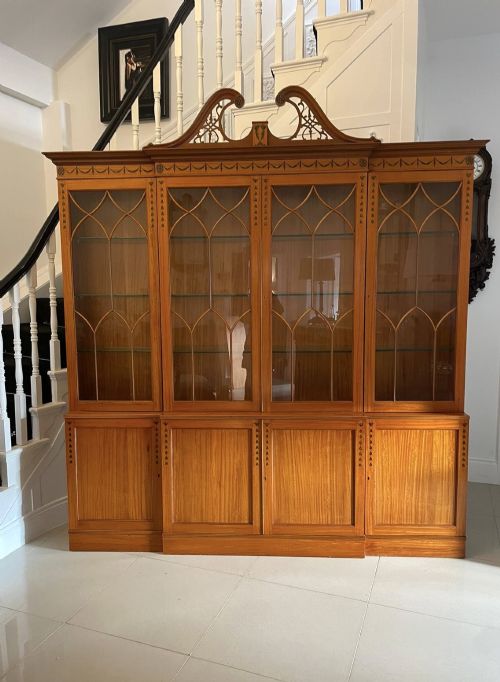
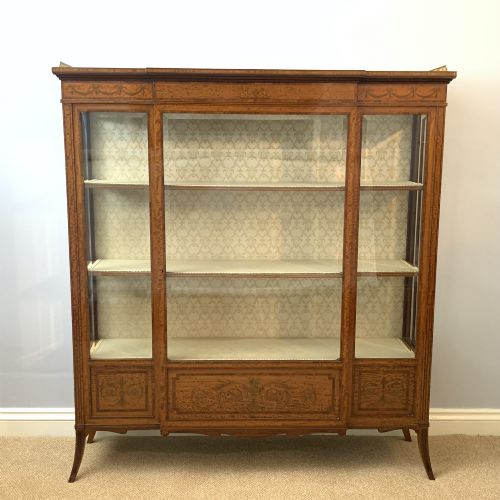
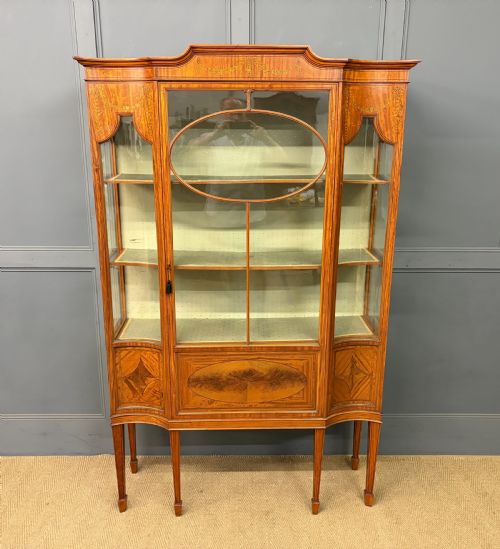
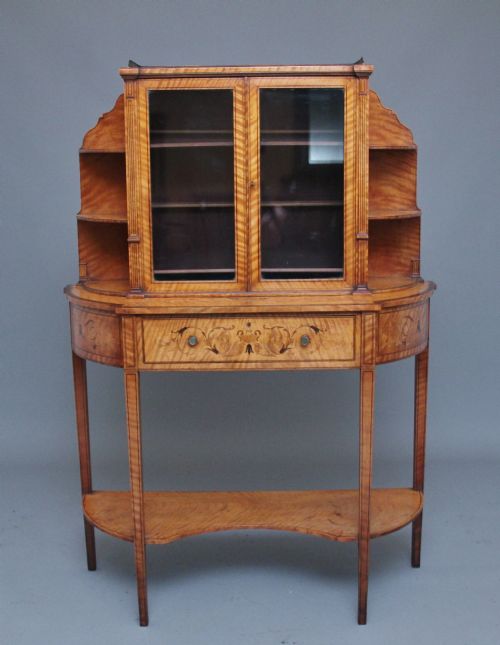
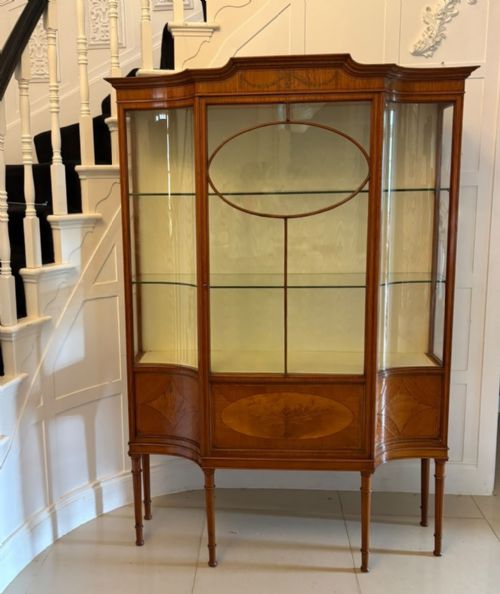
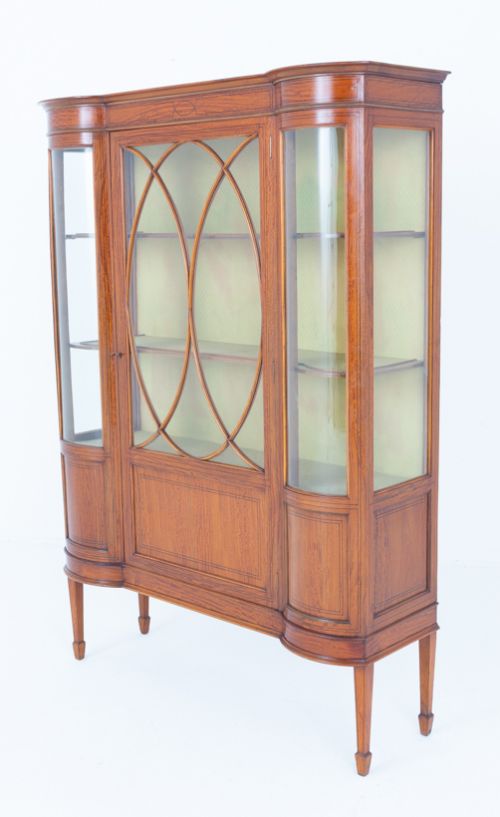
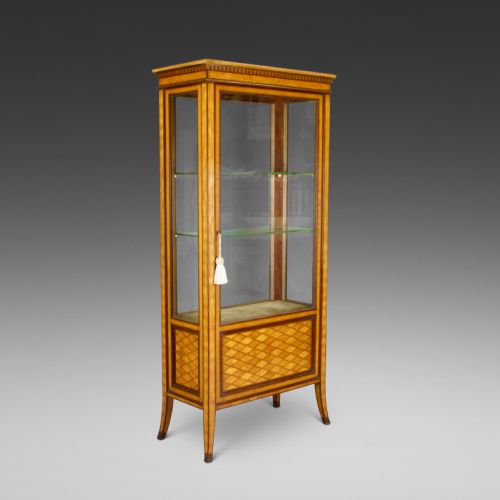
A golden satinwood china cabinet offers a sophisticated way to display prized porcelain and glassware behind glazed doors. The selection spans the nineteenth century through the Edwardian era, encompassing distinct forms such as breakfronts, bow fronts, and serpentine cabinets.
Makers working in the Sheraton Revival style drew heavily on eighteenth-century neoclassical designs, employing delicate proportions and symmetrical layouts. Pieces emerge from Victorian, Edwardian, and later periods, frequently taking the form of dedicated display cabinets or vitrines.
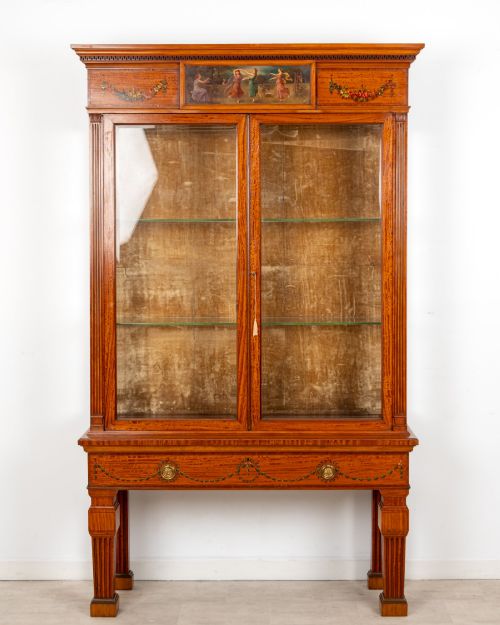
Surviving examples reflect diverse regional influences, including London workshops and Dutch makers. Buyers encounter freestanding cabinets alongside pieces raised upon slender stands or combined with bookcase formats.
How they were made
Cabinetmakers utilised figured satinwood as a primary veneer, often framing panels with contrasting rosewood or banding. Carpenters built internal carcases from secondary timbers before applying elaborate marquetry and wood inlay.
Glazing relied on timber or astragal bars to secure glass panels within doors, while brass fittings and ormolu mounts added structural and decorative accents. Some surfaces received hand-painted decoration directly onto the timber, complemented by fabric-lined interiors.
Listings feature satinwood combined with rosewood, ormolu, and hand-painted decoration across Victorian and Edwardian forms.
What varies in quality
The fineness of a golden satinwood china cabinet rests primarily on the grain figuration of the timber and the precision of its marquetry. Master workshops invested heavily in symmetrical floral inlays and crisp astragal glazing bars.
Construction standards appear in the tightness of cabinet joints, the weight of cast brass or ormolu mounts, and the integration of hand-painted details. Cabinets bearing maker signatures or stamps reflect the pinnacle of late nineteenth-century craftsmanship.
Hampton & Sons, London·Edwards & Roberts·Maple & Co.
The Golden Satinwood China Cabinet Glossary
- Satinwood
- A lustrous, hard timber native to Ceylon and the West Indies, prized for its golden yellow sheen and ability to take a fine polish. It served as the principal veneer for high-status revival furniture.
- Marquetry
- The art of forming decorative patterns by fitting together thin veneers of various woods and other materials. Craftsmen used this technique to create elaborate floral urns and scrolling foliage across cabinet doors.
- Astragal
- A moulded bar of timber dividing panes of glass within a glazed door. These delicate frames define the classical proportions characteristic of Sheraton Revival furniture.
- Serpentine
- A furniture front curving outward in the centre and inward at the sides in a flattened wave shape. This complex contour requires advanced woodworking skill to execute cleanly in solid timber and veneer.
- Ormolu
- Gilt bronze mounts applied to furniture edges and feet for decorative effect. The material provides a rich metallic contrast against polished satinwood surfaces.
- Parquetry
- Geometric mosaic woodwork forming regular patterns such as cubes or chequers. It differs from marquetry by relying on repeating angular shapes rather than pictorial motifs.
Golden Satinwood China Cabinet: Frequently Asked Questions
What is a satinwood cabinet?
A satinwood cabinet is a display piece constructed from or veneered in yellowish, highly reflective tropical timber. These furnishings gained immense popularity during the Victorian and Edwardian periods for brightening formal reception rooms.
Craftsmen often enhanced the golden grain with contrasting wood inlays, painted motifs, and glazed doors designed to showcase porcelain collections.
How do I style a china cabinet?
Position your cabinet away from direct sunlight to protect the sensitive satinwood veneer and internal fabric linings from fading. Allow the luminous timber and delicate inlay work to serve as a focal point within a drawing room or dining space.
Keep internal displays curated and uncluttered so that light passes freely through the glass panels and highlights the fine woodwork.
How do I date a display cabinet?
Dating relies on observing structural characteristics, timber usage, and stylistic revival markers. Pieces reflecting the Sheraton Revival style typically date from the late nineteenth or early twentieth century.
Examine the construction methods of the backboards and interior carcass, and check for maker stamps left by prominent cabinetmakers of the era.
What is Sheraton Revival furniture?
Sheraton Revival furniture reinterprets the neoclassical designs published by Thomas Sheraton in the late eighteenth century. Makers working a century later adopted his light proportions, tapering legs, and balanced decorative schemes.
These pieces frequently utilise satinwood as a canvas for classical urns, swags, and intricate floral marquetry.