



Golden Oak Library Cabinet
A golden oak library cabinet brings warmth and presence to a room, offering sturdy housing for books through glazed, open, or stacking forms.
Golden Oak Library Cabinet
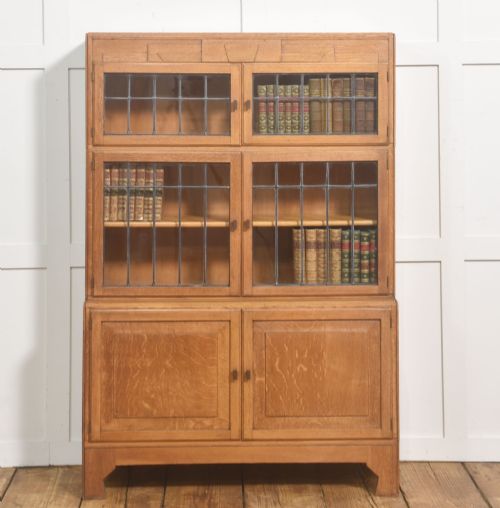
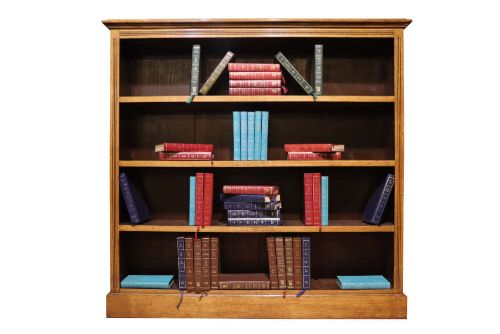
A golden oak library cabinet serves as a functional storage piece for books and display items, drawing on periods from the nineteenth century through to the twentieth. You will frequently encounter open front bookcases, standing glazed cabinets, and stacking office designs on this page.
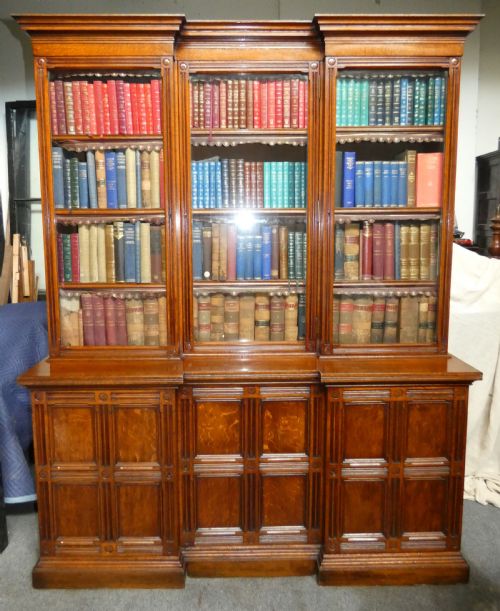
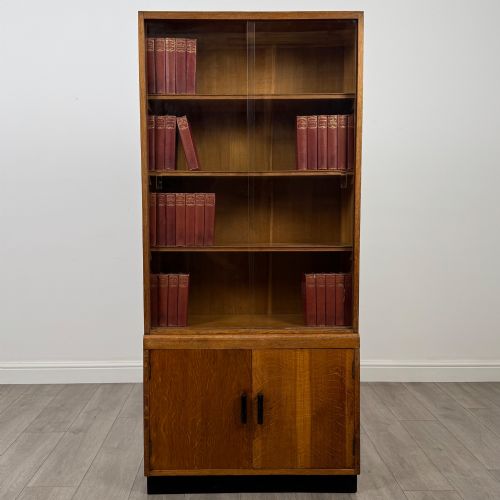
The selection ranges from Victorian breakfront pieces and William IV library bookcases to Edwardian stacking variants and Art Deco leaded glass bookcases. These items originate from British cabinet-making traditions, utilising distinct revival styles like Gothic Revival and Jacobean Revival alongside traditional forms.
What varies in quality
The sophistication of the timber figure and the choice of veneer, such as burr pollard oak versus standard plain oak, dictate the visual depth of the cabinet. Cabinet-making finesse shows in the precision of glazed doors, leaded glass work, and the smooth operation of stacking or drop front mechanisms.
Proportion and architectural detailing set individual pieces apart, ranging from simple open shelving to substantial breakfront cornices and Gothic revival carvings. The integrity of internal adjustable shelving and the retention of original brass hardware contribute to the standing of each piece.
Some barrister bookcases feature clever gravity catches that ensure the glass doors glide shut smoothly without slamming.
Globe Wernicke·Gunn·Richard Bridgens
The Golden Oak Library Cabinet Glossary
- Breakfront
- A cabinet design where the central section projects forward from the flanking sections. This configuration adds architectural depth to large library bookcases.
- Pollard oak
- Timber taken from a tree that has been pruned close to the trunk, producing a dense, highly figured grain pattern. Cabinet makers used this wood for decorative veneer panels.
- Secretaire
- A desk fitted with a pull-down or drop front writing flap concealing small drawers and pigeon holes. Victorian library cabinets sometimes combined this writing function with open bookcase storage.
- Stacking bookcase
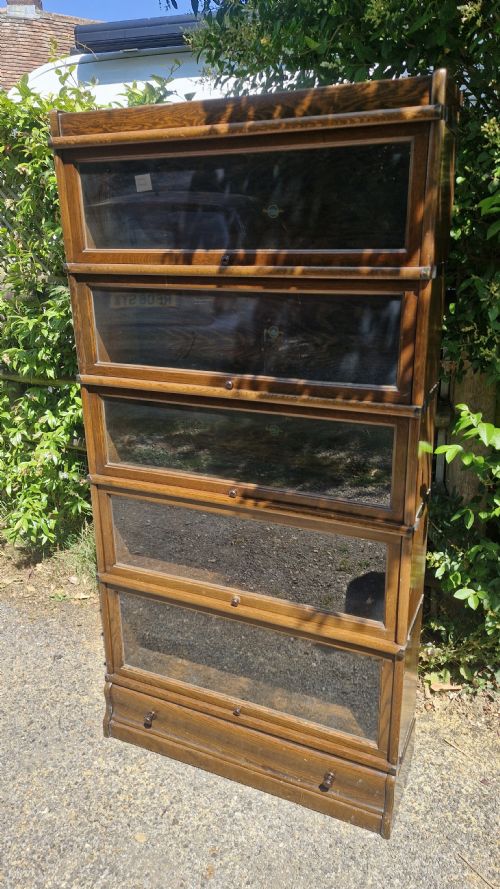
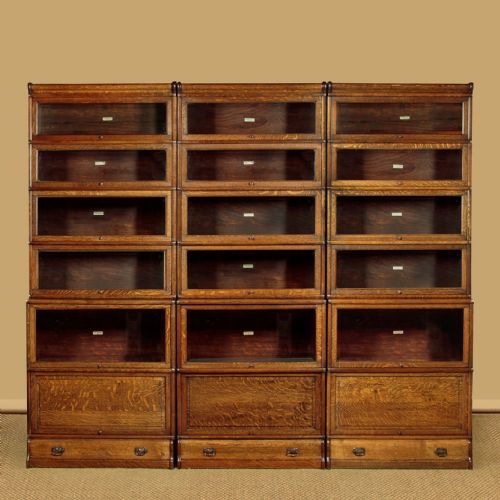
- Modular modular shelving units, often associated with barrister or office designs, that can be stacked vertically. Individual sections lift open to reveal books inside.
- Leadwork
- The network of lead cames holding individual panes of glass together in leaded windows and doors. This technique appears in Art Deco and revival glazed bookcases.
Golden Oak Library Cabinet: Frequently Asked Questions
How do I date an oak library cabinet?
Dating relies on observing construction methods, hardware styles, and the specific revival motifs present in the timber frame. Victorian and William IV pieces often display heavier proportions and breakfront cornices.
Edwardian and later twentieth-century examples tend towards lighter stacking formats or simpler open shelving. Comparing the joinery and glass types helps narrow down the period of manufacture.
Are shelves usually adjustable?
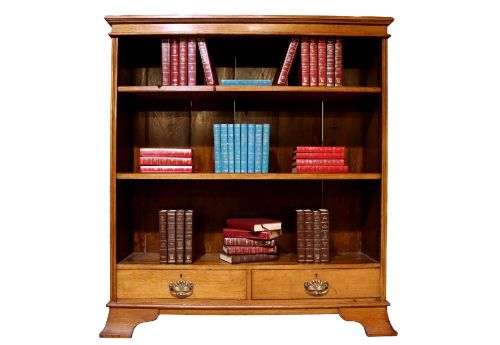
Many library cabinets feature adjustable shelving supported by internal wooden racks or metal pins. This allowed owners to alter shelf heights for varying book sizes.
Some simpler open bookcases feature fixed shelves integrated directly into the side panels during initial construction. Checking the interior walls reveals whether the height adjustments were built into the original design.
Where should I place a heavy bookcase?
Large library cabinets require stable, level flooring to distribute their substantial weight evenly, especially when filled with heavy volumes. Placing them against a secure wall prevents tipping and protects the frame joints.
Keep solid oak and veneered pieces away from direct heat sources and strong sunlight to prevent timber warping or fading. Proper placement preserves the structural integrity of the doors and adjustable shelves.