





Golden Brown Occasional Table
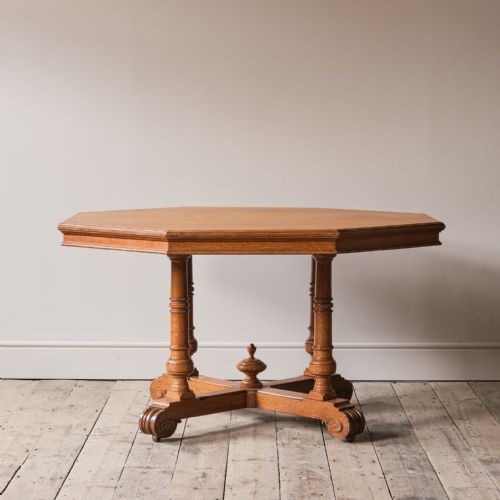
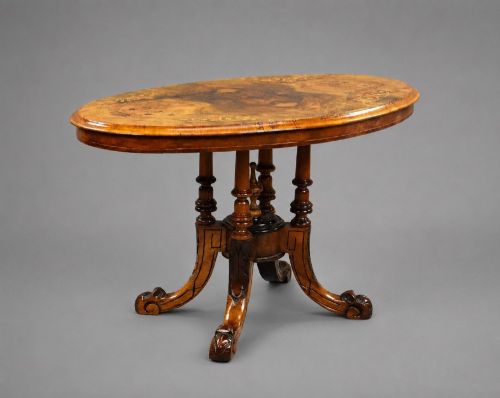
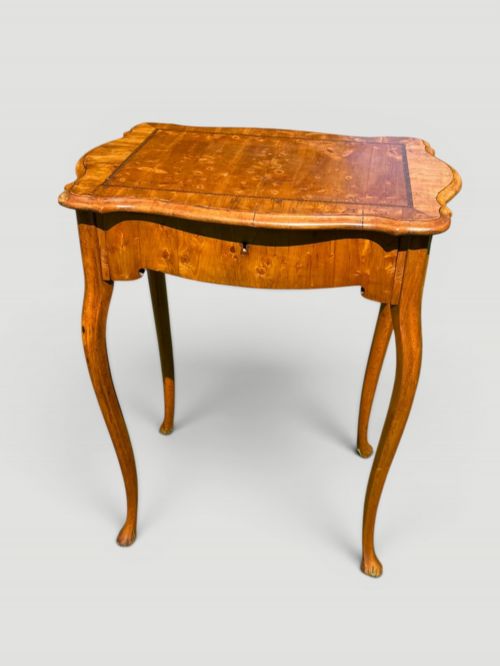
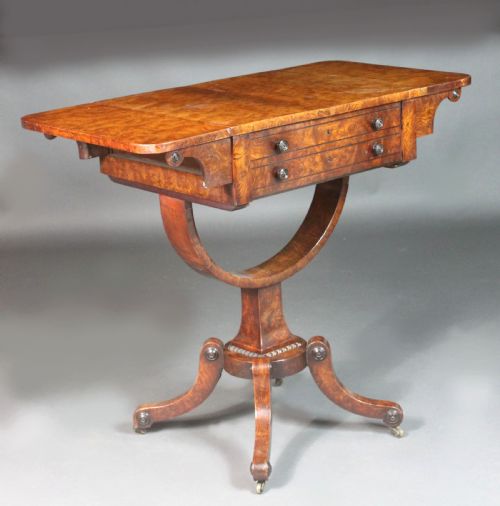
A golden brown occasional table brings warmth to a room, offering a practical surface shaped from figured timbers like satinwood and walnut.
Golden Brown Occasional Table
A golden brown occasional table spans several centuries of domestic furniture, appearing in forms such as side tables, coffee tables, and nests of tables. The selection ranges from compact Victorian and Edwardian examples to earlier Regency and nineteenth-century designs.
Makers utilised rich timbers including satinwood, burr walnut, oak, and mahogany to construct these pieces. Styles vary across the listings, incorporating Victorian, Edwardian, Regency, and Arts and Crafts influences.
Buyers most frequently encounter smaller portable pieces designed for specific household tasks, such as Sutherland tables, card tables, and occasional tea tables. These formats suit modern interiors while retaining traditional construction.
How they were made
Cabinetmakers selected figured veneers like burr walnut, burr elm, and satinwood to create decorative surfaces with deep visual grain patterns. Solid timbers such as oak, mahogany, and yew formed the structural frames and legs.
Inlaid decoration often featured boxwood stringing and floral marquetry, particularly on Edwardian satinwood pieces and Victorian walnut tables. Workshops combined these decorative elements with traditional joinery to ensure stability.
Nineteenth-century makers occasionally used New Zealand specimen woods to build tables that doubled as botanical cabinets of curiosity.
What varies in quality
The choice of timber grain largely determines the visual impact of a piece, with richly figured burr woods and finely selected satinwood occupying the upper tier of craftsmanship. Finer examples display meticulous marquetry and precise inlay work that integrate smoothly into the overall design.
Proportion and scale distinguish standard production pieces from finer work, as seen in neat Regency proportions and balanced occasional forms. The integration of functional elements, such as folding leaves or nests, reveals the precision of the original maker.
Harry and Lou Epstein·Maple and Co·Anton Seuffert·William Norrie
The Golden Brown Occasional Table Glossary
- Satinwood
- A pale, hard timber with a natural golden sheen, frequently used for veneering fine furniture in the eighteenth and nineteenth centuries.
- Burr walnut
- A wood harvested from the wart-like growths on walnut trees, prized for its swirling, highly figured grain patterns.
- Marquetry
- The art of applying pieces of veneer to a structure to form decorative patterns and pictures.
- Sutherland table
- A narrow drop-leaf table with hinged flaps that fold down vertically, supported by pivoting gatelegs.
- Guéridon
- A small French table supported by one or more columns, originating in the seventeenth century.
Golden Brown Occasional Table: Frequently Asked Questions
What is an occasional table?
An occasional table is a small, movable piece of furniture designed for specific, intermittent use around the home rather than a permanent central position.
These versatile tables include side tables, tea tables, and nests, providing convenient surfaces for lamps, books, or drinks.
How do I identify satinwood?
Satinwood is recognised by its distinctive yellow-gold colour and chatoyant grain that catches the light like silk.
It gained popularity during the late eighteenth century and remained a favoured timber for refined Edwardian tables.
Where should I place a nest of tables?
A nest of tables suits living rooms where surface space needs to expand and contract according to company.
They sit compactly together when floor space is required and separate easily to provide multiple small surfaces.
How do I clean burr walnut?
Burr walnut surfaces require gentle dusting with a soft, dry cloth to protect the delicate veneer and polish.
Avoid excessive moisture and harsh chemical cleaners, applying quality furniture wax occasionally to nourish the timber.