




Vintage Yew Wood Table
A vintage yew wood table brings rich grain and warm tone to a room, offering both practical surface space and distinct character.
Vintage Yew Wood Table
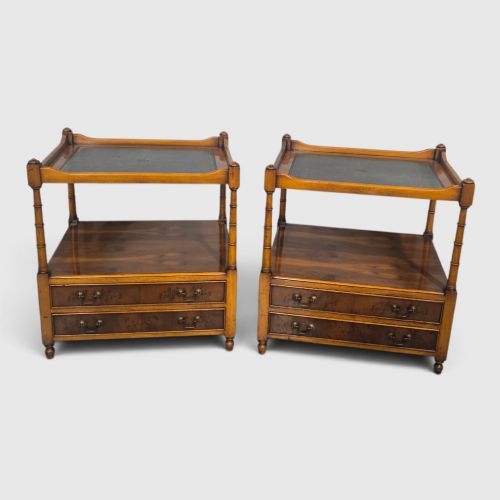
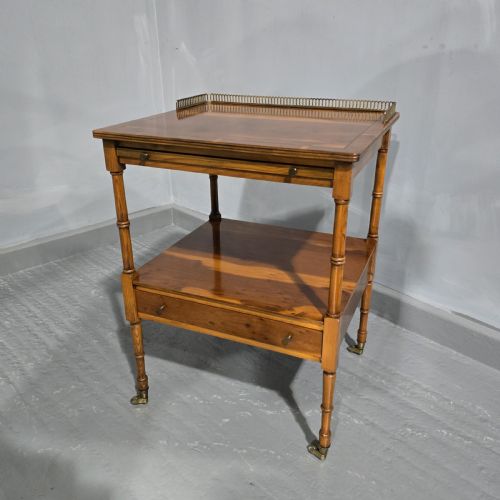
A vintage yew wood table encompasses practical furniture designed for domestic use, ranging from compact lamp tables to coffee tables and occasional pieces. These surfaces bring the distinct figuring of yew into interior spaces, offering both utility and decorative presence.
The selections found here lean towards compact forms, including occasional tables, lamp tables, and coffee tables dating from the early twentieth century. These pieces reflect revival styles such as Regency, Georgian, and Jacobean, adapting traditional forms for twentieth-century homes.
How they were made
Makers utilised solid yew wood alongside burr yew veneer to construct these tables, highlighting the natural patterns of the timber. Oyster veneer and inlaid details appear across surfaces, demonstrating the skill required to work with such decorative grain.
Construction frequently incorporates secondary materials like brass hardware and leather inserts to complement the timber frame. These elements reflect period manufacturing standards that balanced structural timber with decorative surface treatments.
Yew timber holds a legendary status in British folklore, having supplied the wood for medieval longbows before finding its way into elegant domestic furniture.
What varies in quality
Quality rests primarily in the selection of the timber, where heavily figured burr yew or carefully matched veneers command greater visual presence than plain grain. The precision of inlay work and the handling of edge details further separate standard production from finer examples.
Construction integrity distinguishes pieces, visible in the stability of joints and the retention of original brass fittings or leather surfaces. Period execution in revival styles demonstrates the maker's adherence to traditional proportions and finish.
The Vintage Yew Wood Table Glossary
- Yew Wood
- A dense, hard timber known for its varied grain patterns and warm golden-brown colour. It has been favoured by British cabinet makers for centuries.
- Burr Yew Veneer
- Thin slices of timber cut from the gnarled growths of a yew tree, displaying intricate swirling patterns. This material is applied to primary surfaces for decorative effect.
- Occasional Table
- A small, movable table designed for a specific, intermittent use in a principal room. These include lamp tables and side tables.
- Oyster Veneer
- Slices of wood cut transversely across smaller branches to produce small, circular or oval motifs. This labour-intensive method creates a distinctive patterned surface.
Vintage Yew Wood Table: Frequently Asked Questions
What styles are common in vintage yew wood tables?
Revival designs dominate these pieces, drawing heavily on Regency, Georgian, and Jacobean aesthetics. Makers adapted these historical styles for early twentieth-century interiors.
This blending of traditional forms with twentieth-century manufacturing results in tables that complement both period and modern rooms.
How do I care for a yew wood surface?
Keep the timber away from direct heat sources and strong sunlight to prevent the wood and any veneer from drying out. Regular dusting with a soft, dry cloth preserves the finish.
Apply a traditional beeswax polish occasionally to nourish the grain and maintain the natural lustre of the wood.
What is the difference between solid yew and burr yew veneer?
Solid yew uses uniform timber planks for construction, showing the straight growth rings and natural colour variations of the tree. Burr yew veneer utilises knotted growths sliced thinly to display complex, swirling patterns.
Veneer allows makers to showcase highly decorative wood figures across flat surfaces without warping risks inherent in large solid burr boards.
Are these tables suitable for daily use?
These pieces function well as lamp tables, side tables, and coffee tables in daily domestic settings. Their original construction was intended for practical household service.
Use coasters and protective pads to guard the polished timber surfaces against moisture and heat marks during everyday use.