

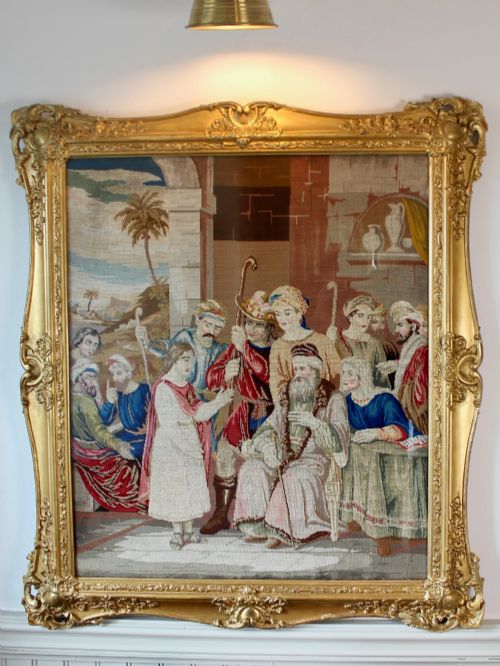


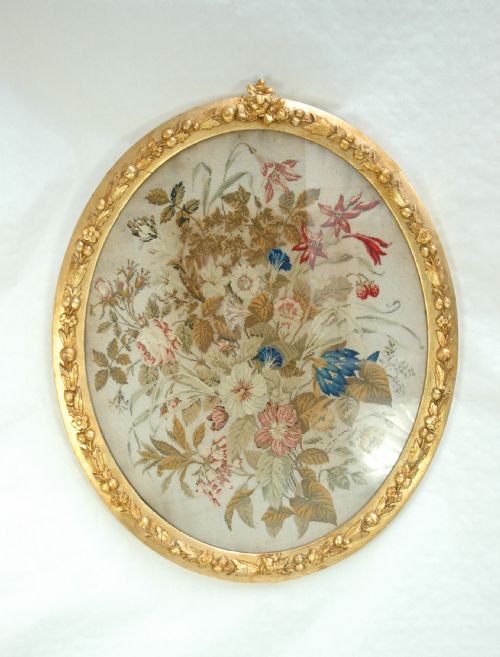

Gold Wool Embroidery Picture
These gold wool embroidery picture works combine fine stitching and historic scenes, offering a tangible link to past textile arts.
Gold Wool Embroidery Picture
A gold wool embroidery picture is a framed textile artwork typically created during the Victorian, Georgian, or Edwardian eras. These pieces often depict historical figures, landscapes, or classical portraits framed for wall display.
Most examples encountered on this page date from the nineteenth century, including specific years like 1860 and 1880, alongside broader periods such as the eighteenth century and 1900. Forms range from Scottish tapestry needlepoint to Italian needlepoint tapestry and Berlin woolwork.
The subjects span from Napoleon at Pont d'Arcole and Pharaoh's dream to Italian noblemen, cobblers, and Constable's The Corn Field. Buyers will find these works categorised as textile art, wall art, framed tapestries, and framed artwork.
Materials and construction methods
These works are constructed using wool, silk, and linen stitched onto a canvas foundation, often incorporating metallic threads for gilded highlights. The textile is stretched and housed within protective glass and framed in giltwood or gilt wood.
Techniques rely on needlepoint and tapestry stitching, executed by hand to build detailed pictorial scenes and portraits. The framing utilises traditional woodworking and gilding methods appropriate to periods from the eighteenth century to 1900.
Gold Wool Embroidery Picture Retail Price Guide 2026
Typical asking prices for gold wool embroidery picture among the pieces listed under this phrase on Sellingantiques today, from the lower quarter to the upper quarter. They describe what is for sale here now, not the wider market.
Listings span the eighteenth century to 1900, encompassing French Empire, Renaissance Revival, and Victorian Rococo Revival styles.
Assessing quality in needlework pictures
Quality rests in the precision of the needlework and the fidelity of the portraiture or scene rendered in wool and silk. Finer examples display intricate tonal blending and well-preserved metallic threads that catch the light through the glass.
The integrity of the original giltwood frame and the stability of the canvas support contribute significantly to the overall merit of the piece. Works that retain their original period framing demonstrate superior preservation compared to later replacements.
The Gold Wool Embroidery Picture Glossary
- Berlin woolwork
- A type of counted-thread embroidery popular in the nineteenth century, charted on squared paper and worked in brightly coloured wools on canvas. It allowed makers to create complex pictorial scenes with ease.
- Needlepoint
- Any embroidery stitched on a stiff open-weave canvas where the thread completely covers the ground fabric. This technique forms the durable pictorial surface seen in many historic wall hangings.
- Giltwood
- Wood that has been coated with a thin layer of gold leaf or gesso and gold paint. It provides the ornate, reflective borders typical of frames housing nineteenth-century artwork.
- Tapestry
- A form of textile art traditionally woven on a loom, though the term also describes needlework pictures mimicking woven designs. These pieces often portray historical or literary narratives.
- Canvas
- A heavy, plain-woven fabric used as the foundational support for needlework and embroidery. It provides the structural grid necessary for precise stitching.
Gold Wool Embroidery Picture: Frequently Asked Questions
What is a gold wool embroidery picture?
A gold wool embroidery picture is a framed textile artwork created using wool, silk, and metallic threads on canvas. These pieces depict historical scenes, portraits, or landscapes.
Originating mostly from the eighteenth, nineteenth, and early twentieth centuries, they showcase traditional hand-stitching techniques preserved behind glass in period frames.
How were these framed tapestries displayed?
These artworks were designed primarily as wall art for domestic interiors, housed in ornate giltwood frames. They served as decorative focal points in drawing rooms and parlours.
The inclusion of glass protected the delicate wool and silk threads from dust, smoke, and fading over decades of display.
How do I date an antique needlework picture?
Dating relies on stylistic clues, subject matter, and the construction of the frame. Victorian and Georgian pieces often feature distinct colour palettes and specific framing profiles.
Details such as the weave of the canvas, the type of wool, and any inscriptions on the reverse help narrow the decade of creation.
How do I care for a wool embroidery picture?
Care involves keeping the textile away from direct sunlight to prevent the wool and silk threads from fading. Maintaining stable indoor humidity prevents degradation of the canvas and frame.
Cleaning should be limited to dusting the exterior glass, leaving internal conservation to professional textile restorers.