

Gold Watch with T Bar
A gold watch with t bar brings together the utility of a pocket timekeeper and the decorative weight of a traditional Albert chain.
Gold Watch with T Bar
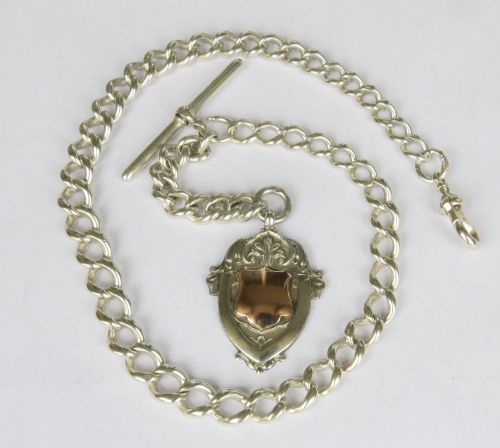
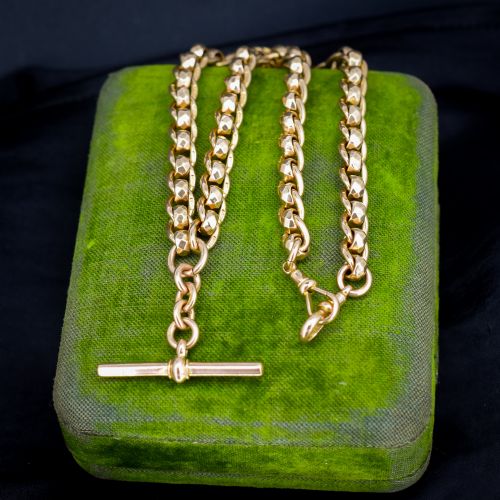
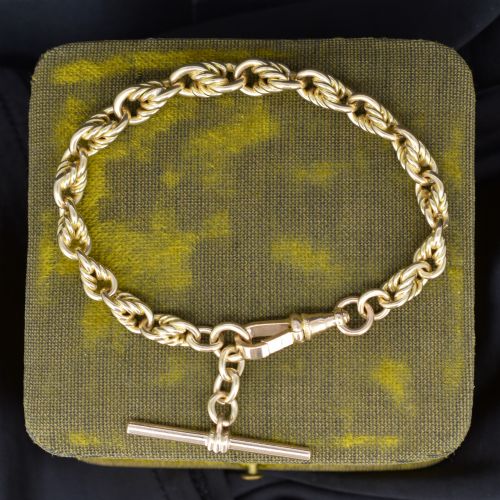
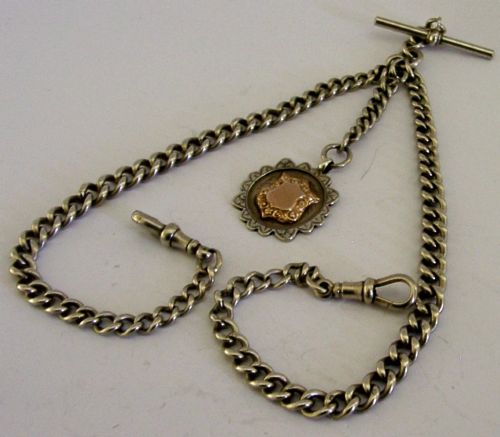
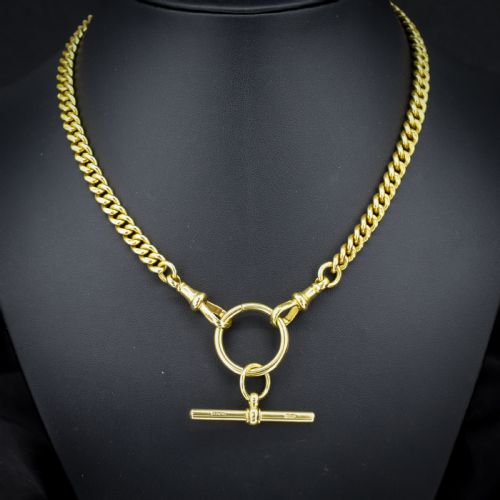
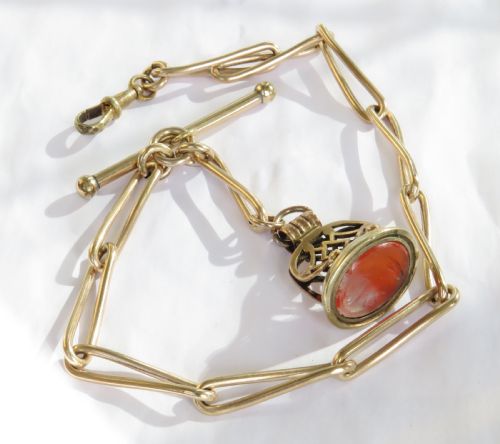
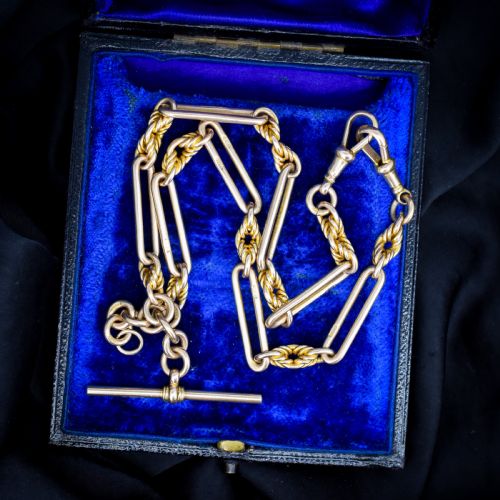
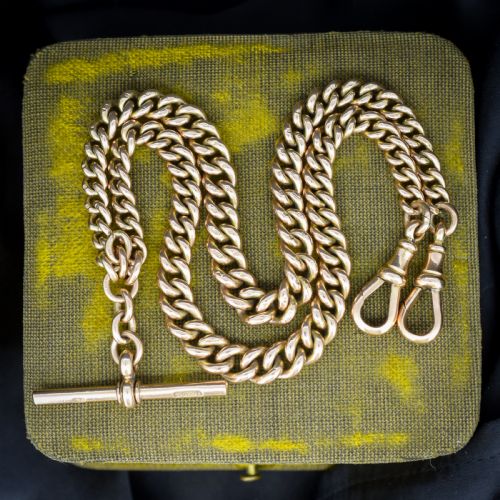
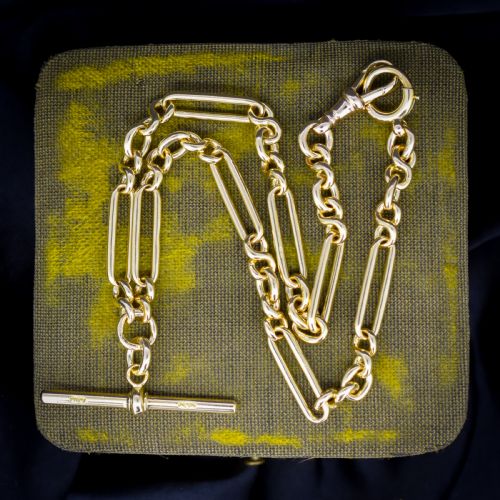
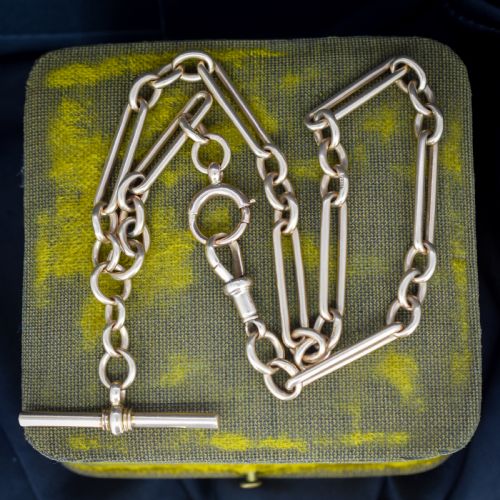
A gold watch with t bar brings together a functional pocket timekeeper and a substantial link chain designed to secure it through a waistcoat buttonhole. These pieces span the Edwardian period, the Victorian era, and the 1920s and 1930s, reflecting changing fashions in timekeeping and personal adornment.
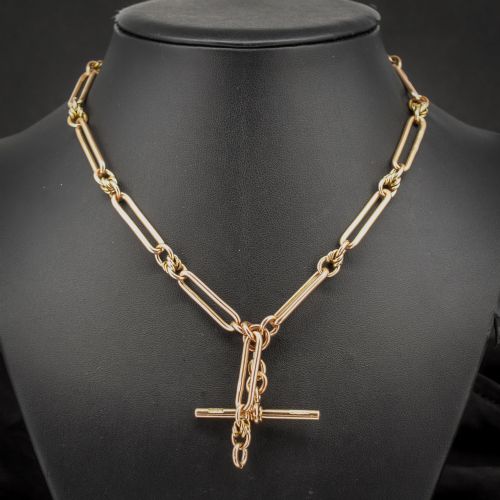
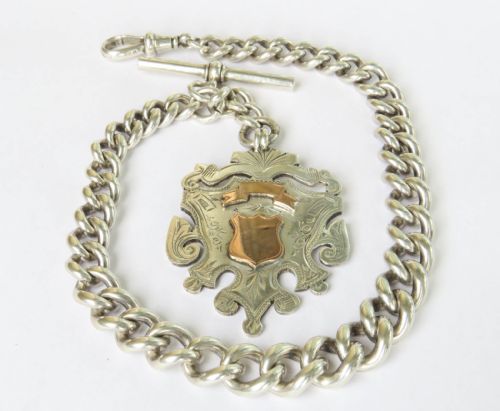
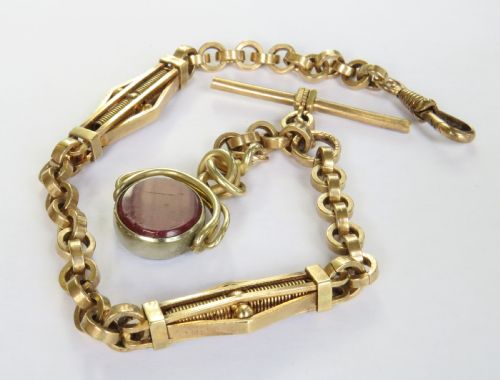
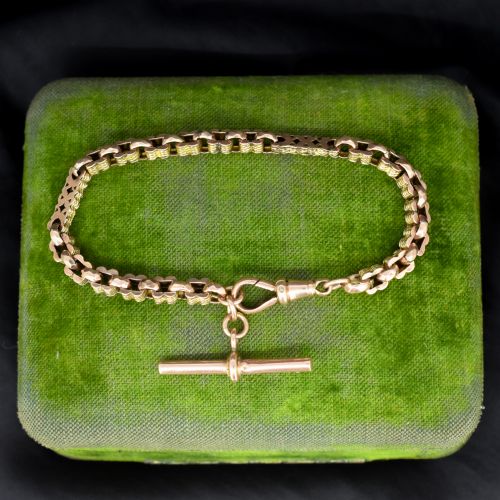
The pieces on this page primarily take the form of pocket watches paired with watch chains, alongside standalone Albert chains, bracelets, and necklaces fitted with the characteristic transverse bar. Materials range from solid 9ct gold and 9ct rose gold to rolled gold, gold plate, and metal.
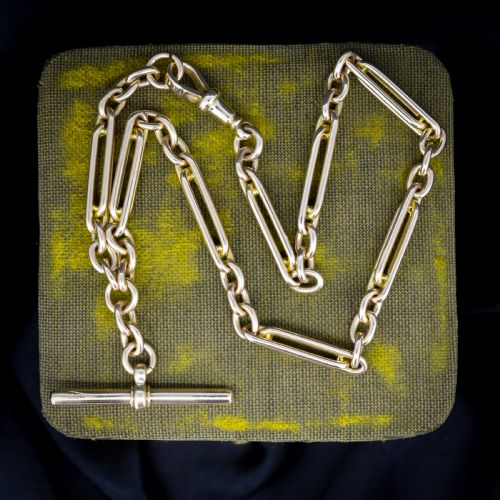
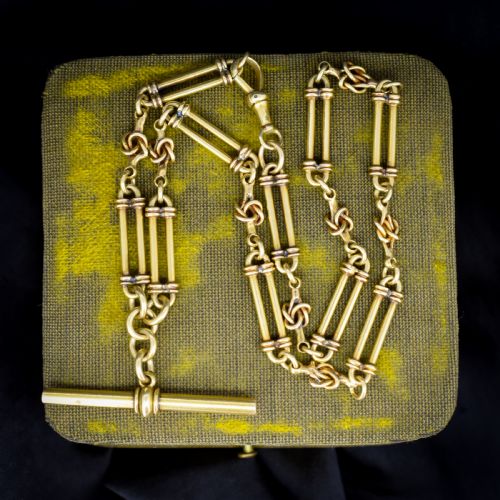
Makers and brands appearing in the record include Swiss, Revue, Pioneer, and Record Trenton, showing how watches were produced for retailers such as Whittakers. The chains themselves often feature distinct link styles including trombone, tubular bar, love knot, oval link, graduated curb, and belcher designs.
Construction and Materials
The chains and watches utilise metals such as 9ct gold, 9ct rose gold, rolled gold, and gold plate, sometimes combined with enamel and glass components. Solid gold components provide weight and durability, whilst rolled gold and plated alternatives offer the appearance of solid metal through bonded layers.
Links are shaped and joined by hand or machine into distinct patterns like trombone, curb, and belcher links, finished with dog clips, bolt rings, and the signature t-bar. Pocket watch movements from makers like Swiss, Revue, Pioneer, and Record Trenton are housed within metal cases designed for daily wear.
Gold Watch with T Bar Retail Price Guide 2026
Typical asking prices for gold watch with t bar among the pieces listed under this phrase on Sellingantiques today, from the lower quarter to the upper quarter. They describe what is for sale here now, not the wider market.
Listings span the Victorian and Edwardian eras, the 1920s, and the 1930s, featuring materials from 9ct rose gold to rolled gold.
Assessing Quality and Craftsmanship
Quality in these pieces rests upon the proportion of solid precious metal versus plated surfaces, with solid 9ct gold and 9ct rose gold examples sitting at the upper end of the scale. The weight of the metal, such as heavier gramages on Albert chains, indicates substantial construction rather than hollow or thin link fabrication.
The complexity and condition of the link work also define the tier of a piece, from intricate tubular bar and love knot assemblies to standard oval and curb links. Mechanical quality within the watch head itself, seen in Swiss and Revue movements, separates standard utility pieces from finer signed timepieces.
Revue·Pioneer·Record Trenton
The Gold Watch with T Bar Glossary
- T-Bar
- A short transverse metal bar attached to a watch chain, designed to slip through a waistcoat buttonhole to secure the chain. It anchors the entire assembly against accidental loss.
- Dog Clip
- A small spring-loaded snap hook used to attach a pocket watch or fob to a chain. It allows the wearer to quickly fasten or remove items.
- Trombone Link
- A specific style of watch chain link alternating elongated rectangular bars with smaller circular or oval connectors. It offers a geometric, structured appearance.
- Rolled Gold
- A material made by mechanically bonding a layer of gold to a base metal core under heat and pressure. It contains significantly more gold than standard gold plate.
Gold Watch with T Bar: Frequently Asked Questions
What is a t bar used for?
The t-bar serves as a secure anchor for a pocket watch chain by slipping horizontally through a buttonhole on a waistcoat. This prevents the watch from falling if it slips from the pocket.
Historically, gentlemen wore their watches in waistcoat pockets with the chain draped across the front, secured by this transverse bar.
How do you wear a watch chain today?
Modern wearers often adapt these chains as necklaces, bracelets, or traditional pocket watch accessories attached to jackets and waistcoats. The dog clips and t-bars make it straightforward to fasten the pieces in various configurations.
Shorter lengths suit neckwear whilst longer chains can double around the wrist or drape across garments.
How do I identify the period of a watch chain?
Dating relies on hallmarks stamped onto the metal, link styles such as trombone or curb patterns, and accompanying components like dog clips and fobs. Victorian and Edwardian pieces often display distinct assay office marks and specific link geometries.
Later pieces from the 1920s and 1930s introduce different mechanical movements and alternative plating methods.