


Gold Vitrine Cabinet
A gold vitrine cabinet is an opulent glazed display piece designed to showcase prized objects, combining gilt finishes with clear glass.
Gold Vitrine Cabinet
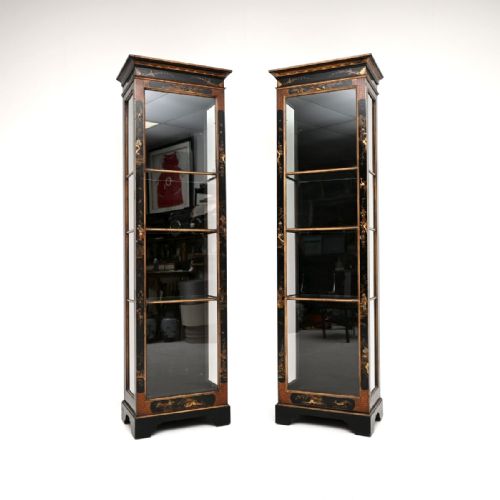
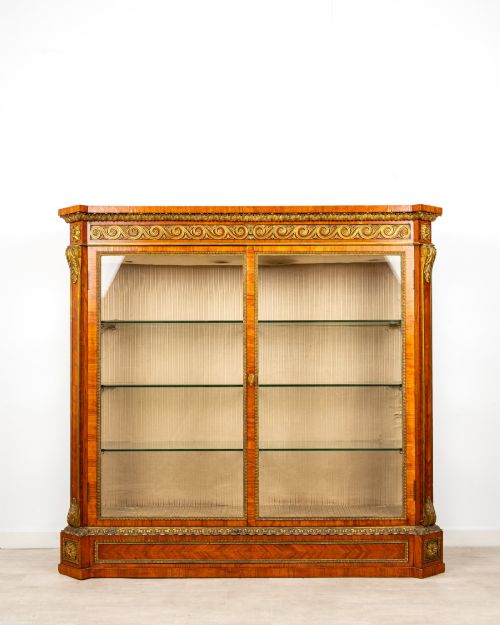
A gold vitrine cabinet serves primarily as a decorative stage for precious collections, silverware and porcelain within a drawing room or salon. You meet these pieces most frequently in French Rococo Revival, Louis XVI style and Victorian interpretations dating from the nineteenth century into the early twentieth century.
The selection ranges from grand freestanding serpentine frontals and cylindrical pedestals to smaller hanging display cases and shop display counters. Many examples incorporate glazed sides alongside glass doors to maximise light reflection across the interior shelves.
How they were made
Cabinetmakers constructed the foundational carcasses from timbers such as mahogany, walnut, kingwood and ebonised wood, often applying elaborate marquetry or gold leaf. Structural enrichment frequently relied upon cast or chased ormolu and brass mounts fixed to the corners, cornices and feet.
Surface decoration frequently embraced painted panels in the Vernis Martin style, alongside lacquered chinoiserie finishes on Edwardian frames. Glazing techniques involved securing individual glass panes within timber rebates or metal framing to ensure airtight and dust-resistant enclosures.
Several cabinets were originally designed for commercial shop counters before finding new life displaying domestic curiosities.
What varies in quality
The distinction between standard cabinetmaking and exceptional workshop production lies in the crispness of the giltwood carving and the weight of the ormolu mounts. Finer pieces demonstrate meticulous hand-chasing on bronze elements and seamless matching of wood veneers across curved serpentine surfaces.
Interior execution also marks the gradation, with superior cabinets featuring original silk or fabric linings, bevelled glass panels, and structurally sound heavy framing capable of supporting loaded shelves without sagging.
H. J. Hatfield & Sons·Siegel·Francoise Linke
The Gold Vitrine Cabinet Glossary
- Vitrine
- A glass-fronted display cabinet intended for the presentation of curiosities and ornaments. It derives from the French term for glass.
- Ormolu
- Gilt bronze mounted onto furniture surfaces as decorative enrichment. The technique involves applying a gold amalgam to heated bronze.
- Vernis Martin
- A simulated Japanese lacquer finish developed in eighteenth-century France. Cabinetmakers later revived the technique for decorative painted panels on cabinets.
- Boulle
- An marquetry technique utilising tortoiseshell and brass inlaid into a dark ground. It was popularised by cabinetmaker Andre-Charles Boulle and revived in later periods.
- Marquetry
- The art of applying decorative pieces of veneer to a structure to form intricate patterns. Woods and other materials are cut and fitted together precisely.
Gold Vitrine Cabinet: Frequently Asked Questions
What is a vitrine cabinet used for?
These cabinets were historically designed to house and display collections of porcelain, fine glassware, and small precious artefacts within formal reception rooms.
The large glazed surfaces protected delicate items from dust while allowing guests to admire the owner's collections from all angles.
How do I clean a giltwood cabinet?
Dust giltwood and ormolu mounts very gently using a soft, dry ostrich feather duster or a clean, dry artist's brush.
Avoid using any water, chemical polishes, or abrasive cloths, as moisture and harsh substances will strip the delicate gold leaf and varnish.
Are these cabinets purely French in origin?
While many examples follow French styles such as Rococo Revival and Louis XVI, British makers also produced similar glazed display furniture.
English interpretations often incorporated Victorian walnut marquetry, Edwardian chinoiserie, or Aesthetic Movement ebonised designs alongside gilt details.
How can I tell a nineteenth-century piece apart?
Examine the construction methods, timber choice, and the quality of the hand-chased bronze or ormolu mounts rather than relying solely on surface finish.
Nineteenth-century examples frequently feature hand-cut dovetailing, heavier structural timbers, and distinct patination on the interior secondary woods.