
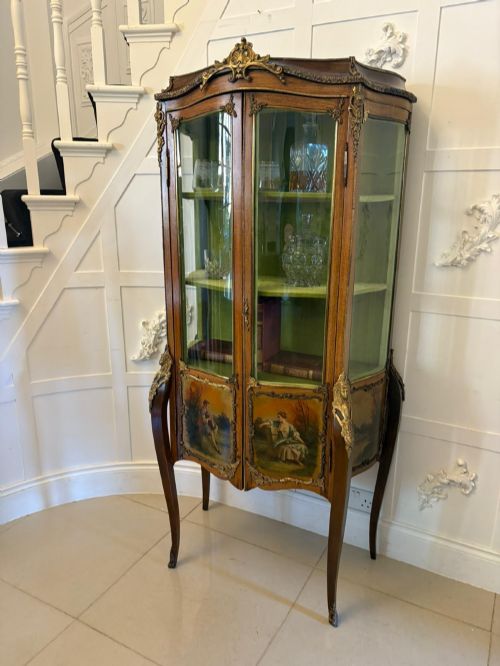
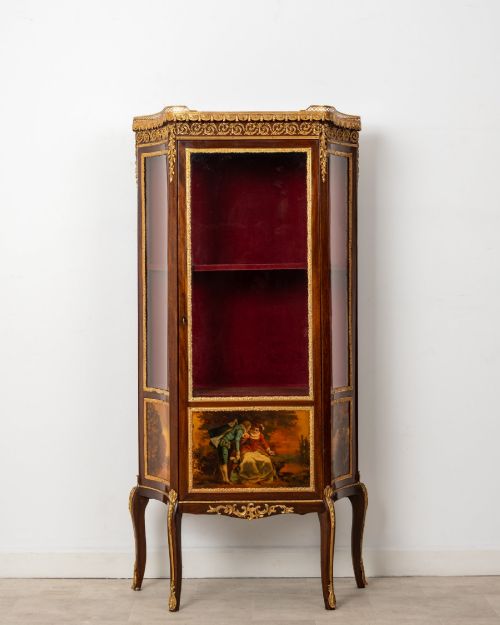
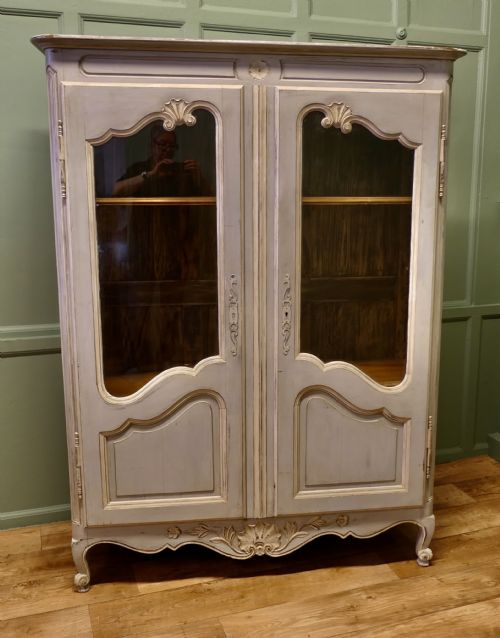
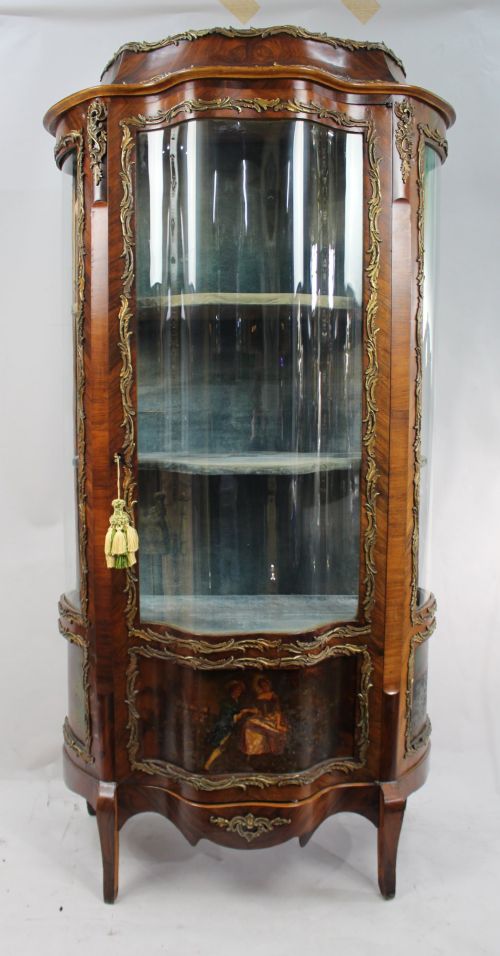
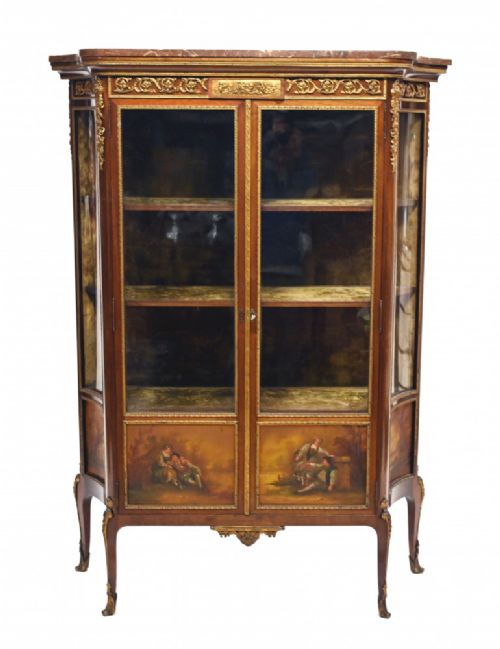
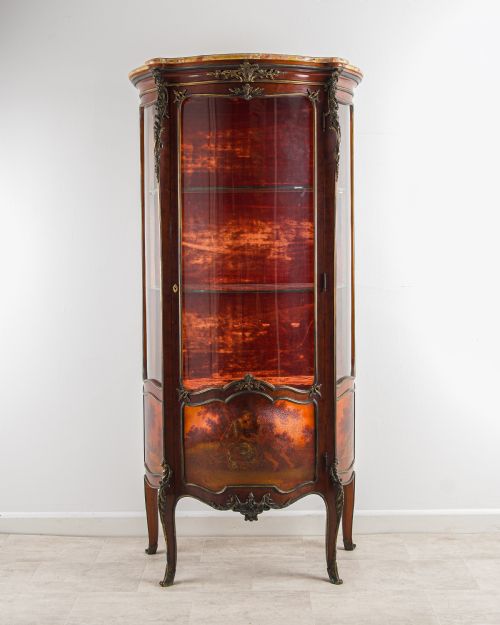


French Painted Vitrine
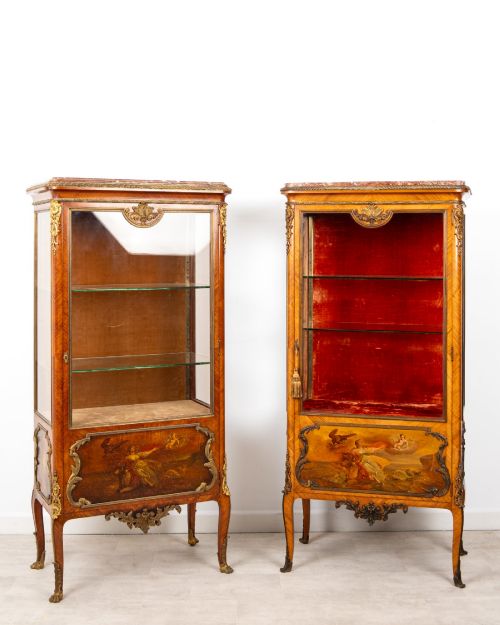
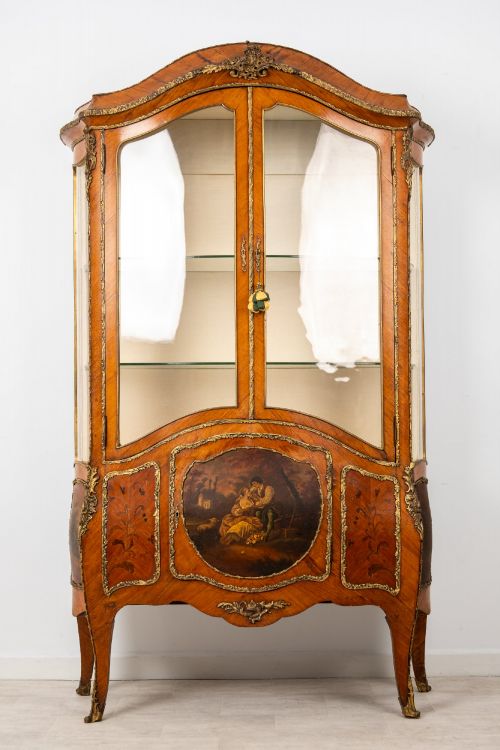
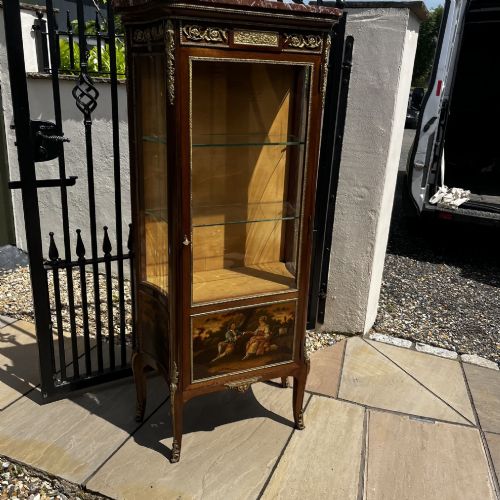
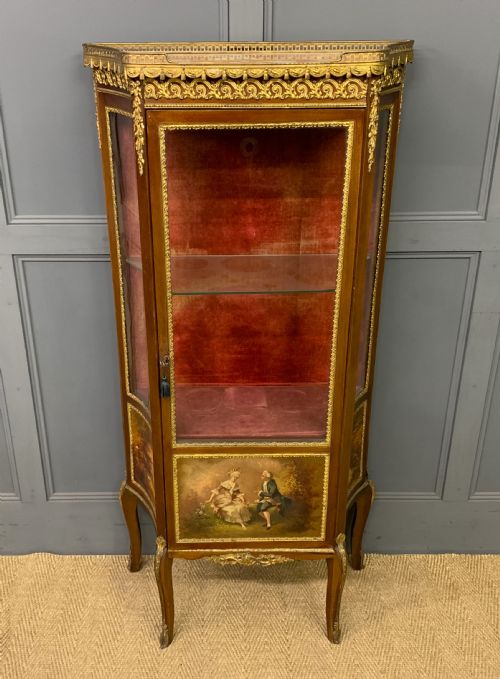
When you select a french painted vitrine, you choose a glazed display cabinet defined by painted panels and decorative finishes designed to showcase prized objects.
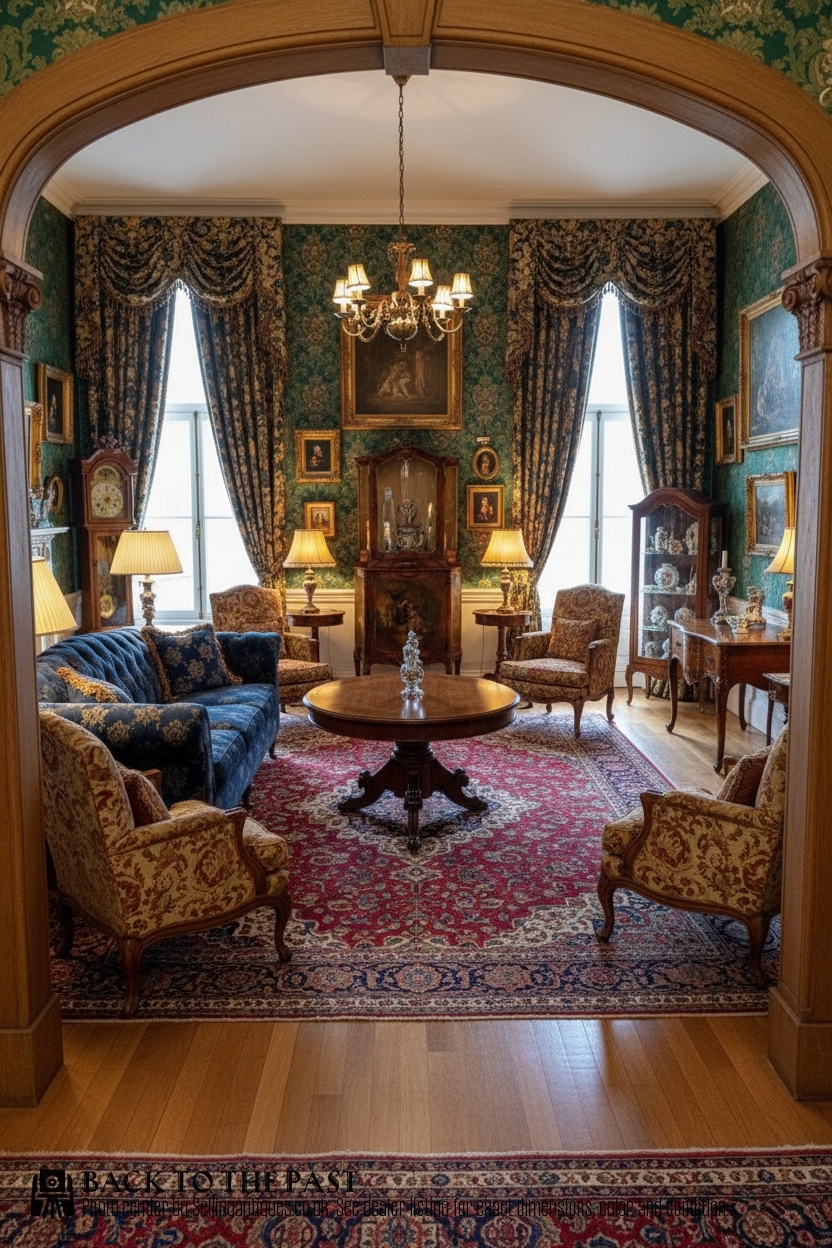
French Painted Vitrine
A french painted vitrine functions primarily as a display cabinet or boudoir cabinet, designed to hold and protect porcelain, glassware and small decorative items behind glazed doors.
The pieces appearing most frequently across these records combine painted surfaces, often utilising the Vernis Martin technique, with structural timbers such as kingwood and mahogany.
Examples span the nineteenth century through to the Edwardian period and the early twentieth century, incorporating revival styles drawing on Louis XV and Louis XVI aesthetics.
Materials and Construction Methods
Cabinet makers constructed the foundational carcass using hardwoods like mahogany and kingwood, frequently mounting marble tops and applying detailed gilt bronze or ormolu mounts to accent the form.
Painted decoration takes the form of Vernis Martin finishes and hand-painted panels depicting figurative or floral scenes, protected beneath clear lacquer layers.
Glazing techniques range from flat glass panels to curved and concave glass doors framed by timber and metal mouldings.
Listings demonstrate a strong presence of nineteenth-century pieces utilising kingwood, mahogany, and extensive ormolu mounts.
Distinctions in Quality and Execution
The refinement of the hand-painted panels and the execution of the Vernis Martin finish separate standard examples from pieces carrying exhibition quality designations.
Quality manifests in the weight and crispness of the ormolu mounts and gilt bronze details, alongside the precision of timber framing and serpentine or bombe shaping.
The French Painted Vitrine Glossary
- Vernis Martin
- A simulated Japanese lacquer finish developed in eighteenth-century France by the Martin brothers, utilising successive coats of varnish to achieve a translucent gloss over painted scenes.
- Ormolu
- Cast brass that has been mercury-gilded, applied as decorative mounts and feet on high-end furniture.
- Bombe
- A swelling, outward-curved contour found on the front and sides of case furniture.
- Serpentine
- A line of furniture styling featuring a convex centre flanked by concave curves.
- Vitrine
- A glass-fronted cabinet designed specifically for the display of objects and curiosities.
French Painted Vitrine: Frequently Asked Questions
What is a Vernis Martin finish?
A Vernis Martin finish is a specialised decorative lacquering technique developed in eighteenth-century France to imitate Asian lacquer work. Artisans applied multiple layers of varnish over painted panels to create a deep, lustrous surface.
This finish appears frequently on nineteenth-century French display cabinets, often protecting delicate floral or pastoral scenes painted directly onto the wood or ground coats.
How are these cabinets typically used?
These glass-fronted cabinets were originally created to display fine porcelain, silver, miniatures, and other prized collectibles safely away from dust. The inclusion of glazed doors and sides allowed light to illuminate the interior contents from multiple angles.
In modern interiors, they continue to serve their traditional purpose as focal display pieces in drawing rooms, dining spaces, or studies.
What distinguishes Louis XV and Louis XVI styles?
Louis XV style furniture, often termed French Rococo Revival, is characterised by asymmetrical curves, naturalistic leaf motifs, and flowing serpentine lines. Ormolu mounts on these pieces tend to emphasise organic, sweeping contours.
Louis XVI style shifts toward classical symmetry, straighter structural lines, and restrained geometric detailing, reflecting neoclassical influences that emerged later in the eighteenth century and returned during nineteenth-century revivals.
Are marble tops standard on these cabinets?
Marble tops appear regularly on specific forms of nineteenth-century French display cabinets, particularly those featuring kingwood carcases and ormolu mounts. They provided a durable and decorative surface finish.
Not all models include marble, as many feature finished wooden tops or painted borders designed to match the overall aesthetic of the specific piece.