
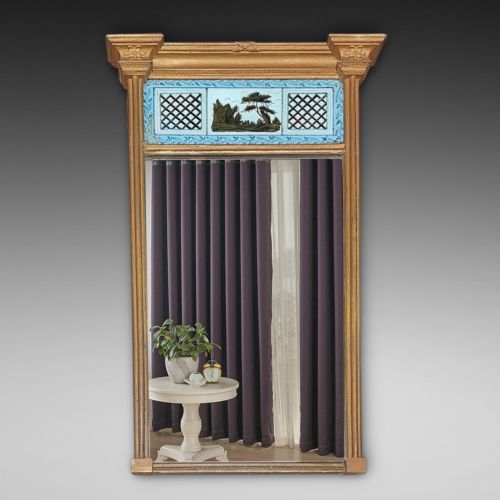

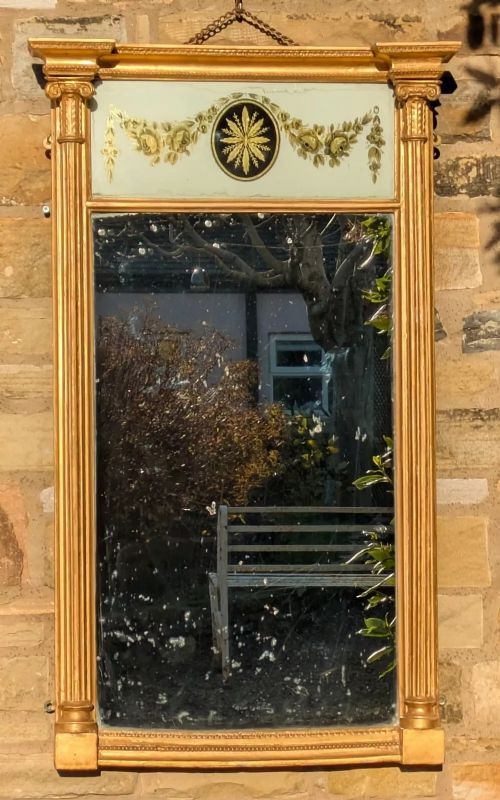
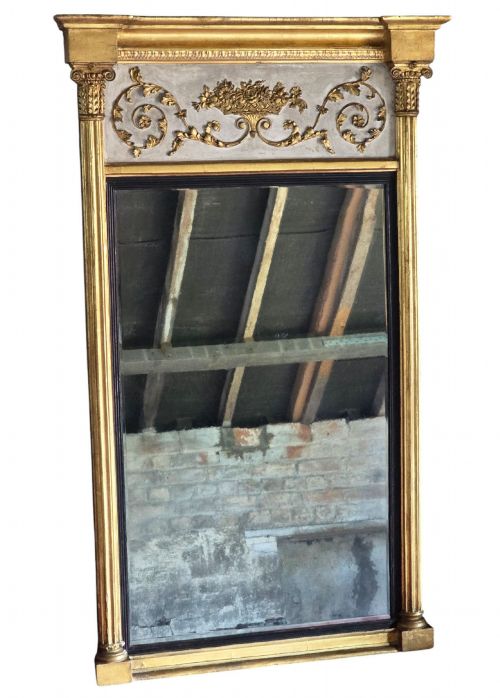
Gold Trumeau Wall Mirror
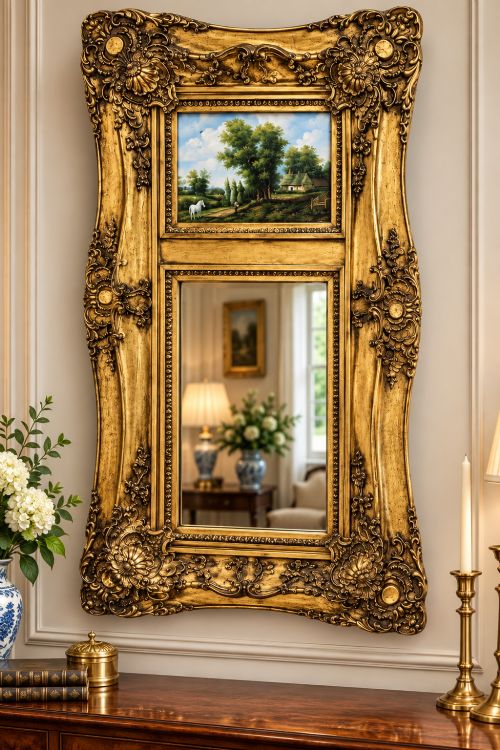
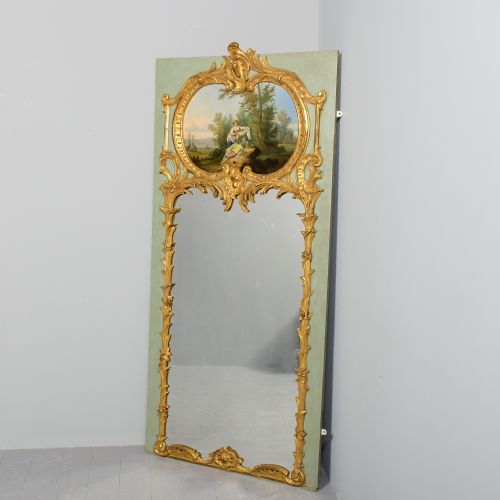
A gold trumeau wall mirror combines reflective glass with integrated upper panels of oil paint, canvas or verre églomisé to anchor a grand interior.
Gold Trumeau Wall Mirror
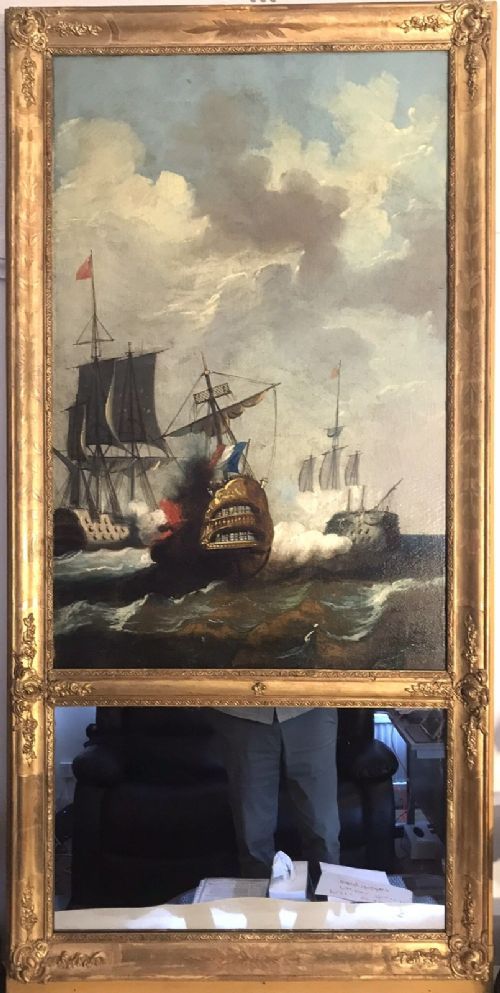
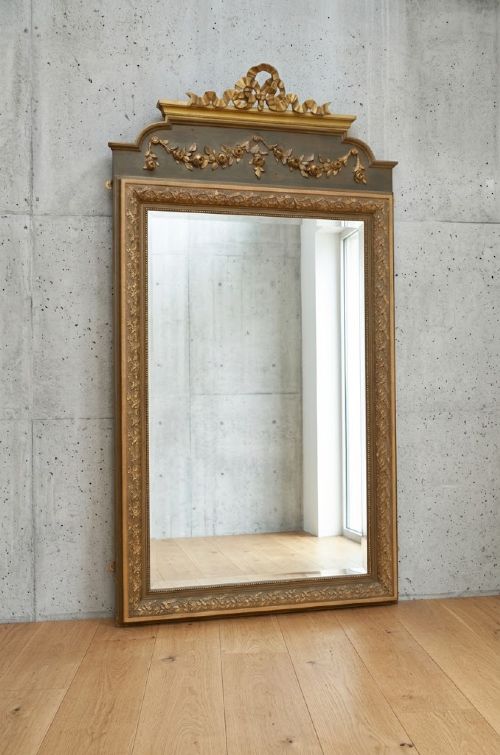
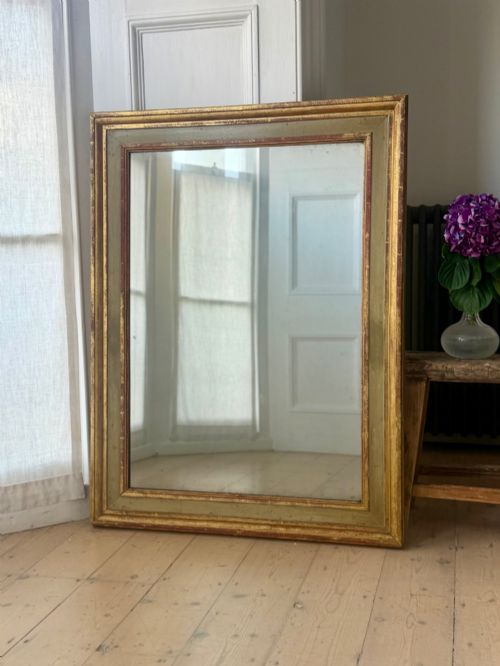
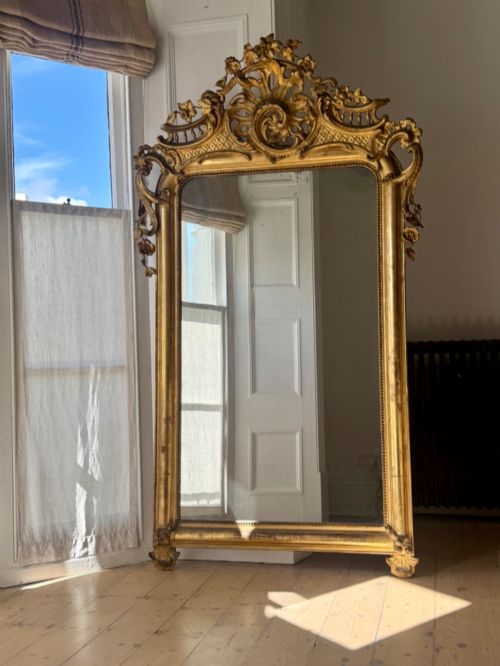
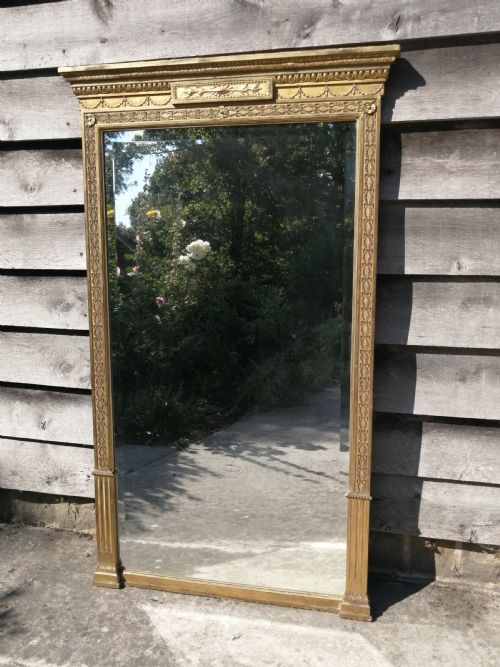
A gold trumeau wall mirror integrates a vertical glass plate with an upper decorative panel, typically designed to hang between windows or above a mantelpiece. These pieces originate across the eighteenth and nineteenth centuries, spanning Regency, French Empire, Louis XVI, and Rococo aesthetics.
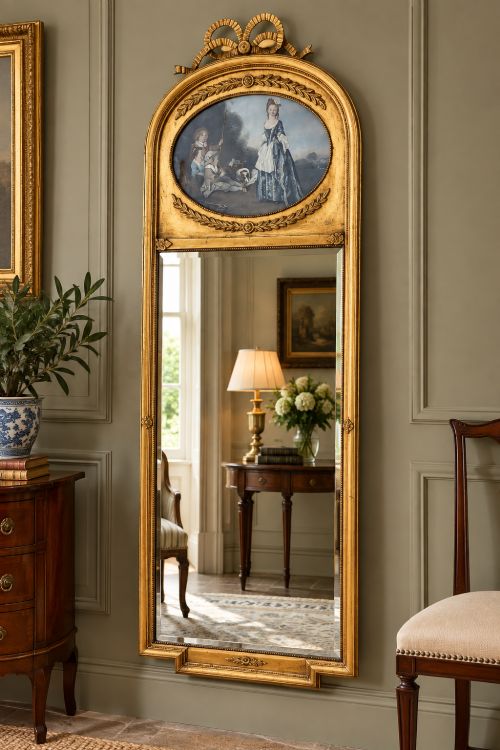
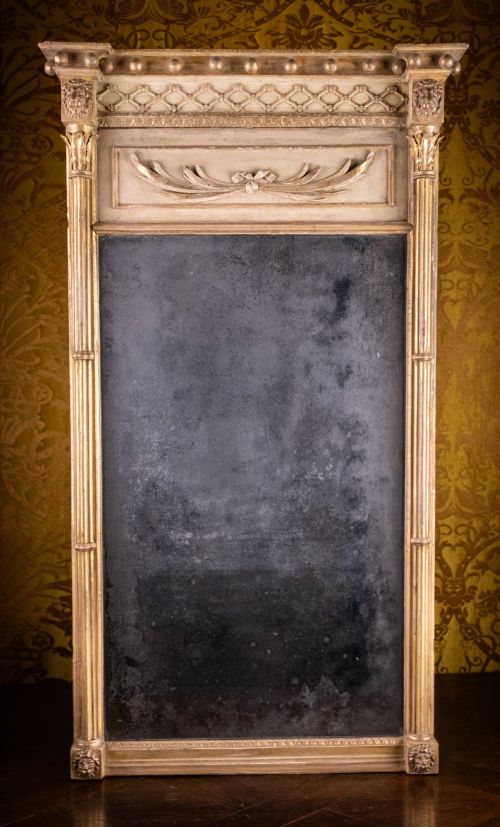
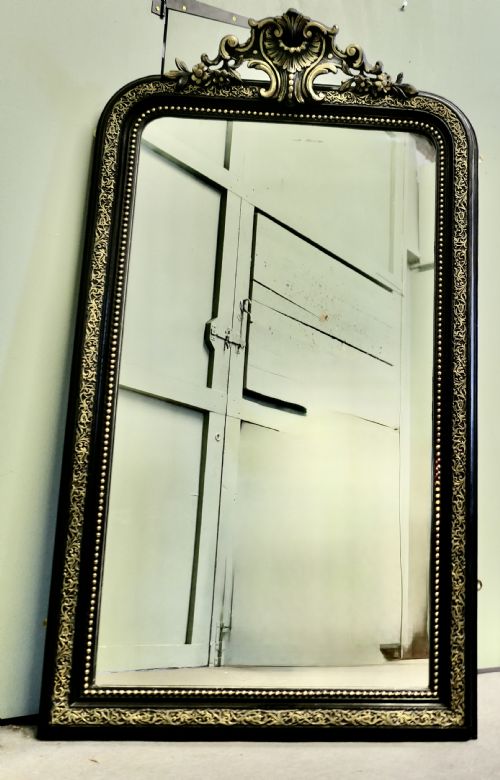
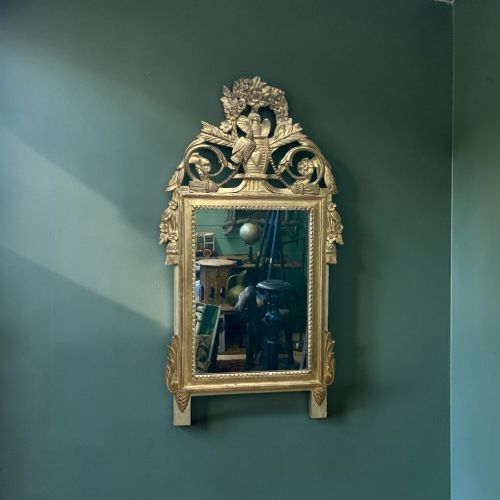
The version most commonly met on this page is the French pier mirror or trumeau, frequently framed in giltwood and gesso with painted wooden elements. Grand scale overmantel examples and tall narrow formats also appear, occasionally incorporating lion masks, ribbon crests, or Egyptian Revival columns.
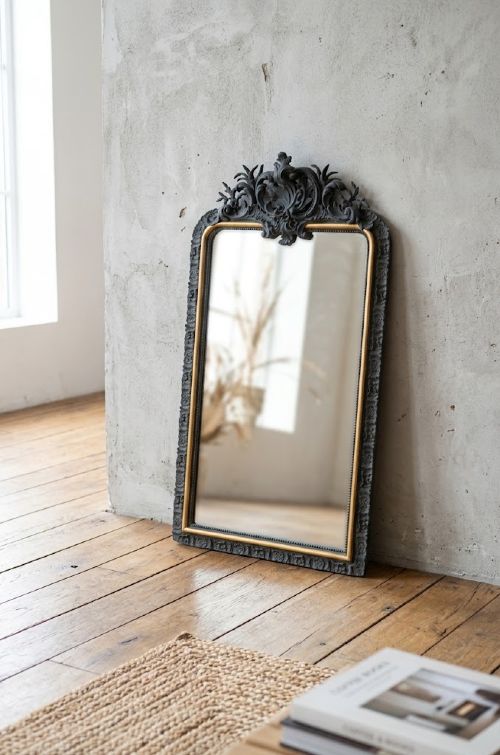
Many of these frames display a combination of gilded surfaces and painted wood, often finished in olive green, black, or white alongside the primary gold leaf. Marriage mirrors and Chinoiserie variants also populate the selection, providing alternative decorative motifs within the broader category.
Materials and construction
Makers constructed these frames from carved wood, frequently applying a layer of gesso to take fine decorative details and gilding. Gold leaf or surface gilding was then laid over the prepared wood and gesso foundation, sometimes paired with painted or patinated sections.
The reflective components rely on traditional mirror glass, including early mercury glass plates that exhibit subtle foxing and age spots. Upper panels utilise canvas, oil paint depicting scenes such as galleons at sea, or verre églomisé techniques to present reverse-painted decoration.
Materials recorded across the selection include giltwood, gesso, mercury glass, canvas, and painted wood finishes.
Distinctions in execution
The refinement of the carved gesso and woodwork dictates the baseline standard of the frame, separating deeply undercut foliage and crisp architectural mouldings from simpler moulded plaster details. Superior examples retain their original mercury glass plates and integrated upper oil paintings or verre églomisé panels rather than modern replacements.
Proportion and scale also govern the hierarchy, with grander architectural pier mirrors and balanced Neoclassical or Empire compositions commanding greater visual presence. The integrity of the original gilding and painted finishes, showing honest patination without heavy modern overpainting, marks the better specimens.
The Gold Trumeau Wall Mirror Glossary
- Trumeau
- A decorative architectural mirror featuring an upper panel containing a painting, canvas, or verre églomisé section above the main glass plate. These items were originally designed to fit the wall space between windows.
- Gesso
- A plaster mixture applied to wood frames to create a smooth base for carving or gilding. Skilled artisans modelled intricate relief ornament onto this surface before applying gold leaf.
- Verre églomisé
- A process of cold painting and gilding on the reverse side of glass to produce a metallic, translucent decorative panel. It frequently appears in the upper sections of Regency pier mirrors.
- Mercury glass
- An early mirror plate type manufactured by applying a tin and mercury amalgam behind the glass. This technique produces a characteristic mottled reflection and uneven dark spots over time.
Gold Trumeau Wall Mirror: Frequently Asked Questions
Where should I hang a gold trumeau wall mirror?
These mirrors suit placement above a mantelpiece or centred between two large windows where their vertical proportions can reflect natural light effectively.
Historically, pier mirrors were built specifically to occupy the wall space between openings, making them ideal for living rooms and formal reception areas.
How do I care for antique giltwood frames?
Dust the carved surfaces gently with a soft, dry brush to prevent accumulation without disturbing fragile gesso or gold leaf.
Avoid liquid cleaners, polishes, and abrasive cloths entirely, as modern chemical solutions can strip historic gilding from the wood.
What is the difference between an overmantel and a pier mirror?
Overmantel mirrors are typically broader horizontal pieces designed to sit directly above a fireplace opening. Pier mirrors are taller and narrower, engineered to hang on the wall space between architectural openings.
Both forms utilise similar giltwood, gesso, and painted construction methods across eighteenth and nineteenth-century examples.
Are the mirror plates original?
Many surviving pieces retain their original mercury glass plates, which often display characteristic foxing, minor speckling, and gentle distortion. Some mirrors have received replacement glass plates during their working life to maintain a clearer reflection.