
Gold Travelling Clock
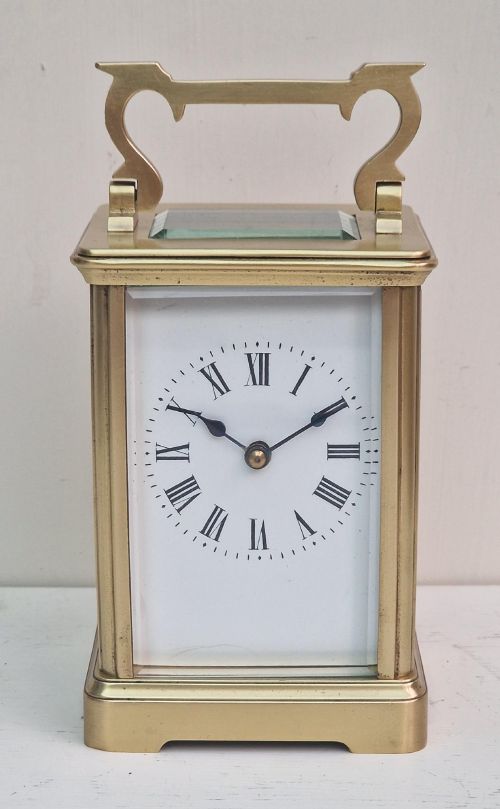
A gold travelling clock brings heavy brass, glass panels and precise French movement together to keep time on the move.
Gold Travelling Clock
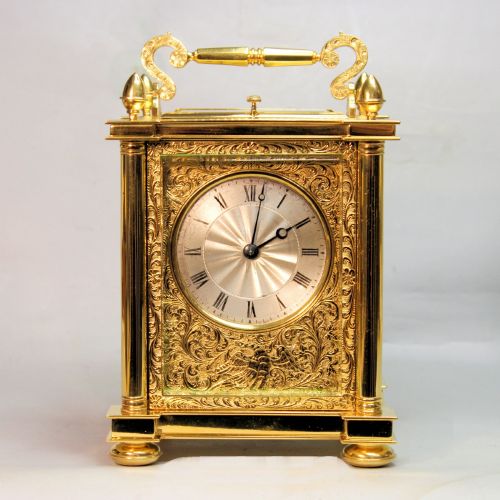
A gold travelling clock, often encountered as a brass or gilt carriage clock, represents portable timekeeping developed for nineteenth-century journeys. These pieces span periods from the Victorian era into the Edwardian decades, originating mostly from French workshops alongside English makers.
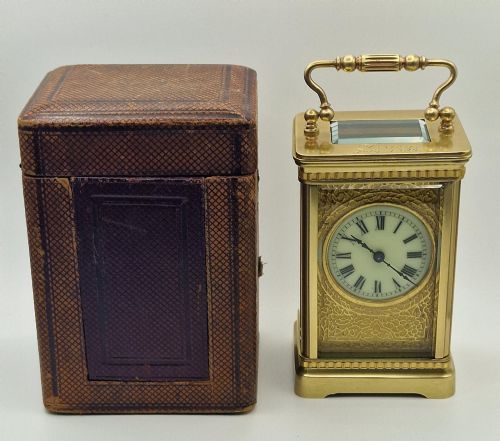
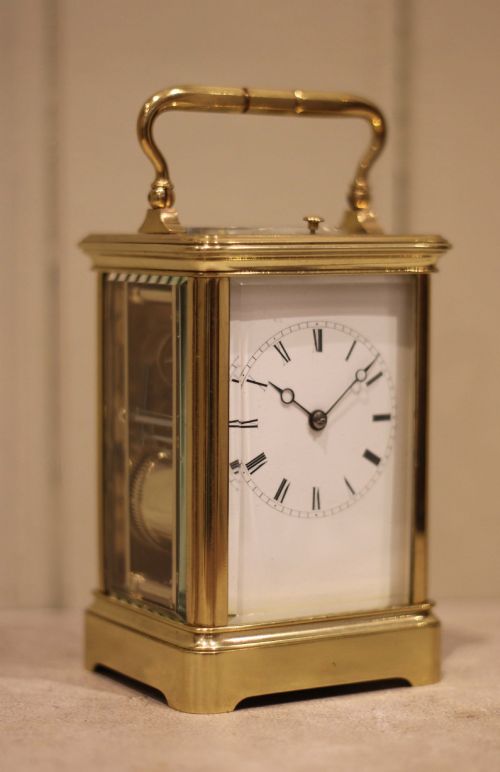
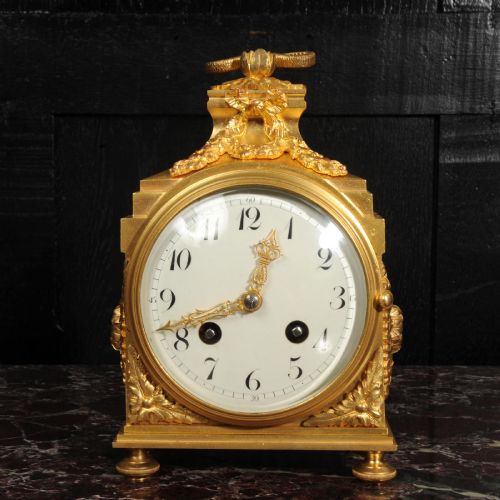
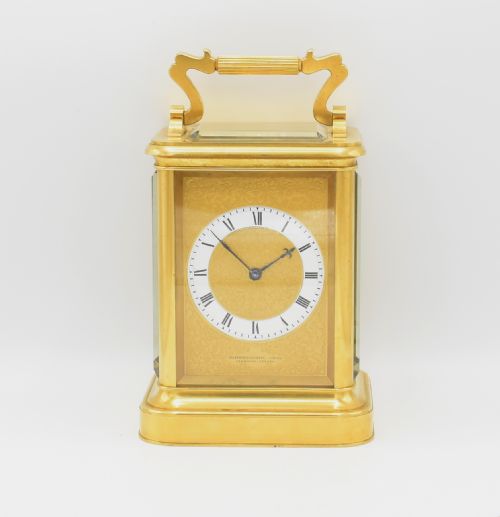
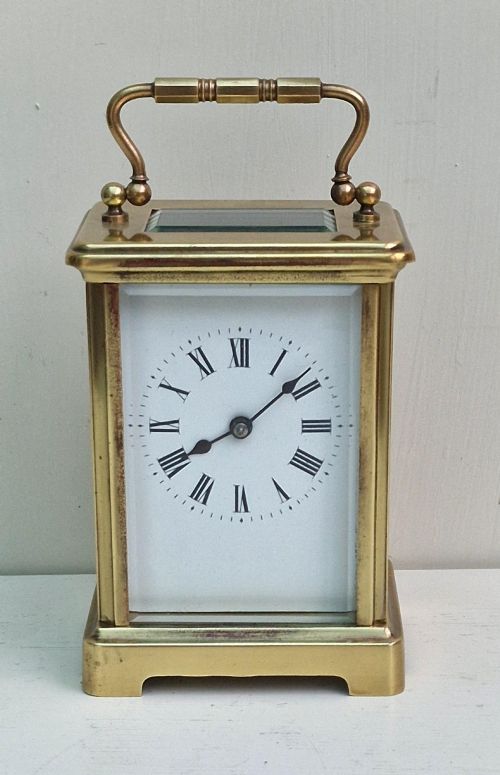
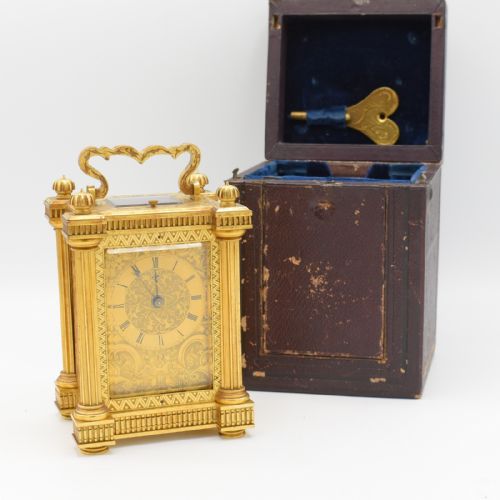
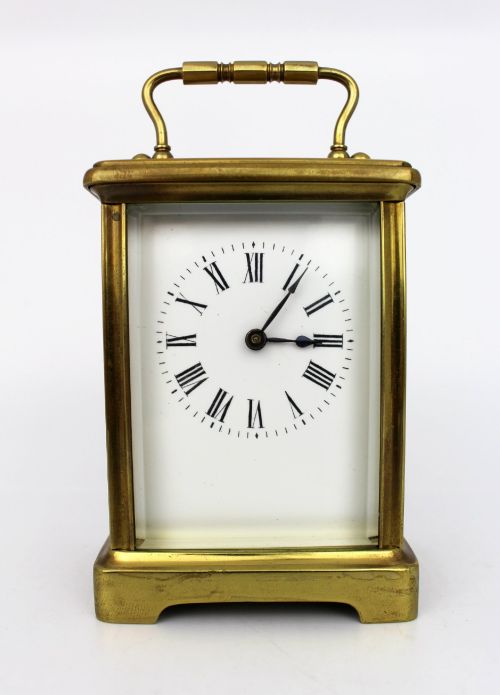
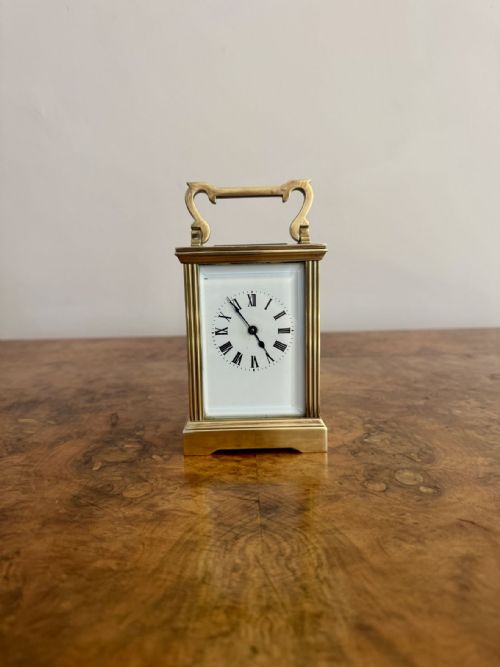
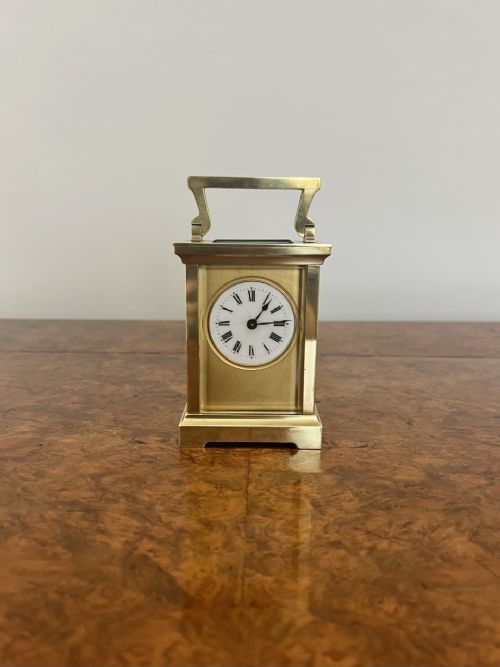
The most common examples on this page are French carriage clocks featuring glass side panels and heavy gilt brass cases. They take the form of mantel timepieces or robust travel companions fitted with leather carrying cases.
Distinctions in craftsmanship
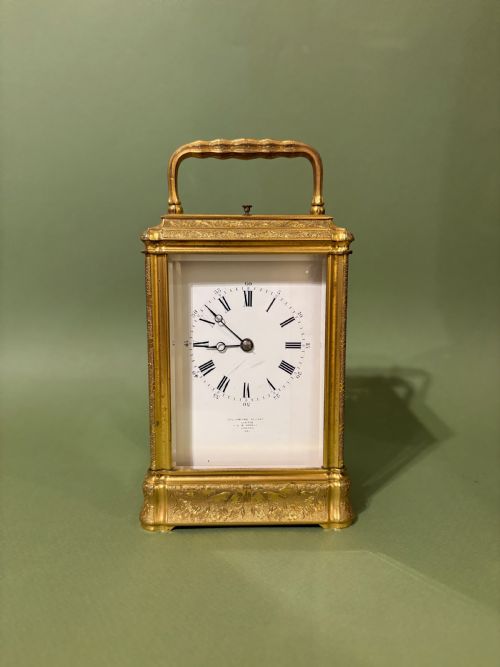
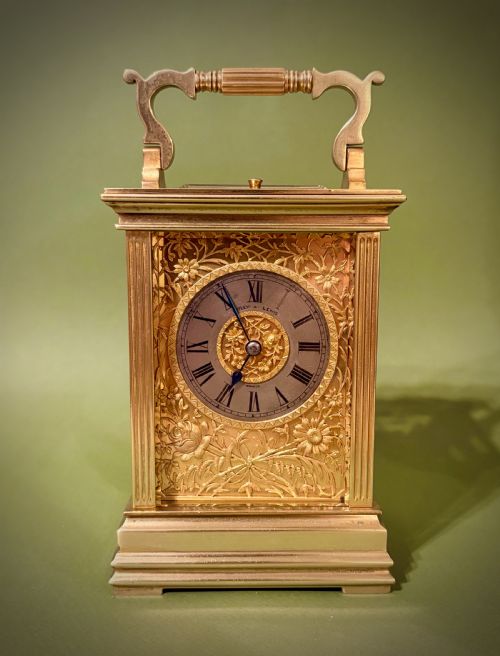
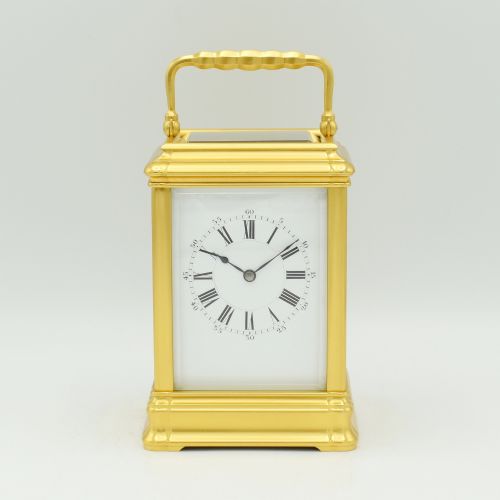
Quality rests in the heaviness of the gilt brass case, the depth of manual engraving upon the metal, and the complexity of the internal movement. Plain brass boxes sit at one end, while fully engraved gorge cases with grand sonnerie strikes represent the pinnacle of workshop production.
The precision of the platform escapement and the clarity of the enamel dial further separate standard timepieces from master-signed examples. The presence of original numbered keys and fitted leather travel cases adds significant technical completeness.
Listings incorporate pieces from the 1840s through to the Edwardian period, utilising materials such as gilt bronze, leather, and porcelain.
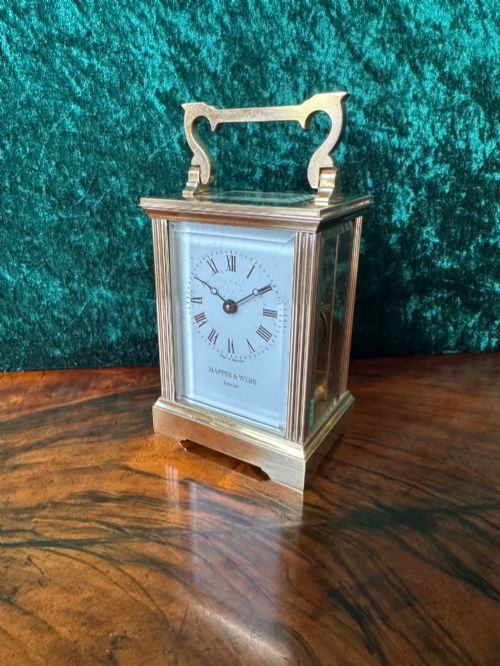
HENRI JACOT·COUSENS & WHITESIDE·Mappin and Web·DROCOURT PARIS·Antoine Redier of Paris
The Gold Travelling Clock Glossary
- Gorge case
- A distinct style of carriage clock housing characterised by reeded pillars and a stepped top moulding. This heavy brass frame provides structural rigidity for travel.
- Platform escapement
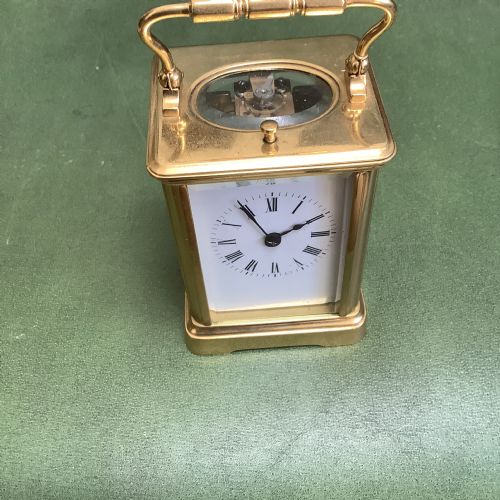
- The miniature regulating assembly mounted on a small platform visible through the top glass panel. It allows a portable clock to keep accurate time in any orientation.
- Repeating mechanism
- A complication that chimes the hours and quarters upon demand when a plunger is pressed. This allowed travellers to check the time in darkness.
- Grand sonnerie
- A striking train that sounds the hours and the passing quarters automatically on bells or gongs. It is a complex movement found in high-grade pieces.
- Pendule d'officier
- An early military-style travelling clock featuring a distinct handle and sturdy case designed for campaign use. These precursors evolved into the standard nineteenth-century carriage clock.
Gold Travelling Clock: Frequently Asked Questions
What is a gold travelling clock?
A gold travelling clock is a portable mechanical timepiece enclosed in a gilt brass and glass case, designed during the nineteenth century for journeys.
These objects combine sturdy metal frames with spring-driven movements, allowing them to function reliably away from a fixed wall or mantel.
How do you wind a carriage clock?
Winding requires a dedicated key inserted into square arbors located through the base or backplate of the movement. Turning the key tensions the internal mainsprings that power the going, striking and alarm trains.
Care must be taken not to overwind the springs, stopping as soon as resistance is felt.
Where were these clocks made?
The vast majority of these pieces originated in Paris workshops, created by specialist makers who exported them across Europe and Britain. A smaller proportion came from English makers operating in London.
French pieces often bear maker marks on the backplate, while British examples display distinct fusee movements and regional signatures.
How do you date a Victorian travelling clock?
Dating relies on stylistic clues within the brass case, the shape of the escapement, and maker signatures stamped on the movement backplate. Victorian pieces often display heavier cast ornamentation compared to earlier plain designs.
Serial numbers and maker stamps help cross-reference production dates against known workshop ledgers.
Can these clocks travel today?
These pieces were originally built to withstand motion inside carriages and trains, making them mechanically suited for careful relocation. However, modern transit requires securing the platform escapement and padding the exterior.
Many owners prefer to keep them stationary on desks or mantels to preserve their delicate internal gear trains.