

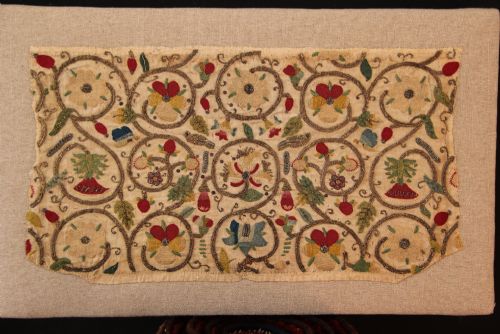


Gold Silk Needlework Panel
These gold silk needlework panel examples combine centuries of textile skill with rich metallic threads, offering collectors tangible fragments of historical domestic art.
Gold Silk Needlework Panel
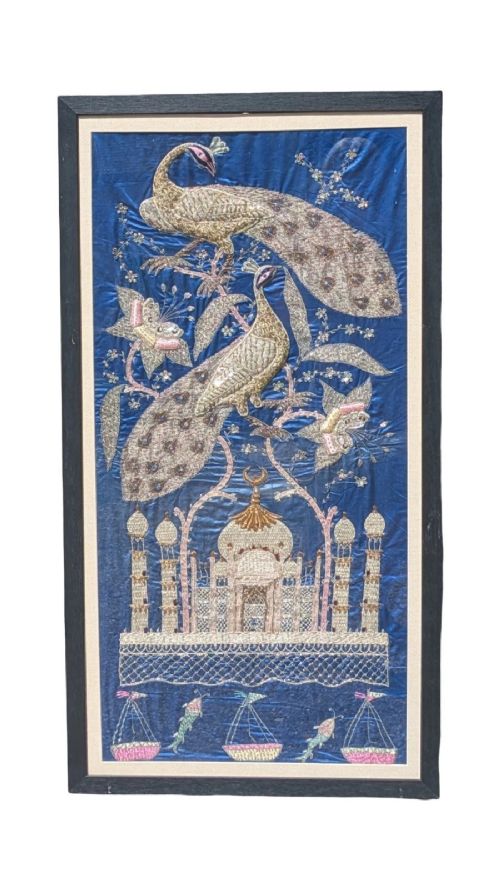
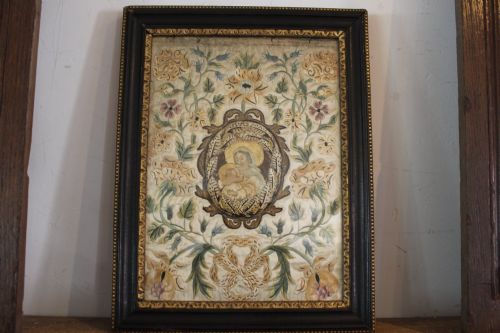
A gold silk needlework panel spans various historical eras, encompassing English and continental traditions from the seventeenth century through to the twentieth century. These textile artworks appear as framed pictures, cushion covers, coifs, and commemorative pieces created using diverse stitching techniques.
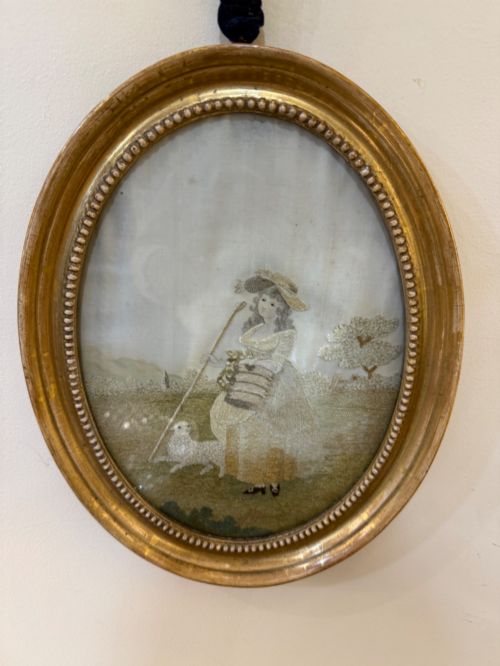
The seventeenth-century examples frequently feature raised stumpwork and detailed embroidery depicting historical figures or biblical scenes, often housed in early frames. Eighteenth-century Dutch and English panels demonstrate sophisticated needlework incorporating metal thread and silk on fine grounds, occasionally set within octagonal or water-gilded oval frames.
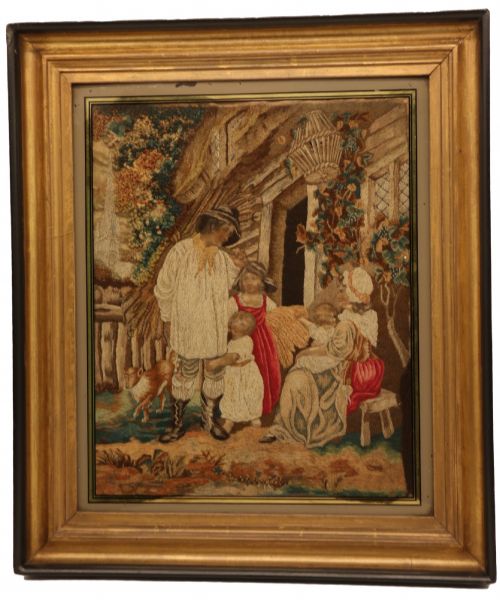
Later nineteenth-century and Georgian pieces include Berlin wool work, hand-painted silk pictures, and military commemoratives tied to regiments like the Royal Artillery. Buyers are most likely to encounter framed needlework pictures and textile panels utilising silk backgrounds embellished with metallic thread.
Materials and Construction
The foundation of these works relies heavily on silk, linen, and wool fabrics, which provide the stable base required for intricate needle manipulation. Artisans applied metallic thread and gold leaf accents to catch the light and create luminous decorative elements.
Frames play a crucial role in the presentation and preservation of these panels, utilising wood, glass, and giltwood to protect the delicate textiles. Water-gilded oval frames and simple wooden mouldings complete the construction of framed works from the Georgian and eighteenth-century periods.
King Charles II and his favourite mistress immortalised in raised needlework threads.
Assessing Quality
The sophistication of the stitchwork and the complexity of the pictorial composition dictate the upper tier of these textiles. Finer panels demonstrate meticulous tension, well-preserved metallic threads, and intricate detailing that remain intact across centuries.
The quality of the mounting and framing significantly influences the overall character of the piece. Original or period-appropriate giltwood frames and clean glass protection elevate the presentation of antique textile art compared to later, unsympathetic remounting.
The Gold Silk Needlework Panel Glossary
- Stumpwork
- A style of embroidered textile art raised high from the background canvas using padding and wire foundations. This technique reached notable popularity in seventeenth-century English needlework.
- Giltwood
- Wood that has been coated with a thin layer of gold leaf or gold paint. Frames utilising this finish frequently accompany eighteenth-century and Victorian panels.
- Crewel work
- Embroidery executed with wool yarn on a plain-weave fabric. This method appears on early nineteenth-century domestic textile items.
- Berlin work
- A type of counted-thread embroidery charted on squared paper using brightly coloured wools. It became a prominent domestic craft during the nineteenth century.
Gold Silk Needlework Panel: Frequently Asked Questions
How should I display a gold silk needlework panel?
Keep these textiles away from direct sunlight to prevent the fading of natural silk dyes and metallic threads. Maintaining stable indoor humidity protects both the fabric grounds and the wooden frames from warping.
Ensure panels are professionally framed behind glass to guard against airborne dust and physical contact. Hanging them on interior partition walls away from direct heat sources preserves the structural integrity of the antique materials.
What is the difference between seventeenth-century and eighteenth-century panels?
Seventeenth-century examples often feature raised stumpwork, figurative scenes involving historical personalities, and dense embellishments. These pieces reflect courtly tastes and intricate domestic needlecraft traditions.
Eighteenth-century works tend towards refined pictorial compositions executed with metal thread and fine silk on structured grounds. They frequently appear within classical geometric frames such as octagons or ovals.
Are military commemorative embroideries common?
Military commemoratives appear across the nineteenth and twentieth centuries, often marking specific artillery batteries or royal regiments. These pieces combine patriotic motifs with traditional needlework techniques.
Such panels serve as historical records of service, utilising structured text and insignia alongside standard embroidery stitches. They provide a distinct contrast to domestic or decorative floral compositions.
How do I identify the materials used?
Close inspection under magnification reveals the distinction between genuine metallic thread, which tarnishes naturally with age, and modern synthetics. Silk grounds exhibit a characteristic natural sheen and fine weave texture.
Secondary materials like wool and linen provide weight and durability to the backing fabrics. Frames made of giltwood or early timber indicate the probable period of assembly.